What is a steroid cream, and why do doctors use it?
A steroid cream is a topical corticosteroid, an anti-inflammatory medicine that goes on the skin. DermNet NZ, a dermatology reference, lists eczema and dermatitis as its main uses, and says it is usually applied once a day for 5 days to several weeks, then stopped or reduced.
Used that way, it works well. DermNet describes side effects as uncommon or rare when the cream is used appropriately under medical supervision. The trouble starts when a cream meant for a short course stays on the face for weeks or months, or when the person does not know it is a steroid at all.
How strong are steroid creams?
DermNet sorts them into four strength bands, and the band matters more than the brand. DermNet gives examples by generic name: mild (hydrocortisone), moderate (clobetasone butyrate, triamcinolone acetonide), potent (betamethasone valerate, mometasone furoate) and very potent (clobetasol propionate). Strength depends on the molecule, on the cream or ointment base, and on how thin the skin is. The same reference advises using the weakest steroid that does the job.
Which of these a pharmacist can hand over without a prescription in Malaysia depends on the product and its strength, so that is a question for a doctor or pharmacist. What the Ministry of Health's drug regulator, the National Pharmaceutical Regulatory Agency (NPRA), says in its public statements is that a cream containing betamethasone 17-valerate is a medicine that must be registered with the Drug Control Authority and used only on the advice of a health professional.
Why is facial skin different?
Facial skin is thin, and thin skin absorbs more medicine. DermNet notes that absorption is greatest through the skin of the eyelids, the genitals and skin creases, and is increased when the area is covered. The UK medicines regulator, the MHRA, asks doctors to tell patients how long to use a steroid cream, especially on sensitive areas such as the face.
New Zealand's medicines safety bulletin was firmer in 2005. It said steroid creams should not be used on the face except for brief periods, under two weeks, and then only for conditions that had not responded to other treatment. That bulletin is old, but DermNet's newer page on withdrawal still advises avoiding prolonged use of moderate to potent steroids on the face.
What happens if a steroid cream is used on the face for too long?
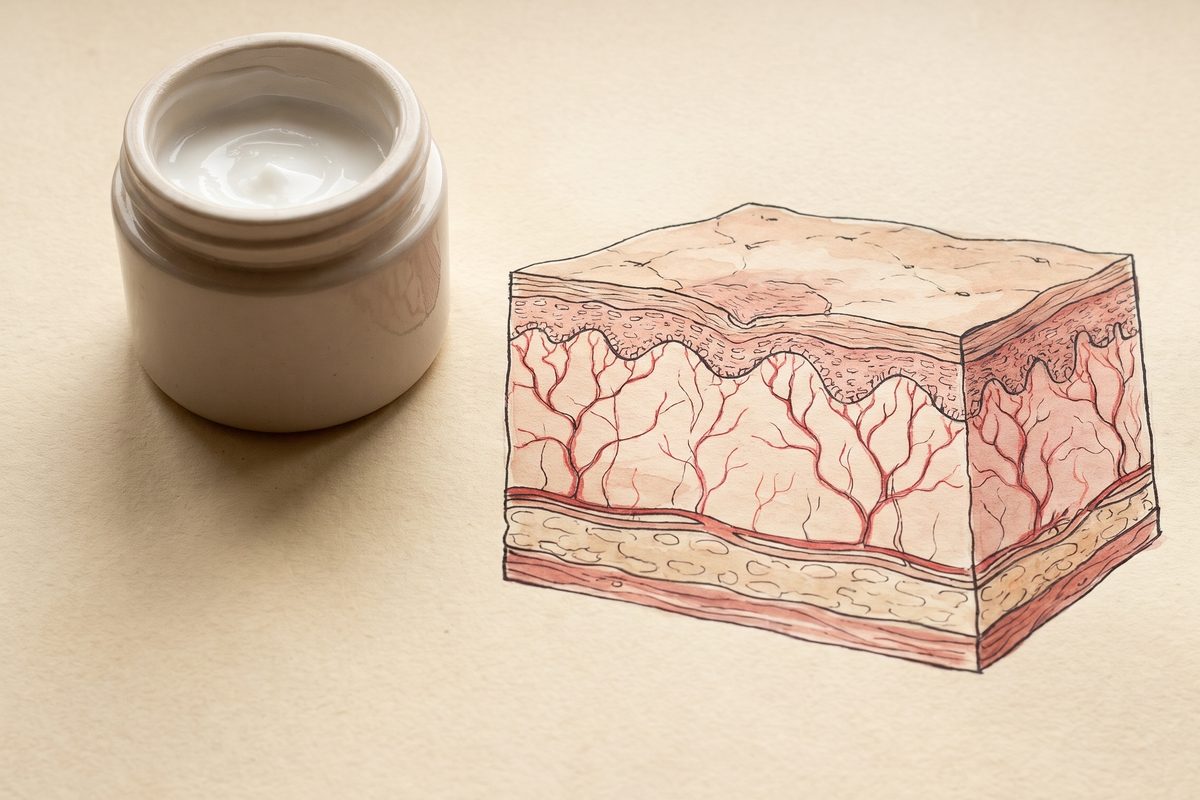
The skin thins, which is called atrophy. Small blood vessels become visible (telangiectasia) and the skin bruises easily. DermNet and the New Zealand bulletin both list these, and both say the risk is greater with the more potent steroids.
Rashes can follow. Perioral dermatitis is a rash of small red bumps around the mouth, nose and eyelids. Steroid rosacea is a rosacea-like redness of the middle of the face, with bumps, burning and visible vessels. DermNet says both can follow weeks to months of potent steroid use, and that steroid rosacea can become especially severe when the cream is stopped. A 2025 review in the Journal of Clinical and Aesthetic Dermatology lists perioral dermatitis, acne and flushing as effects on the face.
NPRA's own statements add acne-like spots and changes in skin colour. About betamethasone 17-valerate, NPRA says the skin of the face that the cream touches can become thin and easily irritated, break out in acne and change in pigment, and that the medicine can be absorbed into the bloodstream, where it can do harm. DermNet also lists extra hair growth in the treated patch, and says steroids can hide or worsen infections such as fungal infection of the skin and cold sores, so a rash that seems to improve under a steroid is not always settling. If acne-like spots are the main problem, the article on what a doctor checks first in adult acne sets out the usual causes.
What are the risks near the eyes?
The skin of the eyelids absorbs steroid readily. DermNet says excessive use over weeks to months might lead to glaucoma or cataracts. Glaucoma is damage to the eye's nerve, usually linked to raised pressure inside the eye, and it can lead to loss of vision.
A 2019 report in the Medical Journal of Australia gives a concrete case. A woman who had used hydrocortisone 1 per cent cream daily on her eyelids for 3 to 4 months was found to have eye pressure of about 42 and 40 (in mmHg, the unit eye doctors use). Two weeks after she stopped the cream, it was 15 and 18, on a single glaucoma eye drop. She had been diagnosed with glaucoma in one eye many years earlier, and the authors list myopia (short-sightedness), connective tissue disease and a personal or family history of glaucoma as risk factors. They advise eye pressure and optic nerve checks for anyone on these treatments. A 2025 review also cites a UK study in which the risk of cataract was higher with steroid creams used elsewhere on the body, though lower than with steroid tablets, eye drops or inhalers.
Anyone who has used a steroid cream on or near the eyelids for more than a few weeks should have their eyes checked, and the same goes for long-standing redness around the eyes, which is covered in the article on rosacea and the eye.
What is topical steroid withdrawal, and how sure are we about it?
The MHRA reviewed it in 2021. It said severe reactions can rarely follow stopping a steroid cream, usually after long or inappropriate use of a moderate or high-potency product, and that it could not estimate how often this happens. The signs it asked doctors to look for are burning rather than itch as the main symptom, redness that spreads beyond the area treated, and a rash in unusual places. It said reactions can develop after daily use for longer than a year, and in children after as little as two months of daily use, and that the face and genitals are most often affected. Symptoms usually start within days to weeks of stopping.
DermNet calls it a rare rebound reaction and says its frequency is unknown. It says doctors have no agreed diagnostic criteria, that a withdrawal reaction is hard to tell from a flare of the original condition, and that no treatment has been shown to shorten recovery. It describes a papulopustular form, with bumps and pustules, that often follows use for pigmentation or cosmetic reasons. Most people recover within about three months, and a small minority take up to five years. The US National Eczema Association says withdrawal has been reported mostly by patients and is under-researched, and that it can be mistaken for the eczema itself.
So the fair summary is that it is recognised by the UK regulator, rare on its account and still poorly measured. DermNet is explicit that this should not stop anyone from having a steroid cream they genuinely need. It is a reason to ask a doctor for a plan. A short, supervised course remains the right tool for many skin conditions.
Can a whitening or miracle cream contain a steroid?
Yes, and NPRA has said so in public. Cosmetics sold in Malaysia are notified to NPRA, and they are not allowed to contain scheduled poisons. NPRA's page of cancelled cosmetic notifications lists products withdrawn after it found prohibited substances, including scheduled poisons, in them. Many entries name betamethasone 17-valerate, sometimes with mercury and sometimes with hydroquinone and tretinoin. When this article was written, the most recent entry naming it was dated 2 April 2026. In each statement NPRA says the notification was cancelled and the product may no longer be sold in Malaysia.
Two things follow. A label, a shop or a well-known seller cannot tell you what is in the jar, which is why NPRA's statements tell the public to check a cosmetic's notification status on its website. And a notification that exists today can be cancelled later, so check when you buy and again if a product appears in the news. The steps are in the KKM check for creams, injections and slimming pens, and the mercury side is in the article on whitening creams and mercury. If the reason for the cream is dark patches, melasma creams in Malaysia sets out which medicines are legal and how they are meant to be used.
I have been using a steroid cream on my face. What should I do?
Do not keep using a cream if you do not know what is in it, and do not guess your own way out either. See a doctor and bring the jar and its box. NPRA tells people who have been using the creams it cancelled to stop using them and to see a health professional if they have any discomfort or reaction.
The plan matters because the way out depends on how long and how strong. DermNet says whether to stop at once or step down gradually is debated, and for steroid rosacea it describes applying less often and moving to a weaker steroid to limit rebound flares. The MHRA says that if skin gets worse within two weeks of stopping, you should not start the cream again without talking to your doctor. A doctor can also tell a flare of the original condition from withdrawal, and can arrange an eye check if the cream was used near the eyes.
If you think a medicine has caused a side effect, you can report it yourself to NPRA through its online ConSERF form; for a cosmetic, NPRA takes complaints through its page on notified cosmetic products. Each route, and what to keep, is set out in how to report a side effect in Malaysia.
What does The Retreat Clinic offer here?
The Retreat Clinic is an aesthetic clinic, not an eczema or dermatology service. Dr Ong can examine the skin, say what it looks like (thinning, visible vessels, leftover marks) and tell you whether it is a matter for him or for someone else. A dermatologist is the right doctor for eczema and for a severe withdrawal reaction, and an eye doctor is the right one for eye pressure. The clinic does not run a programme for steroid withdrawal, and it does not offer vascular lasers, which is explained in why we do not offer IPL or a vascular laser.
Knowing what is in the jar is the first step. The second is having someone who can examine the skin tell you what it has been doing.