
Every laser is a wavelength looking for something to absorb into
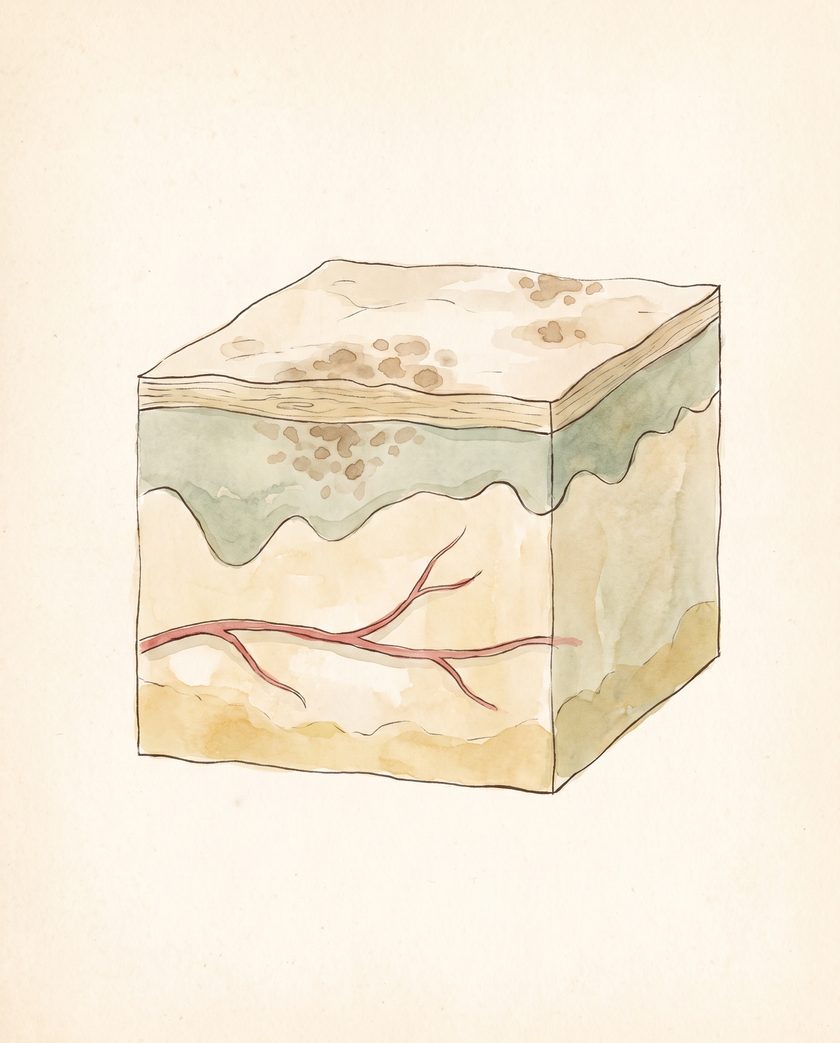
Dermatological lasers all work the same way underneath. A wavelength is matched to a chromophore, the substance in the skin that absorbs that colour of light and turns it into heat. Match it correctly and the energy lands in the target. Match it badly and it lands in whatever else will take it.
The chromophores are not interchangeable. Vascular lesions contain oxygenated haemoglobin, which strongly absorbs visible light at 418, 542 and 577 nm. Pigmented lesions contain melanin, which absorbs broadly across the visible and infrared wavebands. Infrared lasers such as CO2 and erbium:YAG are absorbed by water, which is why they resurface rather than pick out a target. The aim each time is to destroy the target and leave the tissue around it alone.
So the question in front of any machine is what sits in this skin, not what the machine can do in principle. A brown mark and a red vessel look equally treatable in a photograph, and they are two problems with two absorbers, which the comparison of picosecond, Q-switched, IPL and topical treatment works through.
IPL is not a laser, and the difference is the whole story
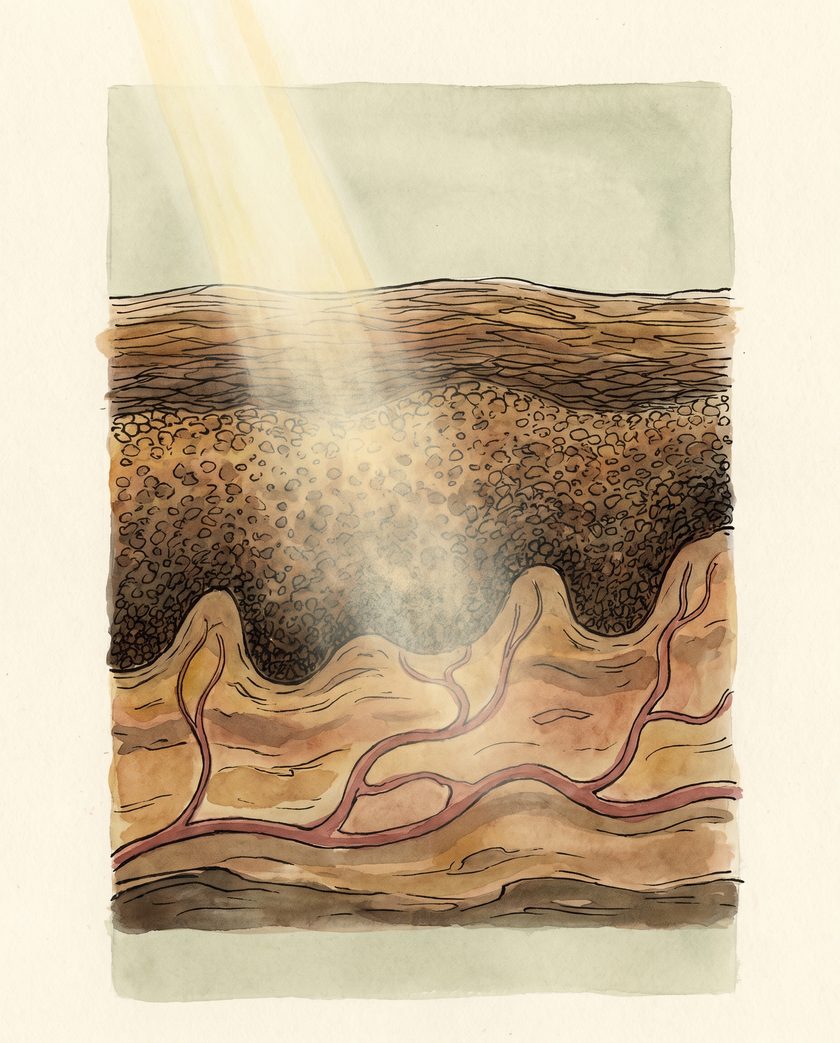
A laser emits one wavelength. An IPL emits many in each pulse, with filters used to refine the output towards a target, and the absorbed light becomes the heat that damages the tissue you were aiming at.
That breadth is what makes IPL versatile and what makes it demanding. It is used against vascular targets, the red pigment in blood, for thread veins, spider veins and vascular birthmarks. It is used against pigmented lesions such as age spots and freckles. It is used for hair removal, where it is generally ineffective on light hair. One device, three jobs, a settings sheet between them.
What a vascular laser is built to do
A pulsed dye laser emits visible light at 585 or 595 nm, absorbed mostly by oxyhaemoglobin inside blood vessels, so the heat concentrates in the vessel. The published uses are port wine stains, superficial haemangiomas, telangiectasia, cherry angiomas and poikiloderma of Civatte. It is the right instrument for a vascular birthmark, which is why a port wine stain near a baby's eye belongs with a service that owns one.
It is not a gentle machine either. Bruising, purpura, is common with it, affecting every patient in some studies depending on the settings, and the list also carries pain, redness, swelling and itching afterwards, rare blistering and burns, and pigmentary change. That belongs in the conversation before the first session.
What this clinic runs instead is a PicoSure picosecond laser. Pigment lasers, picosecond and Q-switched alike, are built around melanin. The picosecond laser here is aimed at pigment, and no setting turns it into a vascular device.
The part that gets skipped in a Malaysian clinic
In Fitzpatrick skin types IV to VI, which covers a large share of the faces that walk in here, the extra melanin in the epidermis competes with haemoglobin for the light. Energy meant for the vessel is intercepted on the way down, and the risk of thermal injury rises. That is a physics problem before it is a technique problem, and experience narrows it rather than removing it.
The literature carries the consequence plainly. A 2025 case report describes a man in his late twenties with Fitzpatrick type IV skin who developed second-degree burns after IPL for post-acne redness at a non-medical spa. The same paper states that IPL is generally not recommended in skin types above III, and its review of reported errors found excessively high energy settings in 62.8%, inappropriate device selection in 39.5%, and treating darker or markedly tanned skin in 20.9%.
Those figures describe reported errors rather than a Malaysian rate, and one burn case is one case. I have found no incidence data for this country and will not invent any. The direction is enough to change how a clinic behaves. Heat landing in melanin is also the mechanism behind why pigmentation comes back.
Who is allowed to hold one, and what that settles
Malaysia does regulate this, more specifically than most people expect. In the Ministry of Health guidelines on aesthetic medical practice, intense pulsed light sits in the non-invasive list, which a general practitioner may perform after a Certificate of Training and a requisite number of logged procedures. Lasers for pigmentation, benign lesions, rejuvenation and hair removal sit one rung up, in the minimally invasive list. An order taking effect on 1 June 2026 designates certain aesthetic devices, laser systems and HIFU among them, so anyone operating one now needs a designated medical device permit under the Medical Device Act 2012. What that order covers is set out separately.
A certificate records that a doctor was taught the device and logged the cases. Whether it was the right answer for a particular face gets decided in the room, before anything is switched on. Both are worth having. Only one is a diagnosis.
Where facial redness should actually go
If the concern is persistent flushing and visible vessels, rosacea is the commonest explanation and worth having named before any device is discussed. The dermatology reference lists intense pulsed light and vascular laser among its procedural options, alongside topical alpha-adrenergic agonists such as brimonidine and oxymetazoline, and says plainly that there is no cure and that rosacea is managed rather than cleared. A dermatologist is a sound first stop, as is a doctor who owns those devices and examines before quoting.
Rosacea reaches the lid margin often enough to raise in the same breath as the skin, which is the subject of why the eye needs its own doctor when the face is being treated for redness. IPL also has a use of its own in eye care, around the lower lids for blocked oil glands in dry eye, and Dr Catherine Chow, an oculoplastic surgeon, sets out what the trials show for IPL and thermal pulsation in dry eye.
Why a clinic should publish its gaps
A clinic with one machine finds reasons to use it. That is not a character flaw, it is how a fixed cost behaves once it is standing in the room, and the defence against it is to write the limits down where patients can read them.
We have no IPL. We have no vascular laser. Neither absence is a verdict on the devices, which do the work they were designed for, in trained hands, on skin that suits them.
The costly part is the next sentence. Some of the redness that arrives here belongs to a machine we chose not to buy, and saying so sends that patient elsewhere on the day she was ready to spend. That is the correct outcome. A treatment list is a statement about what a clinic can absorb its energy into. It should be as honest as the physics is.