
Where does hydroquinone sit under Malaysian rules?
There are two doors a skin-lightening product can come through in Malaysia, and hydroquinone belongs behind only one of them. A cosmetic is notified to the NPRA by the company before it is sold. A medicine is registered with the Drug Control Authority and carries a MAL number. The Ministry of Health's answer for hydroquinone is the second door. Its 2018 press statement says products with hydroquinone, tretinoin and diphenhydramine "are classified as pharmaceutical products that requires registration with the Drug Control Authority", and that they should be used only on a healthcare professional's advice. Bernama's report of the 31 October 2026 cancellation repeats the point: products with these ingredients are classified as medicines and must be registered before they are marketed.
The cosmetic side agrees. The ASEAN Cosmetic Directive keeps a list, Annex II, of substances that must not form part of the composition of a cosmetic product. In the 10 June 2026 version, hosted by the NPRA, entry 1339 is hydroquinone, with one exception cross-referenced to Annex III. The Ministry of Health's own FAQ says that a medicine without a MAL number is an unregistered product, and that every cosmetic must be notified to the NPRA.
The Ministry calls these ingredients "scheduled poisons", which refers to the Poisons List under the Poisons Act 1952. For the group of the list that applies to a given product, ask a pharmacist or the Pharmacy Enforcement Division.
What happened on 31 October 2026?
Bernama reported that the Director of Pharmaceutical Services cancelled the notification of a facial toner after tretinoin and hydroquinone were found in it. The product is no longer permitted to be sold, sellers and distributors were told to stop sales immediately, and the report cites the Control of Drugs and Cosmetics Regulations 1984. For individuals the first-offence penalty stated is a fine of up to RM25,000, imprisonment of up to three years, or both. Users were told to stop and see a health professional if they had side effects.
It was not a one-off. The NPRA's public list of cancelled cosmetic notifications, read on 12 November 2026, had seven entries for 2026, and three of them name hydroquinone as a scheduled poison detected, dated 2 April, 24 August and 31 October. Hydroquinone turns up in products that were sold as toners, night creams and soothing creams.
Is hydroquinone the same as mercury?
No. Hydroquinone and mercury are different substances. The ASEAN annex lists them as separate entries, and the NPRA describes different harms for each. Mercury, in the Ministry's words, can damage the kidneys and the nervous system, may affect brain development in unborn and very young children, and can reach other people in the household through vapour or touch. The article on mercury in whitening creams covers that side. For hydroquinone, the Ministry names skin redness, discomfort, discolouration and hypersensitivity when it is used without supervision.
That distinction matters, and it has a limit. A cream with hydroquinone in it is not a mercury cream. It is still a medicine sold without a registration, with no known strength and no doctor deciding whether the skin can take it, which is what the cancellations are about.
What can hydroquinone do to skin?
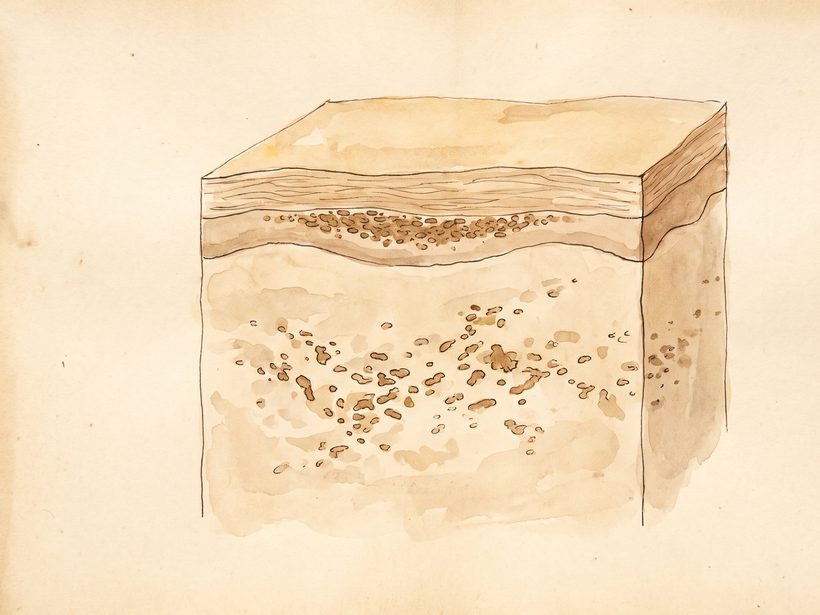
Used properly, hydroquinone is a recognised topical lightening agent. DermNet describes it for melasma and post-inflammatory hyperpigmentation, and notes that it lightens pigment in the epidermis and does not treat pigment that sits deeper. In New Zealand and many other countries it is available on prescription only. The side effects below are what the dermatology sources describe.
Irritation and contact dermatitis. DermNet says mild irritant contact dermatitis can occur at concentrations above 4%, and that it usually settles with a short break or a topical steroid. People who are allergic to hydroquinone or to anything else in the formulation should not use it, and some commercial versions contain metabisulphite, which can trigger an allergy. The Ministry adds redness, discomfort, discolouration and hypersensitivity.
Exogenous ochronosis. This is a blue-black or grey-blue discolouration, usually on the face. A 2022 systematic review in the International Journal of Dermatology pooled 126 reported cases from 56 articles. Every patient had facial blue-black or grey-blue macules in a lace-like pattern. The median duration of use was five years, and only four cases came after a course of three months or less. The authors conclude that concentrations above 4% and courses longer than three months may be associated with ochronosis, and that treatment is often unsatisfactory. It is a reported complication, and the review does not give a rate for any one person. Duration of use is the detail the review keeps returning to.
Sun and cancer. The Ministry's 2018 statement says that because hydroquinone reduces the skin's protection from ultraviolet light, it increases the risk of skin cancer. DermNet gives the other half of the evidence: oral high-dose hydroquinone caused cancer in rats, and after about 50 years of topical use no human cancer case has been reported. Both are on the record, and neither settles the question for an individual. They explain why sun protection comes with any lightening treatment.
DermNet also notes that safety in pregnancy and breastfeeding has not been established.
How do I check a product?
Start with what the product claims to be. A cosmetic should have been notified to the NPRA. A cream that contains hydroquinone is a medicine and should carry a MAL registration number. Neither is a promise of quality on its own, since a notification is a company's own declaration, but a missing one is the clearer warning.
Then search. The NPRA's QUEST3+ page lets you choose the Cosmetic or the Pharmaceutical category and search by product name, registration number, holder, manufacturer, importer or active ingredient. Its own disclaimer says a result applies only on the date and time of the search, so the answer can change.
Then read the list. The NPRA keeps a public page of cosmetics whose notification has been cancelled, grouped by year, with the scheduled poison that was detected beside each product name. It is written in Malay, and the public is advised there to avoid buying or using anything on it. The list only holds products that have already been found, so a product missing from it is not cleared. A product that cannot be found anywhere, or a seller who cannot give a notification or MAL number, is the stronger signal.
If a product has already caused a reaction, how to report a side effect in Malaysia sets out where the report goes and what to keep.
If you have already used one
Stop the product and see a doctor. The Ministry says the same: users who have side effects should stop and see a health professional. A general article cannot tell you what a particular cream has done to a particular face, and ochronosis in particular is diagnosed by examining the skin. Bring the jar.
What does The Retreat Clinic offer for pigmentation?
The Retreat Clinic is a doctor-led aesthetic clinic in Setia Alam, Shah Alam. The clinic's pigmentation page starts with the diagnosis, because melasma, sun spots and the marks that follow acne need different plans. The clinic's pigmentation article says that for melasma the usual start is daily sun protection and prescription topical treatment, which may include hydroquinone, a retinoid or azelaic acid, chosen after assessment. Tranexamic acid for melasma sets out a further prescription step that is not for everyone.
The pigment laser used at the clinic is a picosecond laser, PicoSure, and only after the pigment has been diagnosed. The clinic does not offer IPL, vascular lasers, fractional CO2 laser or whitening drips. What a doctor checks first describes the first visit. Nothing here is an offer of any product, and this article does not say where to obtain one.
Common questions
Is hydroquinone legal in Malaysia?
As a medicine, yes, when it is a registered product used on a health professional's advice. The Ministry of Health classes products containing hydroquinone as pharmaceutical products that must be registered with the Drug Control Authority. As a cosmetic ingredient, no: it is on the ASEAN list of substances that must not form part of a cosmetic, and the Ministry cancels the notification of cosmetics found to contain it.
Is hydroquinone the same as mercury?
No. They are different substances with different recorded harms. The NPRA describes mercury exposure as damaging to the kidneys and nervous system and a risk to unborn and very young children, and describes unsupervised hydroquinone as causing redness, discomfort, discolouration and hypersensitivity. Both have been found in illegal skin-lightening products, which is why the check is the same.
What are the side effects of hydroquinone?
DermNet lists mild irritant contact dermatitis, allergy and, with high concentrations used several times a day for years, exogenous ochronosis, a blue-black or grey-blue discolouration of the skin. A systematic review of 126 reported cases found most were in long courses, a median of five years, and that treatment of ochronosis is often unsatisfactory. Anyone with a reaction should stop the product and see a doctor.
How do I check whether a cream is notified or banned in Malaysia?
Search the product on the NPRA QUEST3+ page under the Cosmetic category, and read the NPRA list of cosmetics whose notification has been cancelled. A cream that contains hydroquinone is a medicine, so a MAL registration number is what a registered one carries. A product that cannot be found, or a seller who cannot give a notification or MAL number, should be treated as unverified. The search result applies only on the day it is run.
Sources
- Bernama, Ministry of Health cancels the notification of a cosmetic toner found to contain tretinoin and hydroquinone, 31 October 2026 (in Malay). Read 12 November 2026 The Director of Pharmaceutical Services cancelled the notification of a facial toner after scheduled poisons, tretinoin and hydroquinone, were found. Products containing them are classified as medicines and must be registered before they are marketed. They should be used only under the advice and monitoring of a health professional, and without supervision can cause side effects such as skin discolouration and hypersensitivity. Sellers were told to stop sales immediately for breaching the Control of Drugs and Cosmetics Regulations 1984. For individuals, a first offence carries a fine of up to RM25,000, imprisonment of up to three years, or both; for companies, up to RM50,000 for a first offence. Users should stop and see a health professional if they have side effects, and can check a cosmetic's notification status on the NPRA website.
- National Pharmaceutical Regulatory Agency (NPRA), Ministry of Health Malaysia. Press statement of the Director General of Health, Cosmetic products found to contain scheduled poison, 9 October 2018. Read 12 November 2026 Products with hydroquinone, tretinoin and diphenhydramine "are classified as pharmaceutical products that requires registration with the Drug Control Authority (DCA)" and should be used only on a healthcare professional's advice. On hydroquinone: "The unsupervised usage of hydroquinone can cause skin redness, discomfort, skin discolouration and hypersensitivity", and it reduces the skin's protection from ultraviolet light, increasing the risk of skin cancer. On mercury: exposure can damage the kidneys and the nervous system and may affect brain development in unborn and very young children, and other people can be exposed through vapour or touching the product or the user's skin. Selling or distributing these products is an offence under the Control of Drugs and Cosmetics Regulations 1984.
- NPRA, Cancellation of Notified Cosmetic Products (page text in Malay; footer "Last Modified: Wednesday 11 November 2026"). Read 12 November 2026 The public is advised to avoid buying and using the listed products, which were found to contain prohibited substances including scheduled poisons, and which are no longer permitted to be imported, manufactured, distributed or sold. Entries are grouped by year in tables of product name, scheduled poison detected and press statement. The 2026 table had seven entries on 12 November 2026; three of them (2 April, 24 August and 31 October 2026) list hydroquinone, one of those with tretinoin and betamethasone 17-valerate, one with tretinoin; three list mercury.
- NPRA, QUEST3+ product search, Pharmaceutical and Cosmetic categories. Read 12 November 2026 A product category choice of Pharmaceutical or Cosmetic, and a search by product name, product registration number, holder name, manufacturer name, importer or active ingredient. Disclaimer: "The search result displayed is only applicable on the date and time of when the search was conducted."
- ASEAN Cosmetic Directive, Annex II (version 2026-1, 10 June 2026), as hosted by the NPRA Annex II is the "List of substances which must not form part of the composition of cosmetic products". Entry 1339 reads "1,4-Dihydroxybenzene (Hydroquinone), with the exception of entry 14 in Annex III" (CAS 123-31-9).
- Ministry of Health Malaysia, Pharmaceutical Services Programme, frequently asked questions. Read 12 November 2026 Medicines without a MAL registration number "are considered unregistered products" and cannot be sold or advertised in Malaysia. "All cosmetic products must be notified to the National Pharmaceutical Regulatory Agency (NPRA), Ministry of Health Malaysia."
- DermNet. Hydroquinone. Read 12 November 2026 A topical skin-lightening agent used for melasma and post-inflammatory hyperpigmentation; it lightens epidermal pigmentation and does not treat dermal pigment. Mild irritant contact dermatitis can occur at concentrations above 4%; people allergic to it or to the excipients should not use it, and some commercial versions contain metabisulphite, which can trigger allergy. Exogenous ochronosis is linked to high concentrations used several times a day for years. Oral high-dose hydroquinone caused cancer in rats, and after about 50 years of topical use no human cancer case has been reported. Safety in pregnancy and breastfeeding has not been established. In New Zealand and many other countries it is available on prescription only.
- Ishack S, Lipner SR. Exogenous ochronosis associated with hydroquinone: a systematic review. International Journal of Dermatology 2022;61(6). PMID 34486734 Fifty-six articles describing 126 patients. All presented with facial blue-black or gray-blue macules in a reticulate, lace-like pattern. Median duration of use was 5 years; four cases were reported with courses of 3 months or shorter and eight with use of a year or less. The authors conclude that hydroquinone in concentrations above 4% and in courses longer than 3 months may be associated with new-onset ochronosis, and that treatment is often unsatisfactory.
Disclosure: In September 2026 Cynosure Lutronic, which makes XERF and PicoSure, gave Dr Ong its XERF Innovation Leader and XERF Clinical Visionary awards at the Malaysian launch of XERF. How he thinks about ties like these: The quiet we kept: what shapes what your doctor recommends.