
What is a gummy smile, and what causes it?
A gummy smile, called excessive gingival display in dental papers, means a lot of gum shows above the upper teeth when smiling. A dental review notes that many people consider more than 4 mm of gum unattractive, and that the cause has to be diagnosed accurately before treatment is chosen. How much gum is too much is a personal view, and a gummy smile is not a medical problem.
The same review lists the contributors: altered passive eruption (the gum sits low on the tooth, so the teeth look short), lip length, a hypermobile upper lip, worn or short teeth, vertical maxillary excess (an upper jaw that grows long) and gum overgrowth. A 2023 narrative review calls altered passive eruption and a hypermobile upper lip the two major soft-tissue causes. Several can be present together.
Which cause can botulinum toxin help?
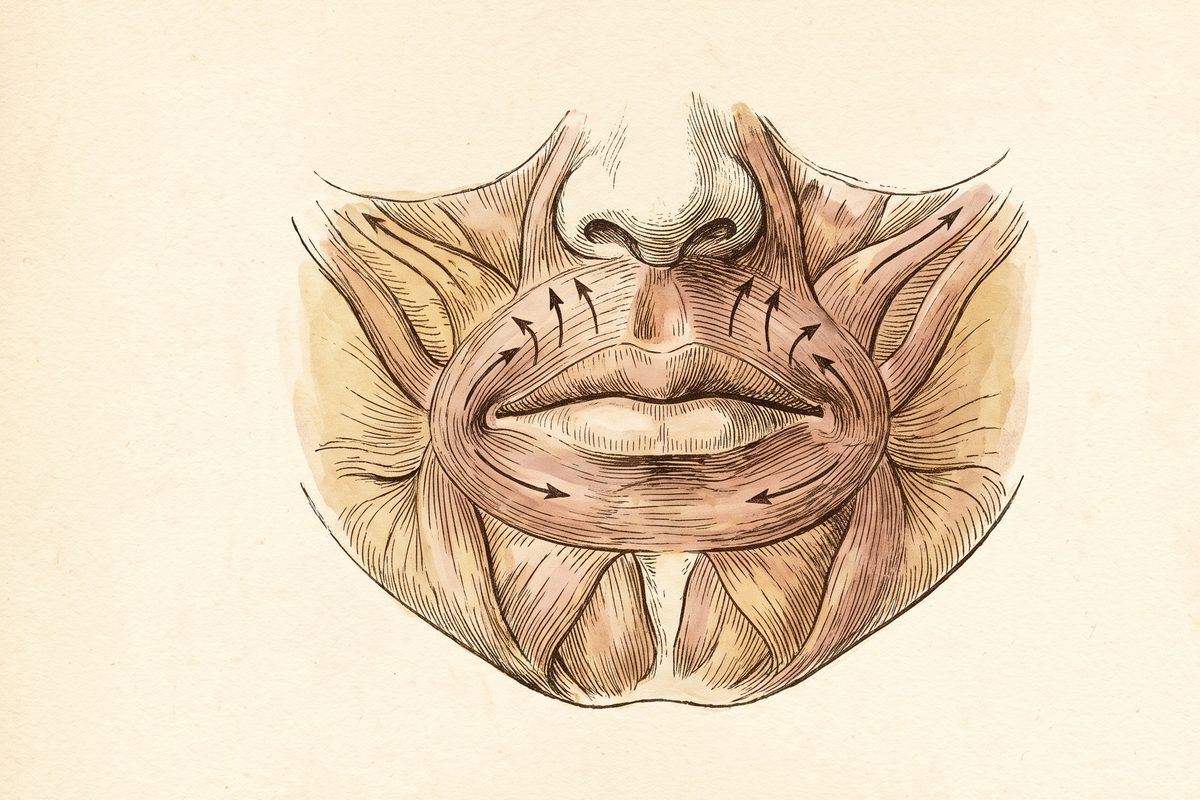
One: the muscular type. The upper lip rises when the muscles above it contract, and in some people they lift it higher than usual. Botulinum toxin reduces the force of those muscles, so the lip lifts less and less gum shows. The 2023 meta-analysis names the muscles most often treated: levator labii superioris, levator labii superioris alaeque nasi and zygomaticus minor.
It has no effect on the other causes. A gum that sits low on the tooth needs dental assessment, and a long upper jaw is a skeletal matter. The meta-analysis itself excluded people whose only cause was gum or tooth related, and it describes jaw surgery as the ideal solution for a long upper jaw, with toxin for borderline cases and overactive lip-lifting muscles. The same principle, a muscle weakened on purpose, is explained for a different muscle in the article on masseter injections.
At The Retreat Clinic, anti-wrinkle injections for a gummy smile caused by the lip-lifting muscles are offered after the smile is examined, and the injections take about five minutes. The effect is temporary, and the examination also checks whether the gum or the teeth are involved.
What do the studies report?
The 2010 paper by Mazzuco and Hexsel classified 16 people by where the gum showed and which muscles were involved: anterior, posterior, mixed or asymmetric. They injected abobotulinumtoxinA (sold as Dysport) with a technique for each type, and gum display fell in everyone, by 75.09 per cent on average. The authors point out that the study had no sample size calculation and no statistical analysis, so it shows a pattern, not proof.
The 2023 systematic review and meta-analysis is the stronger summary. Across its studies, gum display before treatment ranged from 3.5 to 7.2 mm, with a reduction of up to 6 mm at 12 weeks. The doses were small and divided between a few points on each side, and they varied between studies, so no single dose is given here. They are set for each face by the doctor after examining the smile.
How long does it last, and what are the side effects?
The effect fades gradually. The 2018 meta-analysis of three prospective studies found the reduction in gum display greatest at two weeks, about 4.4 mm, then wearing off, stable to at least eight weeks and not back to the starting level by 12 weeks. The authors call the evidence on duration scant and ask for trials of at least six months. Toxin in general lasts about four to six months, and the 2023 review adds that the duration may be shorter around the highly mobile mouth. The wider picture of timing is in how long anti-wrinkle injections last.
The side effects listed by the 2023 review are injection-site pain, swelling, bruising, mild redness and an asymmetric smile. The last matters because the muscles are weakened on purpose, and if the toxin reaches a neighbouring muscle the smile can lift unevenly or look flatter. In the 2010 study, two of 16 people had slight effects that extra doses corrected. These effects fade as the toxin does, and the common and rare effects are covered in the anti-wrinkle injection side effects article.
When is it a dental or gum matter instead?
When the gum sits low on the tooth, the teeth look short, the gum looks thick or swollen, or the upper jaw is long. A dentist or periodontist (a gum specialist) examines the gum and tooth length, and an orthodontist or oral surgeon assesses the jaw. The 2023 narrative review names aesthetic crown lengthening for altered passive eruption and lip repositioning surgery for a hypermobile lip as the established surgical treatments, and notes that evidence for many newer techniques is limited to case reports. These are dentistry and surgery, outside this clinic.
Because several causes can sit together, the order matters. A smile assessment that includes the muscles, the lip length and a dentist's view of the gums and teeth shows which part is which, and avoids injecting a smile whose real cause is the gum. The clinic's anti-wrinkle injections page describes what that kind of treatment is for. Whether a particular smile suits toxin is decided by examination.
So what is the honest answer?
A gummy smile is several problems with one look. Toxin helps one of them modestly and temporarily, and the studies are small and short. The most useful first step is to find out which cause is yours, and a dentist is part of that when the gum or the teeth may be involved.

