Is expired Botox harmful, and does it still work?
Most likely it works less, or not at all. That is an expectation, and the evidence behind it is thin. The leaflets say only "do not use after the expiration date". They give no data on what happens afterwards, because the date is the limit up to which the manufacturer has tested the product. A toxin is a protein, and a protein that has degraded is expected to do less. Nothing in the leaflets or the safety notices suggests that an expired genuine vial becomes more dangerous than a fresh one.
That does not make using it acceptable. A clinic that injects past the date is a clinic that is not following the leaflet, and the other things the leaflet asks for, such as sterile handling and a fresh vial, deserve a question too.
What do the expiry date and the mixing window mean?
Two clocks run on every vial. The first is the expiry date printed on the box and vial, which applies to the sealed powder kept as the leaflet says. The Botox Cosmetic, Xeomin and Dysport leaflets each say not to use the product after it.
The second starts when the powder is mixed with saline. Botulinum toxin type A is supplied as a dry powder, and once it is in solution the clock is short. The Botox Cosmetic, Xeomin and Dysport leaflets each give 24 hours after mixing, kept in a refrigerator until use. Xeomin adds that a mixed vial is for one session and one patient. Botox and Xeomin vials are single-dose, and any remaining solution is discarded.
These are US leaflets. The Malaysian package insert for a product may differ in detail, so the leaflet that came with the box in front of you is the one to follow.
Why does the cold chain matter?
Storage is part of the product. The Botox Cosmetic and Dysport leaflets say unopened vials are kept in a refrigerator at 2°C to 8°C, and Dysport adds protection from light. Xeomin is different: its leaflet says unopened vials are kept at or below 25°C and refrigeration is not required. So there is no single rule across brands. What the leaflet says for that product is the rule.
The cold chain is the whole route from the manufacturer to the clinic fridge, with no long spell in a hot car, a shop shelf or an unmonitored cupboard. A break in it is invisible to the patient. A clinic should be able to say where the product came from and how it is kept. A vial that has been stored badly is expected to lose potency, which is the same outcome as an expired one.
What are the bigger risks?
A fake or unregistered vial. In April 2024 the US Food and Drug Administration warned that counterfeit Botox was being injected for cosmetic purposes, with adverse events including hospitalisations. The FDA said there was no indication that the events were linked to authentic Botox. The same month the CDC counted 22 people in 11 states harmed after counterfeit or mishandled toxin from unlicensed providers, and in England in 2025 an investigation linked 25 cases of botulism to an unlicensed product. The article on fake anti-wrinkle injections sets out those clusters and the warning signs. In these cases the problem was the product itself and who supplied it, which is a different thing from a genuine vial that is a few weeks out of date.
Poor hygiene. The Botox Cosmetic leaflet describes a sterile powder without a preservative, mixed with preservative-free saline, in a single-dose vial. With no preservative in the vial, the protection against contamination is the way the vial is handled and how soon it is used. That is the reason for the 24-hour limit, the single-session rule and the instruction to discard what is left. A vial shared across patients, or kept for days, starts as a handling problem, and storage comes second. Infection at an injection site is the realistic harm here.
What should a genuine vial and box show?
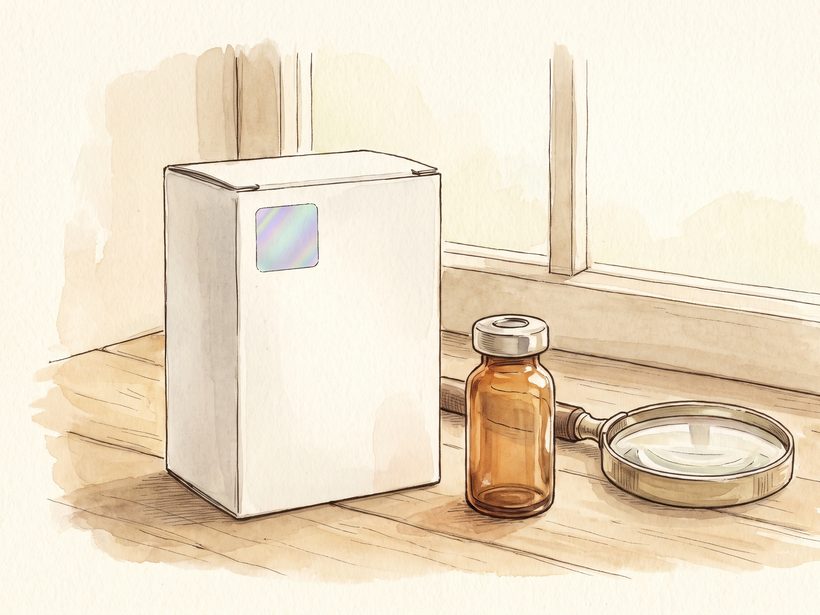
The leaflets and the regulators agree on the main points. The box and the vial should show the product name and the active ingredient, the strength in units, a batch or lot number and an expiry date, and the maker. The FDA's account of the counterfeit Botox is a useful example of what goes wrong: the active ingredient was worded differently from the genuine carton, the carton showed a 150-unit dose that the manufacturer does not make, a single lot number appeared on the carton and vial, and part of the text was not in English.
In Malaysia, a registered medicine carries a MAL registration number and a hologram security label, according to the Ministry of Health. The number can be searched on the NPRA product search or in the NPRA Product Status app, and the name, strength and maker on the entry should match the box. How to check whether Botox or a skinbooster is registered goes through each step. A registered entry shows that a product exists on the register. It does not show that the box in front of you is genuine, or how it was kept.
Brand names can confuse the check. The article on botulinum toxin brands explains why units differ between products and why the name on the box should match the entry.
Five questions to ask the clinic
A doctor who runs a careful practice expects these questions. They are plain, and each has a short answer.
1. Can I see the box and the vial label? Look for the product name, strength, batch number, expiry date and MAL number, and the hologram.
2. Is this vial opened fresh for me? The leaflets describe single-dose vials, and a mixed vial used within the stated window for one patient.
3. How is the product stored, and where do you buy it? The answer should be a refrigerator or the storage the leaflet allows, and a supplier that can be named and that sells registered product.
4. Can I check the MAL number myself? A clinic with nothing to hide lets you note it and search it on the NPRA register.
5. Who is injecting, and what is their registration? Checking a doctor's MMC number and LCP takes a few minutes. The practitioner matters as much as the product.
A clinic that is irritated by the questions has already told you something.
When should I see a doctor urgently?
Go to emergency care at once for double or blurred vision, drooping eyelids, slurred speech, difficulty swallowing or difficulty breathing after an injection, and say that you had a cosmetic injection. These are the symptoms the CDC asked clinicians to recognise in botulism. The fake-injection article covers the signs and the timing in more detail.
See a doctor the same day for redness that spreads, a hot, swollen or painful injection site, pus, or a fever. For swelling of the face or lips or any trouble breathing, go to emergency care. A milder problem, such as a result that is weaker than expected, can wait for a clinic visit, and the doctor who injected should be told. The common and rare side effects of anti-wrinkle injections are listed in their own article, and how to report a side effect in Malaysia says where a report goes and what to keep.
Keep the box, or a photograph of it, with the batch number. It helps whoever has to trace the product.
What this article cannot tell you
It cannot say what an expired vial will do in a particular person, because the leaflets are silent and this draft found no direct study. It also cannot say how long a given clinic's storage has been sound. What a patient can check is the label, the register entry and the answers to five plain questions.
Common questions
Is expired Botox harmful?
The leaflets say not to use it after the date and give no data beyond it. Nothing in the product labels or the safety notices points to expired genuine toxin acting as a poison. The expected effect is a weaker result. The larger risks come from a fake or unregistered vial and from poor hygiene, so the label and the clinic's handling matter more than the date alone.
Does expired Botox still work?
It may work less, or not at all, because the toxin is a protein that loses activity, but there is little direct evidence and no leaflet tests past the date. A weak result is also what a mixed vial kept too long would be expected to give. If the expiry or the storage is in doubt, the vial should not be used.
What happens if expired or badly stored Botox is injected?
Most often, little or nothing happens, or the effect is shorter or weaker. An infection at the injection site is possible with any poorly handled injection, so redness that spreads, heat, pus or fever needs a doctor. Symptoms such as double vision, drooping eyelids, slurred speech or trouble swallowing or breathing are an emergency, and are linked to counterfeit or unlicensed product in the outbreaks on record.
Does Botox need to be refrigerated?
Botox and Dysport leaflets say unopened vials are refrigerated at 2°C to 8°C. The Xeomin leaflet says unopened vials can be kept at or below 25°C. After mixing, all three leaflets give 24 hours, in a refrigerator. Follow the leaflet of the product in the box.
Sources
- Botox Cosmetic (onabotulinumtoxinA) US prescribing information, DailyMed. Sections 2.3, 11 and 16. Read 12 November 2026 Unopened vials are stored in a refrigerator at 2°C to 8°C; "Do not use after the expiration date on the vial." Administer within 24 hours after reconstitution. Vials are single-dose only and any remaining solution is discarded. The product is supplied as a sterile, vacuum-dried powder without a preservative, and is mixed with sterile, preservative-free 0.9% sodium chloride. The vial is discarded if a vacuum does not pull the diluent in.
- Xeomin (incobotulinumtoxinA) US prescribing information, FDA label 125360s099, 2024. Sections 2.7 and 16. Read 12 November 2026 Unopened vials are stored at or below 25°C, and "Refrigeration of unopened vials is not required." Do not use after the expiration date on the vial. After mixing, use for only one injection session and only one patient, within 24 hours, stored in a refrigerator at 2°C to 8°C until use. Vials are single-dose only.
- Dysport (abobotulinumtoxinA) US prescribing information, FDA label 125274s123, 2023. Sections 2 and 16. Read 12 November 2026 Unopened vials must be stored refrigerated at 2°C to 8°C and protected from light. Do not use after the expiration date. Mixed product is kept in the refrigerator, protected from light, and discarded if not used within 24 hours; it is not frozen. The carton carries a unique hologram, and the label says not to use the product if the hologram is missing.
- US Food and Drug Administration. Counterfeit Version of Botox Found in Multiple States, 16 April 2024 (updated 1 May 2024). Read 12 November 2026 Counterfeit Botox was administered for cosmetic purposes in several states, with adverse events including hospitalisations. The counterfeit carton named the active ingredient "Botulinum Toxin Type A" rather than "OnabotulinumtoxinA", showed 150-unit doses that the manufacturer does not make, carried non-English text and one lot number. FDA found no indication that the events were linked to authentic Botox and said the genuine product should be considered safe and effective for its approved uses. Providers are told to buy only from authorised sources. Consumers are told to confirm the source and the provider's licence and training, and to seek care if symptoms follow an injection.
- US Centers for Disease Control and Prevention. Health Alert Network advisory HAN 00507, 23 April 2024 The 22 people in 11 states with symptoms after injections of counterfeit or mishandled toxin from unlicensed providers, and the symptom list: double or blurred vision, drooping eyelids, slurred speech, difficulty swallowing and difficulty breathing. As already used on the live article about fake injections.
- Pharmaceutical Services Programme, Ministry of Health Malaysia. How to identify a medicine registered with KKM. Read 10 October 2026 A registered medicine carries a MAL registration number and a hologram security label; a product with neither is suspected of being unregistered; the number is checked on the NPRA product search or the NPRA Product Status app.
Disclosure: In 2022 Dr Ong was a key opinion leader for Botox for Allergan, which makes Botox, the Juvéderm range and CoolSculpting, and he has spoken for Allergan on botulinum toxin and at the CoolSculpting launch in Manila (2019). How he thinks about ties like these: The quiet we kept: what shapes what your doctor recommends.