
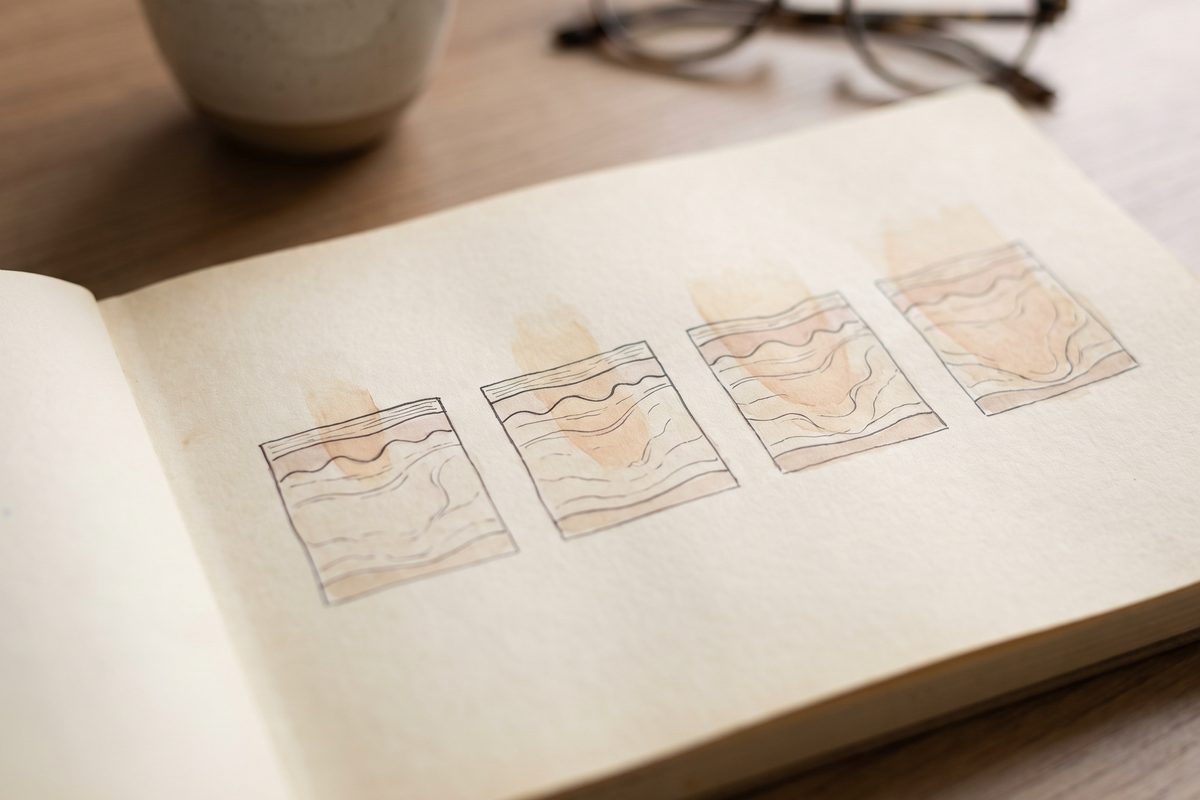
Four classes, four different things being heated
The marketing puts these devices on one shelf, labelled lifting. The physics does not. Each class delivers energy to a different depth, in a different pattern, and asks the tissue to respond in a different way. Once that is clear, the question of which one lifts what mostly answers itself.
Micro-focused ultrasound with visualisation (MFU-V) is the class Ultherapy belongs to. It focuses ultrasound to a point, so that tiny zones of tissue at a fixed depth are heated to the point of coagulation while the skin above stays cool. The depths available reach the superficial musculo-aponeurotic layer, the SMAS, which is the layer a surgeon tightens in a facelift. The visualisation part matters: the operator sees the layer on a screen before firing into it.
Non-visualised HIFU is the same physics without the imaging. High-intensity focused ultrasound devices of many makes deliver focused heat at set depths; the operator relies on the handpiece depth setting rather than seeing the layer. Because there are many devices, the published reviews pool them, which is why their numbers should be read as evidence about the class and not about any one machine.
Monopolar radiofrequency is the class XERF belongs to. Instead of a point, it heats a volume: an electrical field passes through the dermis and the layer beneath, resistance turns it into heat, and the surface is cooled so that the heat concentrates below it. Newer devices in the class use more than one frequency and monitor tissue impedance as they treat; a 2025 computational and porcine study of a dual-frequency approach (6.78 and 2 MHz) found that the two frequencies heated tissue at different depths and, in that animal model, remodelled collagen without killing fat cells. A pig is not a patient, and that study belongs to the manufacturer's development programme, but it is a fair description of what the class is trying to do.
Radiofrequency microneedling heats from the inside. Insulated or non-insulated needles enter the skin to a set depth and release radiofrequency at their tips, so the injury is columns of heat in the dermis rather than a field passing through it. That makes it a remodelling tool: texture, scars, pores, fine lines. Some tightening follows, but lifting was never the primary design.
The comparison, in one table
| Device class | What it heats, and how deep | Evidence in one line | Suits | Does not suit | Comfort and downtime | Regulation in Malaysia |
|---|---|---|---|---|---|---|
| Micro-focused ultrasound with visualisation (Ultherapy) | Points of coagulation at set depths, down to the SMAS; skin surface spared | Rater-blinded studies show a modest brow lift in most treated patients and lower-face improvement in a little over half; two small trials found it comparable with monopolar RF | Early to moderate laxity of the brow, lower face and neck; a patient who wants one deeper session | Volume loss; advanced laxity; heavy lower faces (higher BMI did worse in one study) | Procedural pain rated moderate to high without numbing; little downtime | HIFU devices for tightening are named in the Medical Device (Designated Medical Device) Order 2026; operator permit required |
| Non-visualised HIFU (many devices) | Focused points at set depths, chosen by handpiece rather than seen | A 2025 review of 45 studies (2010 to 2024) reports laxity improvements of roughly 18 to 30 percent and under 5 percent transient side effects, with poorly standardised protocols across devices | Similar indications to MFU-V, in principle | The same exclusions; and read any claim about a specific machine against the pooled evidence | Varies by device and settings | Named in the same Order; operator permit required |
| Monopolar radiofrequency (XERF) | A volume of the dermis and the layer beneath, surface cooled | A 2022 systematic review of 121 articles found improved laxity and elasticity, mostly by subjective ratings, with one serious adverse event; two randomised trials of 20 patients found the class comparable with MFU-V for face and neck laxity, with less procedural pain | Early to moderate laxity of the face, jawline and neck; a patient who prefers comfort and gradual change over two sessions | Volume loss; advanced laxity; the usual radiofrequency cautions (certain implanted electronic devices) | Comfortable for most without numbing; flushing for a short while | Radiofrequency devices are not named in the Order 2026; the device must still be MDA-registered |
| Radiofrequency microneedling | Columns of heat in the dermis via needle tips, at set depths | Its evidence is mainly for acne scarring and texture (a 2025 review of 16 studies found it likely effective as a single therapy); tightening is secondary | Texture, scars, pores, fine lines; mild laxity as a side benefit | A face that needs lift rather than resurfacing | Numbing usual; a few days of redness; small risk of pigment change in darker skin | Not named in the Order 2026; the device must be MDA-registered |
What the studies actually say
For micro-focused ultrasound the founding paper is a rater-blinded prospective study of 35 patients published in 2010: three masked clinicians judged 30 of them to have a clinically significant brow lift at 90 days, and the measured mean rise in eyebrow height was 1.7 mm. A larger lower-face study of 93 evaluated patients in 2014 found blinded reviewers saw improvement in 58 percent, less in patients with a body mass index over 30, and recorded procedural pain scores of about six out of ten. So the well-documented effect is real, modest, and not universal.
For monopolar radiofrequency the class evidence is broader and softer. A 2022 systematic review of 121 articles found improved laxity, elasticity and global appearance, largely by subjective ratings, with histology consistent with new collagen and elastin, and one serious adverse event (a neck fistula) across the whole set. The two direct comparisons with micro-focused ultrasound are small: a randomised evaluator-blinded trial of 20 necks in 2017 and a split-face randomised trial of 20 faces in 2019, both finding no statistically significant difference between the classes at six months, and only the 2017 neck trial noting more procedural pain with the ultrasound. Twenty patients cannot prove two treatments equal; they can only fail to find a difference. That is the honest reading.
For HIFU as a wider family, a 2025 systematic review of 45 clinical trials and cohorts published between 2010 and 2024 reported laxity improvements of roughly 18 to 30 percent in the lower face, neck and around the eyes, and under 5 percent of patients with transient redness, swelling or discomfort. Its authors flagged the absence of standard protocols across devices and the need for longer follow-up. Because the review pools many machines, it says something about the class and nothing decisive about any one of them.
For radiofrequency microneedling, a 2025 systematic review of 16 studies and 481 patients concluded it is likely effective as a single therapy for acne scarring, comparable with other options, and asked for more randomised trials. A 2023 review of 35 studies of radiofrequency and radiofrequency microneedling in skin of colour found transient post-inflammatory hyperpigmentation in seven studies, one case of prolonged pigmentation and one of permanent scarring, and judged the overall risk low but noted that most of the studies were not of strong quality.
For XERF specifically, as of September 2026 there are two small uncontrolled clinical studies, both published in 2026: one of 39 people at four sites in the United States, and one of 16 women at a single clinic. Neither had a control group, the maker was involved in both, and in both the energy was set to what each patient could tolerate, so both are preliminary. Alongside them there is the 2025 computational and porcine study of its dual-frequency approach and a short 2024 histology report by the manufacturer's clinical team. I set that out in full, with the caveats it deserves, in a separate evidence review. It is why the row for XERF above rests on the class evidence rather than on device evidence.
Depth or field: how deep does each kind of heating actually reach?
The four classes above reduce to two ways of putting heat into skin, and the difference between them is the shape of the heat rather than its strength. One kind places heat at points, which is what the focused ultrasound devices do, visualised or not. The other pushes heat through a volume, which is what monopolar radiofrequency does, with the needle devices a variation on it. Much of what a patient wants to know about which suits their face follows from that, and the rest is settled at assessment.
Focused ultrasound places points. The beams converge below the surface, and at the focus the tissue reaches the temperature at which collagen denatures and the repair response starts. What is left behind is a set of small discrete coagulation zones at a chosen depth, with the tissue immediately around each one untouched. The transducers in common use place those zones at 1.5 mm, 3 mm and 4.5 mm, and at 4.5 mm the zone sits in the fibromuscular layer, the SMAS, the layer a surgeon addresses. Where the device carries imaging, the operator sees those layers before the line is placed, which is why the visualised version rewards someone who knows what they are looking at. What that depth can and cannot change on a given face is set out in what Ultherapy lifts.
Monopolar radiofrequency heats a field. Current passes from the handpiece through the tissue to a return electrode, and the resistance of the tissue itself turns that current into heat across the whole volume it crosses: the dermis, the subcutaneous layer beneath it, and the fibrous septa running through it. There are no points to count. The shape of the heated field is set by the tip, the frequency, and the impedance of the skin in front of it, which is why the class does not reduce to a single depth number. XERF is built to deliver two frequencies in sequence, which its maker specifies as 6.78 MHz followed by 2 MHz within a single pulse, so the delivery is designed to reach more than one depth in a pass, with integrated cooling holding the surface down while the depth comes up. It reads the tissue as it treats and adjusts to it, which is real-time impedance feedback and nothing more exotic than that.
Neither paragraph quotes a temperature figure, and that is deliberate. The focal temperature of an ultrasound coagulation zone is a defined property of the mechanism, and the studies that report it are the place to read it. The temperature of a radiofrequency field varies with the tip, the frequency and the tissue it meets, and published target figures for the class do not agree with one another. A number on this page would look more precise and mean less.
This is also where the word lifting starts to strain. Neither kind of heating repositions tissue and neither removes skin. Both change the mechanics of tissue that is already there, and the lift the studies above measure, modest and real, follows from that change rather than from anything being moved. The category has used one word for two different jobs for a long time, and a reader who has been shown both under the same heading has simply met that habit.
The calendar, since both are sold as though they were quick. Both are collagen treatments, so both are slow by design. Radiofrequency has a small immediate component, because heat shortens existing collagen fibres on the day, and the meaningful change is the new collagen laid down over the following two to three months, with improvement continuing through to around six months. Focused ultrasound is more back-loaded: the coagulation zones contract at once, the visible change comes from remodelling over the following two to three months, and the published clinical assessments in that class are made at 90 days and again at 180 days, with change still accumulating between the two readings. Read that as a calendar. If a date matters to you, neither of these is the tool for it. Where energy sits among the slower routes to collagen is mapped in the three roads to collagen.
One group is missing from both columns and it is a large one. A face that reads tired rather than slack is a different diagnosis, and tightening it produces a tighter tired face. The exclusions that follow from the evidence itself, volume loss and advanced laxity, are set out in the section below, and both kinds of heating are deferred where the skin is not ready, each carrying its own standing cautions, which the assessment covers.
Which lifts what: the practical reading
The brow: micro-focused ultrasound has the specific, blinded evidence, and it is where I would start the conversation for a heavy or low brow that is not yet a surgical one.
The jawline, lower face and neck in early laxity: ultrasound and monopolar radiofrequency both have evidence, and the two small trials that compared them found no significant difference. Which suits you tends to be decided by where the laxity sits (a deep support that has slipped, or skin that has loosened over a support that still holds), how you weigh comfort against one deeper session, and how much time you will give a gradual result. That is an assessment finding, not a preference to be ordered from a menu.
Texture, pores, acne scarring: radiofrequency microneedling, and it is not close. If a clinic proposes it as a lifting treatment, ask what the evidence for the lift is; the answer will be thin.
Volume loss, a hollow midface, a deflated cheek: none of the four. Heating a face that needs filling tends to sharpen the look of depletion. That is a structure conversation, and it is covered in where radiofrequency fits among the roads to collagen.
Advanced laxity with real excess skin: none of the four. The studies above are studies of mild to moderate laxity. A clinic that says surgery plainly, before it treats, is protecting you from an expensive underwhelm.
The classes also combine, and the ordering matters when they do: reduce a fat pocket, lift the deep support, tighten the skin, in that sequence, as one plan rather than three sales. Who XERF is for, and who it isn't walks through how that decision is made for the radiofrequency branch. A broader class comparison that adds threads to the picture is in the lifting comparison guide.
How to read any comparison, including this one
Three habits keep a comparison honest. First, notice the size of the study and the length of follow-up; twenty patients for six months is a signal, not a settled answer. Second, notice who did the measuring: blinded raters looking at standardised photographs are worth more than patient satisfaction scores, and both are worth more than a manufacturer's claim. Third, notice who wrote it. Device studies are often authored or funded by the company that makes the device, which does not make them wrong, but does make independent replication the thing to wait for.
Then ask the practical questions that no comparison can answer for you. Is the device registered with the Medical Device Authority, which you can check yourself on the public register. If it is a laser or a HIFU device, does the operator hold the designated medical device permit the law now requires. And is the doctor who assessed you the person who will treat you. How to check an aesthetic doctor in Malaysia covers the registers, and the Medical Device Order 2026 explainer covers the permit.
This article compares device classes for general information. It is not a recommendation for any treatment; whether any of these suits you is decided at an assessment, in person.