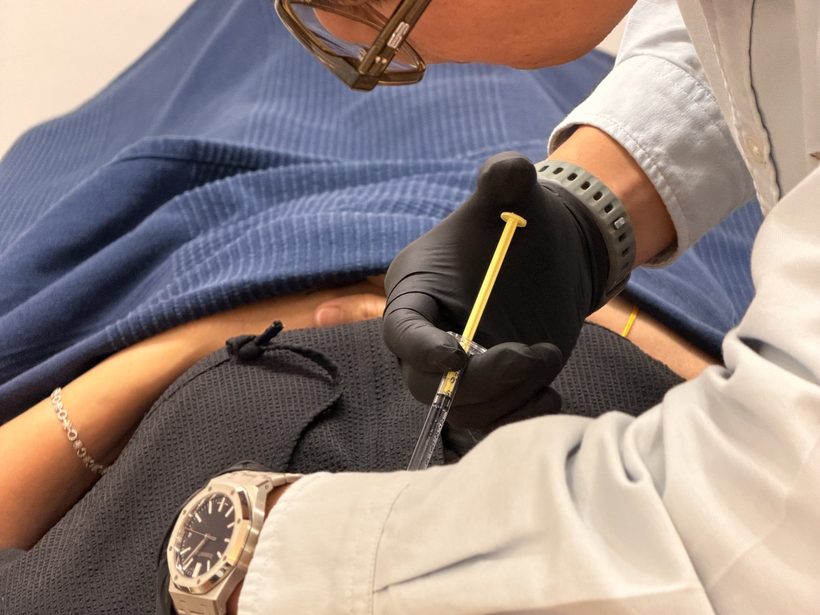
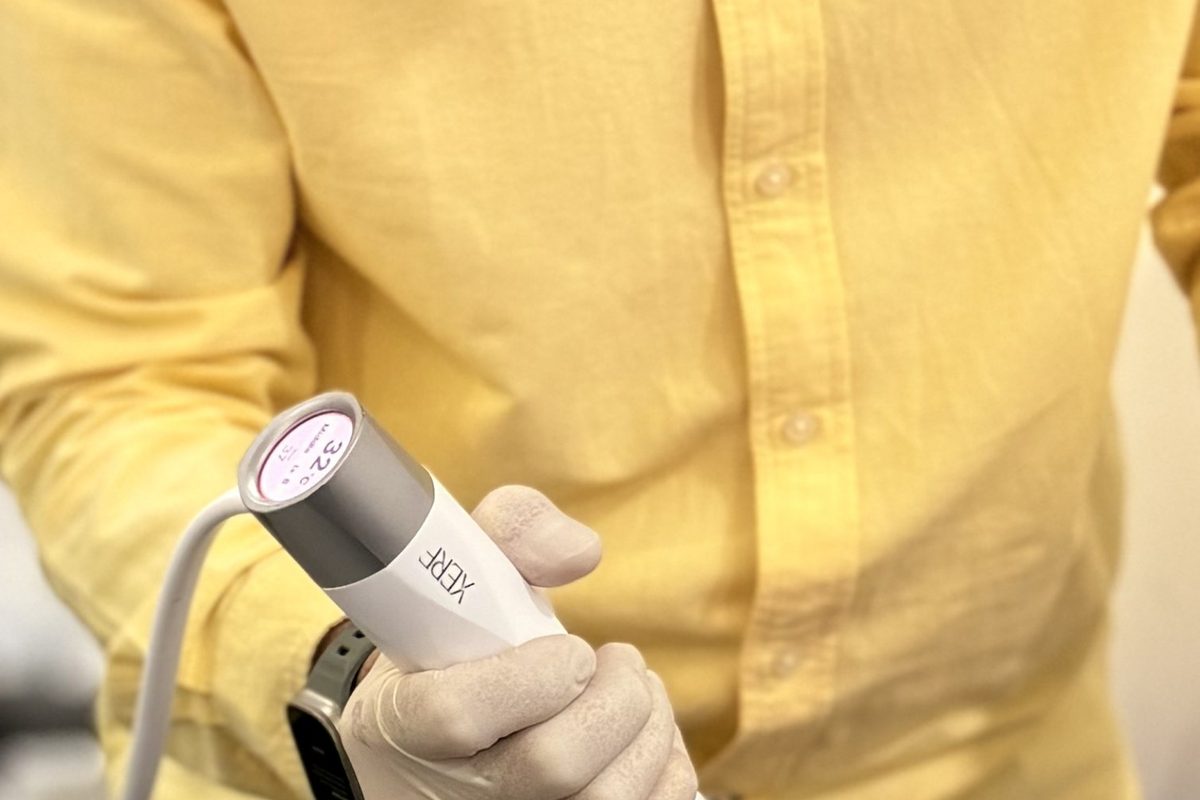
The same machine, two very different outcomes
A patient comes in wanting a tighter jawline. Another comes in wanting to look less tired. Both have heard that XERF tightens. Both are right that it does. But only one of them has a problem that tightening will actually solve.
The first has early laxity, skin that has loosened but not descended heavily, a profile that will respond well to collagen remodelling. The second has volume loss, a hollow midface that makes the lower face look heavy by comparison. Tightening that face will not restore the fullness that was lost. The device is not wrong. The match is.
This is the work no brochure does. Telling the difference between the two is the actual clinical task, and it happens before the treatment, not during it.
Who XERF suits, stated plainly
Early-to-moderate laxity of the face, lower face, jawline, submental area and neck. Skin that has loosened but where the tissue has not descended so far that energy-based remodelling cannot reach it meaningfully. Someone whose goal is firmer, tighter skin, not restored volume. Someone who understands that collagen rebuilds over months, not days, and that the result will be gradual rather than sudden.
Integrated cooling makes the treatment tolerable for most patients, usually without numbing. The handpiece shows the tip's surface temperature with every shot and cuts out if it passes 43 degrees Celsius, which manages heat at the contact point while RF energy works at depth. Most people find it tolerable; some find it genuinely easy. The honest answer is that individual experience varies, and comfort is not a thing we guarantee.
Maintenance is typically every six to twelve months. The mechanism, delivering radiofrequency energy to stimulate collagen and elastin remodelling at targeted tissue depths, has histological support. Durability figures for this specific device are not yet established at scale, and we say so. What we offer is the mechanism, the protocol, and the clinical judgment to match it to the right face.
Who it does not suit, and why this matters more than who it does
If the primary concern is volume loss, the honest conversation is about restoration, not tightening. A hollow midface or deflated cheek needs a different tool entirely. Tightening something that needs filling will not resolve the concern, and may highlight it.
If laxity is advanced, the truthful answer may be surgical. There is a degree of tissue descent that an energy-based device cannot meaningfully address, and reaching that conclusion in a consultation rather than after a treatment is the point. We will say so, clearly, before anything is booked.
If the expectation is an overnight result, that is not a failure of the device. It is a mismatch of expectation to mechanism. RF builds collagen over weeks and months. The result that forms at three months is often more than the result visible at three weeks. Someone expecting a dramatic immediate change will not have a good experience with XERF, regardless of whether their laxity profile would otherwise suit it.
These are not small print. They are the candidacy criteria, and they carry as much weight as the criteria for who does suit the treatment.
The decision as a path
The way I think about it in a consultation: the concern is assessed first, and the concern decides the branch.
Early-to-moderate laxity, with realistic expectations and a goal of tightening? RF is a road worth considering, and XERF is the device I use for it. Volume loss as the primary driver? The conversation moves to fillers or biostimulators, not RF. Advanced laxity beyond what energy-based treatment can address? We discuss what surgery can do that devices cannot, and what that means practically. An expectation of an overnight result? We talk about timeline before anything else, because the expectation itself is the obstacle.
The face decides the branch. Not the machine. Not the patient's preference for a particular treatment they have read about. The clinical picture, assessed properly, decides.
The XERF treatment page covers the mechanism and the protocol in detail. This piece is about the prior question: whether the mechanism is the right one for your face.
Where the judgment comes from
I was the first Malaysian doctor to be treated with XERF (Hong Kong, February 2026), and I had my hands on the machine overseas, before its Malaysian launch. I say that once, not as a credential to display, but because it reflects a standard: I do not offer a machine I have not been under and held.
The experience that comes from being on both sides of a device, knowing how it feels from the patient's perspective and how it behaves in the hand, is what makes candidacy judgment honest rather than theoretical. I know what a good response looks like, what an underwhelming one looks like, and what it feels like to be in the chair during the session. That is the basis of the assessment I offer.
It also means I have a clear sense of where the device is genuinely strong and where other tools in the clinic do a better job. XERF sits alongside Ultherapy on the menu because they work at different depths and suit different faces. The decision between them, or the decision that neither is right, is one I can make with some confidence, because I have used both.
The honest close
An assessment is not an advertisement for a treatment. Its job is to match the concern to the right tool, and sometimes the honest outcome of that assessment is that XERF is not your answer.
That answer is the diagnosis working. It protects you from a treatment that cannot reach your concern, from a result that will fall short of what you expected, and from the particular disappointment of spending time and money on the wrong thing.
The machine is excellent. For the right face. The work is telling you whether yours is one, and that work happens in the consulting room, not on a brochure.