
What is an Ultherapy fee actually made of?
Four things. The first is the dose: Ultherapy delivers energy in lines, and the fee follows how many lines are placed and over which areas, such as the brow, the lower face or the neck. The second is the consumable, a single-use transducer. The third is the device itself, which should be genuine and registered. The fourth is the doctor: the assessment beforehand, the treatment, and the follow-up.
This follows the logic in the clinic's guide to why aesthetic fees vary, which says a fee is only readable next to its dose. The same guide explains why this clinic does not quote a number before the doctor has seen you.
Why do the lines and the area move the fee?
A line is one pass of focused ultrasound, placed at a chosen depth under the skin. A small brow area asks for fewer lines than the lower face and neck together. One consensus review found 800 to 1,200 lines optimal for a full-face and neck treatment, and also said the number should be customised to the person: face size, laxity, fat distribution, skin quality and what the ultrasound image shows.
So a quote that says only "Ultherapy, full face" leaves out the part that sets the cost. Ask how many lines are planned and where. A person with early laxity along the jawline and a person who needs the whole face and neck are not buying the same amount of treatment, even though both are told it is Ultherapy. The treatment page sets out who it suits.
What does the single-use transducer add?
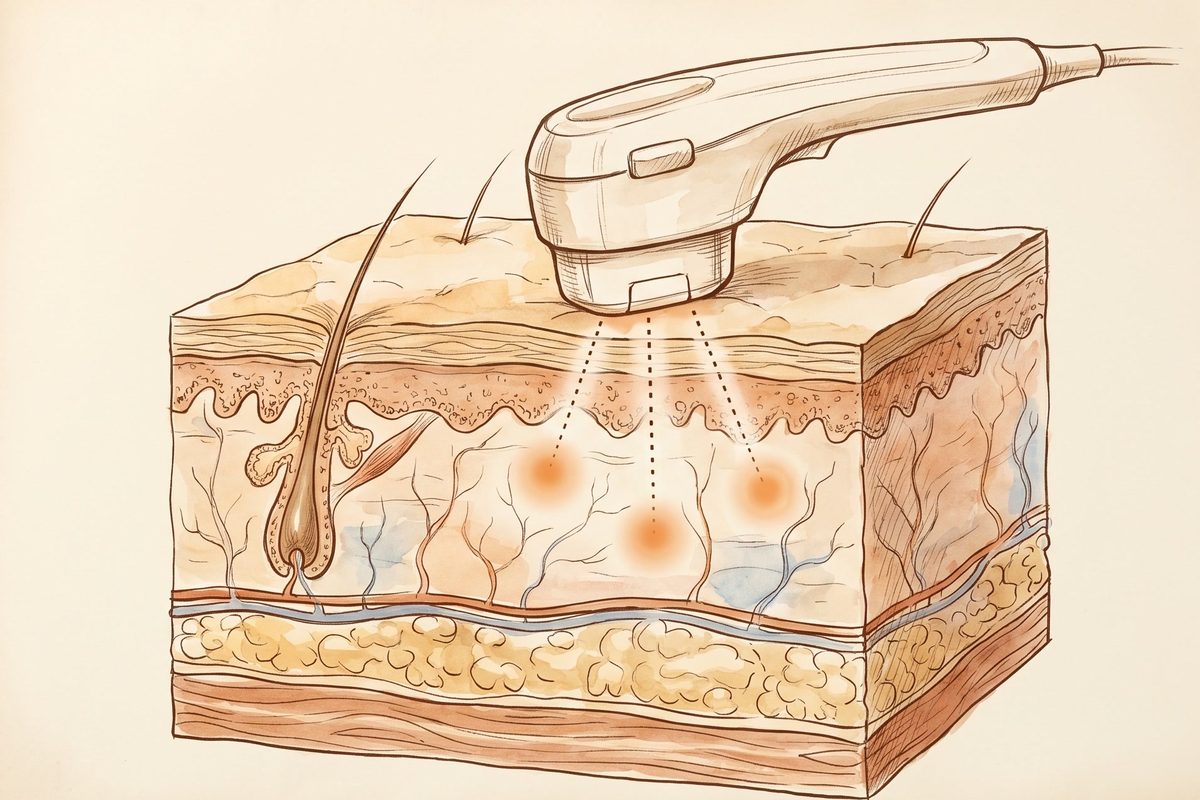
The transducer is the part that touches the skin and focuses the ultrasound. The manufacturer states that each one is designed to deliver a fixed number of lines and cannot be recharged or refurbished once it is used up. It is a consumable, and it is part of what you pay for.
That matters because a transducer can be faked or reused. The manufacturer says each genuine one carries a serial number and a QR code traceable to the clinic that bought it. A price that sits far below what the lines and the consumable would suggest is a reason to ask how the transducer was sourced, and it is not proof of anything wrong by itself.
Why does a genuine, registered device matter to the fee?
A clinic that buys a genuine system through the authorised channel carries the cost of that purchase and of servicing it. The device should also appear on Malaysia's Medical Device Register, which anyone can search at mdar.mda.gov.my. Ask for the registration number rather than relying on the brand name.
In June 2026 The Star reported that a May raid by the Domestic Trade and Cost of Living Ministry had seized a counterfeit Ultherapy Prime unit and 25 counterfeit transducers. The report did not name the clinic, and none is named here. The manufacturer's advice to patients was to seek providers who can present a valid Certificate of Authenticity. That is a fair thing to request at any clinic, including this one.
Is a low price for "HIFU" the same treatment?
HIFU is a category, and Ultherapy is one device within it. Two quotes that both say HIFU can describe machines that differ in construction, in whether they image the tissue, and in where their parts come from. The comparison of XERF, Ultherapy, HIFU and microneedle RF shows how the tools differ in what they reach.
A low price does not prove a shortcut, and a high one does not prove care. What helps is checking the register, the transducer and who holds the handpiece, which a separate piece on low-priced HIFU walks through. A separate piece sets out why price alone misleads, including why a fee quoted before an assessment is a guess.
What does the doctor's part cover?
The doctor decides whether Ultherapy is the right tool at all. Laxity from descent responds differently from a face that has lost volume, and some people are better served by another road or by none. That assessment, the treatment itself and the follow-up where one is planned are the doctor's time, and at this clinic it is part of the fee rather than a separate line.
Two practical points sit beside it. What Ultherapy feels like varies, and settings can be adjusted during the session. And since the lift develops over months and is described as lasting up to a year, when a repeat makes sense belongs in the cost conversation from the start.
What to ask before you pay
Ask for the area and the approximate lines. Ask which device it is, and for its registration number. Ask whether the transducer is genuine and whether a Certificate of Authenticity can be shown. Ask who performs the treatment and what follow-up the fee includes. Ask what happens if the assessment finds Ultherapy is not the right choice.
A clinic that answers these plainly has told you more than its price list could.
The honest complication
None of this tells you what a fair fee is, and this page does not try to. A fee can be high for sound reasons or for none, and low for the same. The only reliable comparison is between quotes that state the same area, lines and device. If they do not, you are comparing two different products with one name.

