
The price is not the signal
Aesthetic medicine in Malaysia has a pricing problem, but it is not the one most patients think. The conversation tends to start with: that price seems low, is something wrong? The more useful question is the one that rarely gets asked before booking: what, exactly, is being delivered?
Trial pricing for HIFU is unremarkable. Clinics introduce device categories with promotional rates, run limited-time offers, and price competitively to build a patient base for a newer service. A lower number in an advertisement tells you the clinic wants bookings. It does not tell you what device they are using, whether it is genuine, or who will be operating it. Those three questions are the ones worth investigating, and each of them has a checkable answer.
Check 1: is the device on Malaysia's Medical Device Register?
The Medical Device Authority maintains a public register of approved devices at mdar.mda.gov.my. Searching it takes a few minutes. A HIFU device used clinically in Malaysia should appear there. If the device a clinic names in its marketing does not appear on the register, that is a direct question to raise with them before you proceed.
The register matters because it is the mechanism by which a device's safety and performance data has been reviewed for the Malaysian market. A device outside the register has not cleared that process. This is not a technicality. The Medical Device (Designated Medical Device) Order 2026, P.U.(A) 10, which came into force in June 2026, formally designated HIFU among the device categories subject to heightened regulatory attention. The register is publicly searchable precisely so patients can check. Use it.
At this clinic, devices are purchased through authorised distributors licensed by the Medical Device Authority. That is not a guarantee that belongs to every clinic offering the same treatment name.
Check 2: is the transducer genuine?
This is the check most patients have never considered, because the problem it addresses is not visible at the point of booking.
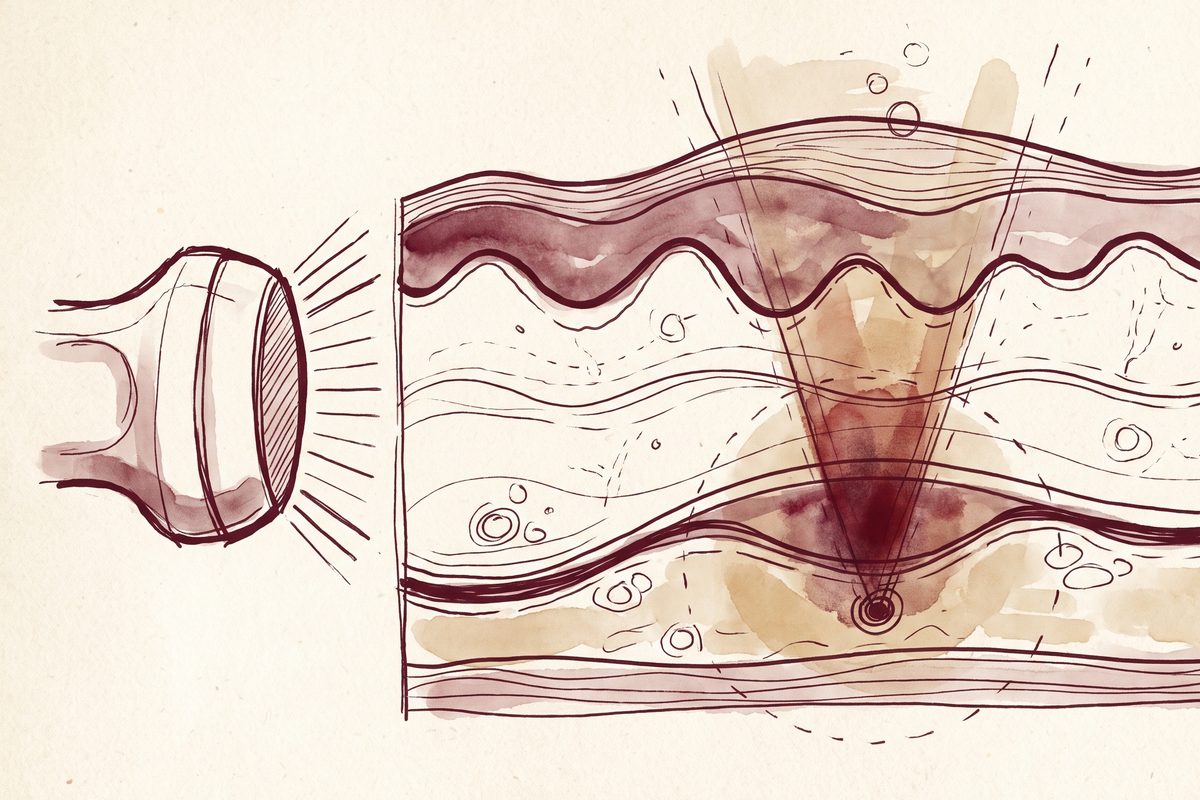
HIFU devices work through transducers: interchangeable heads calibrated to deliver focused ultrasound energy at specific tissue depths. A 1.5mm transducer targets a different layer than a 3.0mm or 4.5mm transducer, and the clinical result depends on delivering the right energy to the right depth. A counterfeit transducer may look identical to a genuine one. It is not calibrated to the same standard and has not passed the same safety testing. The patient on the treatment bed has no way of knowing the difference.
In May 2026, enforcement officers from the Domestic Trade and Cost of Living Ministry raided an aesthetic clinic in Malaysia. They seized a counterfeit Ultherapy Prime unit and 25 counterfeit transducers. The manufacturer, Merz Aesthetics, had received a patient report the previous year indicating that the clinic had not acquired its device through Ulthera Inc or its authorised Malaysian distributor. The investigation and subsequent raid followed. No clinic or individual is named here. The point is the mechanism: a patient had a treatment, something felt wrong, and the question of what device was actually used only became answerable after the fact.
Asking a clinic directly whether their device and transducers were sourced through the manufacturer's authorised distributor is a reasonable question. A clinic confident in its supply chain will answer it. This is a question I encourage patients to ask us as well. Our devices are purchased through MDA-licensed authorised distributors, and I am comfortable being asked to confirm that.
For a fuller explanation of what a shared device name can conceal, this article covers the transducer problem in more detail.
Check 3: who is holding the handpiece, and what are their qualifications?
HIFU delivers focused ultrasound energy to tissue layers beneath the skin surface. The energy is precise by design, and a targeting error, placing the focal point at the wrong depth or over the wrong anatomy, has real consequences. This is not a treatment that is equivalent regardless of who performs it.
The question to ask is not whether a doctor is affiliated with the clinic. It is who performs the procedure, what their qualifications are, and, if the procedure is performed by a non-physician, what the supervision arrangement looks like. These are different questions with different answers, and they are worth asking plainly before you book.
At this clinic, Ultherapy is performed by Dr Ong. That is a factual description of who holds the handpiece, not a marketing claim. If you want to verify the credentials of any doctor before a procedure, the guide to checking an aesthetic doctor in Malaysia walks through exactly how to do that using the Malaysian Medical Council's public register.
What the price actually tells you
Between two clinics where the device is registered, the transducer is genuine, and a qualified doctor is performing the treatment, a lower fee can carry almost no information about the quality of what you will receive. The price collapses as a signal once the three checks above are satisfied. That dynamic is explored in more detail here, and it is worth understanding before you make a decision based primarily on cost.
The three checks are also not difficult. The device register is publicly searchable. The distributor question takes one direct conversation. The doctor's name and credentials are verifiable through a public registry. None of this requires specialist knowledge. It requires deciding that the answer matters before you book rather than after.
A note on who HIFU does not suit
No article on how to evaluate a HIFU offer should end without this. HIFU is not the right treatment for everyone, and a clinic that skips a proper assessment in favour of a quick booking is a more reliable warning sign than any price point.
HIFU is generally not appropriate during pregnancy, over active skin infections or open wounds, in treatment zones directly over metal implants, or for patients with certain neurological conditions. There are other individual factors that matter, including skin laxity severity, tissue depth, and what the patient is actually trying to address. These are assessment decisions, and they belong in a consultation, not in an advertisement. A low price combined with no assessment is the combination worth being cautious about.