
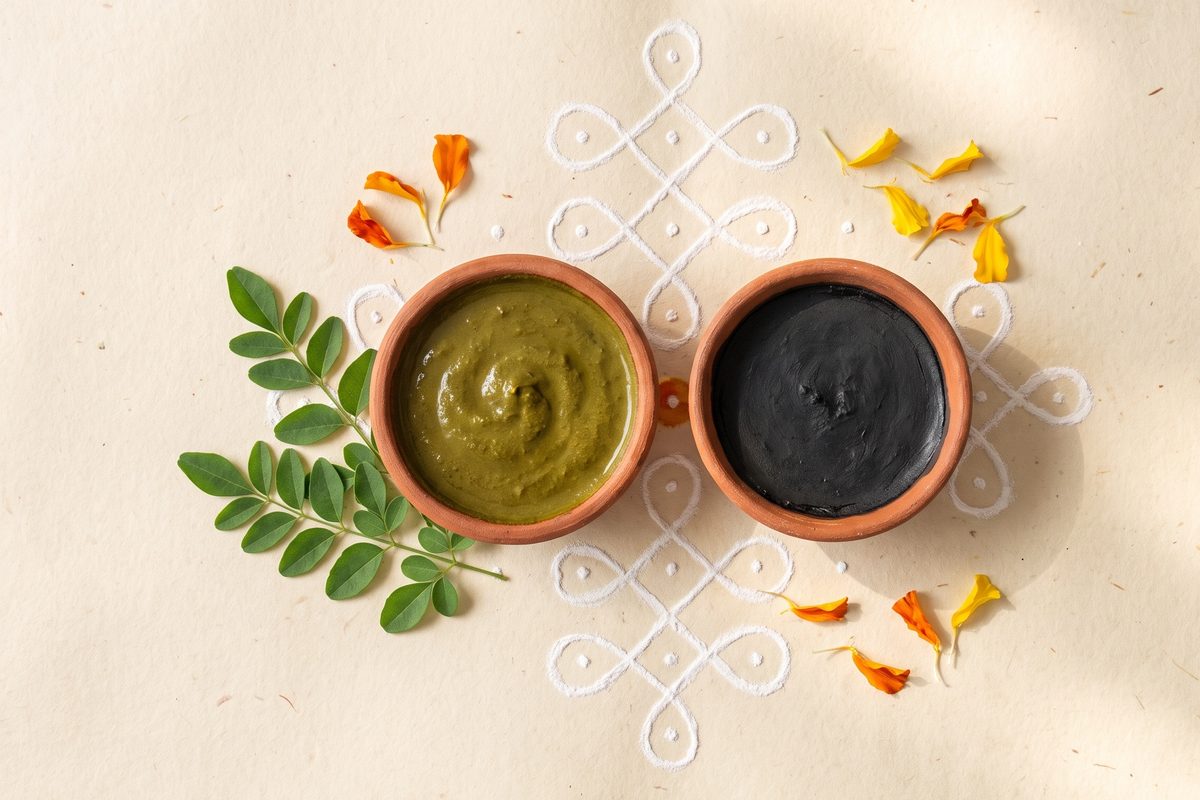
What is the difference between real henna and black henna?
Real henna, or inai, is a paste made from the leaves of the henna plant. It is part of weddings and festivals such as Deepavali, and it is a lovely practice. The medical reports describe natural henna as causing very few allergic reactions.
Black henna is a different product. It is usually henna with para-phenylenediamine (PPD) added, a chemical used in hair dye. A review of henna tattoos explains why sellers add it: it shortens the time the paste needs on the skin and intensifies the colour. The problem sits in the additive.
How can you tell real henna from black henna?
Start with the colour and the time. A review of henna tattoos describes natural henna as taking several hours to be absorbed into the skin and leaving a brownish-orange stain. A paste that is sold as ready in minutes and goes black is behaving like a paste with something added.
The words on the stall are the second clue. Black or fast on the label or the sign should make you stop and ask. The third is the simplest: ask what is in it. A good henna artist can tell you the ingredients and how the paste was made. If no one can say, skip it.
None of these is a laboratory test. Colour and speed raise suspicion and do not prove what is in a cone of paste, so the honest rule is to ask first and walk away if the answer is unclear.
Why does PPD matter?
PPD is a powerful contact allergen. The review of temporary henna tattoos links it to most of the complications reported after black henna: a rash at the design that can spread beyond it, thickened or keloid scars, and skin that ends up lighter or darker than before. Hives, swelling of the face and anaphylaxis are reported more rarely, and some of those have been serious.
A reaction to the design is not always the end of it. A review of PPD allergy notes that a person can be sensitised by a temporary henna tattoo, and that cross-sensitisation to other hair dye components can follow. A second review reports that PPD contact allergy is becoming more common, particularly in younger people. If the mark left behind turns dark, the same pigment behaviour is explained in why marks after inflammation linger on Malaysian skin.
What does Malaysia allow?
PPD has a place in the rules, and that place is hair dye. Under the ASEAN Cosmetic Directive, Annex III lists PPD and its salts as a hair dye substance in oxidative hair dye products only, up to 2% after mixing, and prohibits using it to dye eyelashes and eyebrows. The listing has no allowance for skin. The required label wording on those hair dyes says that temporary black henna tattoos may increase the risk of allergy, and that the product is not for anyone under 16.
That is why the same chemical sits inside a box of hair colour with a warning on it, and in an unlabelled cone of paste with none.
Is black henna safe for children?
The reports advise against it. A case report describes an 11-year-old boy with eczema and hay fever who developed severe dermatitis at a black henna design on his arm, and was left with a lighter patch of skin afterwards. A second report describes a girl with a red rash after a black henna tattoo, whose patch tests were positive to PPD. These are single cases, and no rate can be taken from them. The authors of the first suggest that henna tattoos in children be discouraged.
For a child at Deepavali, a small design in real henna from a maker who can tell you what is in it is a different matter from a black one.
What should you do if it itches or blisters?
Wash the paste or design off with soap and water and stop. Do not put black henna on again, and do not scratch or pick at blisters. See a doctor, because a reaction that starts as itch can turn into blisters, weeping and a scar. Itching has other causes too, and itchy skin and when to see a doctor covers those.
Go to an emergency department if the face or lips swell, if breathing is hard, or if the rash spreads fast over the body. Those are the rarer allergic reactions the review describes.
Once the skin has settled, a doctor can settle the cause with a patch test. Irritation and allergy look alike on the skin and differ in what they mean, and skin purging, irritation and allergy explains the difference and what a patch test is.
What about hair dye afterwards?
Tell your hairdresser. PPD is the common ingredient in oxidative hair dyes, and a reaction to a henna design can cross over to hair dye. The label wording the ASEAN directive requires says the same thing in plain language: do not colour your hair if you have had a reaction to a temporary black henna tattoo. Tell the hairdresser what happened and show them the label on the box.
The honest complication
Most of what is known comes from case reports and reviews, not from counts of how many people react. No one can say from a photograph whether a given reaction was PPD, and a patch test is the way to know. A paste sold as henna can contain other additives too. And a person can be sensitised by a single temporary tattoo, which is the reason to ask what is in the paste before it goes on.

