
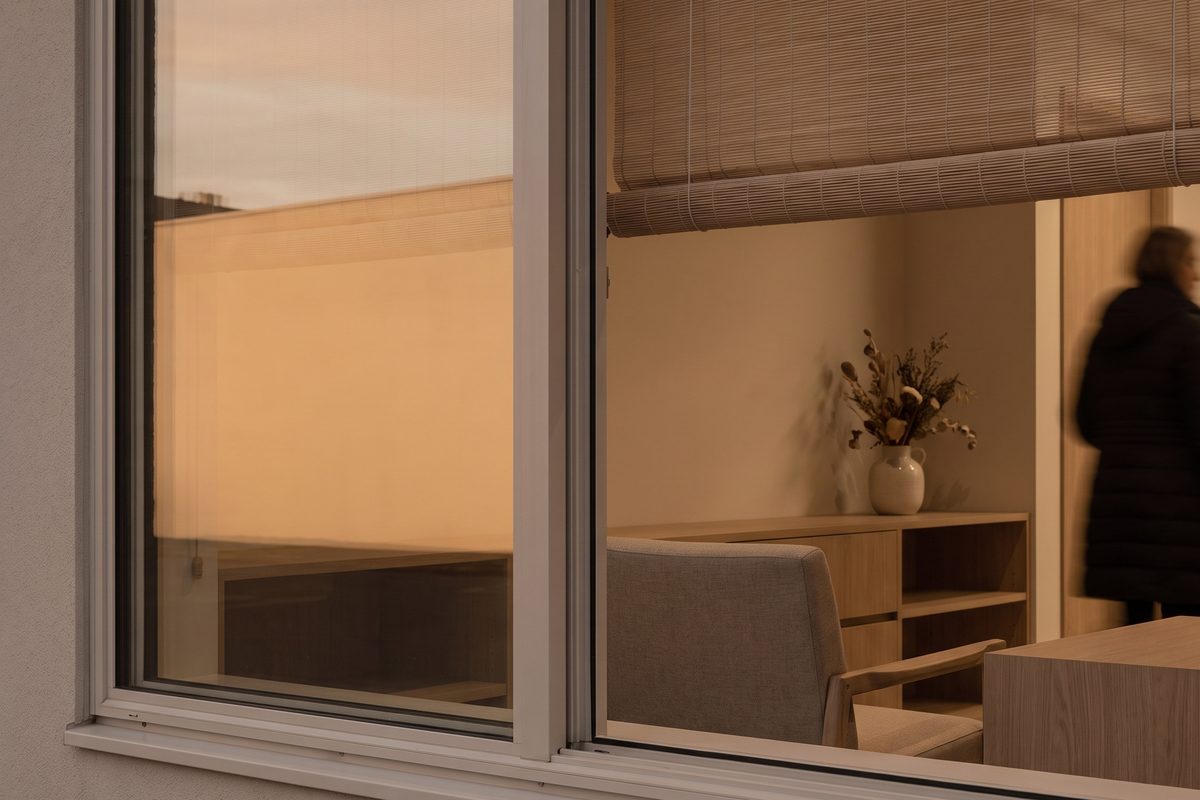
The sky turns colour before anyone tests the air
Some years the haze settles over the Klang Valley long enough that the light through the clinic window goes flat and amber for a week. Patients ask about it before I do.
The honest first answer sits in a document nobody reads for skin advice. The Department of Occupational Safety and Health's guideline for employers during haze lists the symptoms staff should be sent to a doctor for: throat itchiness and coughing, irritated and watery eyes, a running nose, difficulty breathing, and itchy skin. Itchy skin is on that list because a Malaysian government safety document put it there. That is the firmest local anchor in this whole piece.
Red, irritated eyes during a bad haze week are a different question, and when the eyes belong to a child it is not one a skin consultation can assess, or mine to answer. Dr Chan Li Yen, a paediatric ophthalmologist, sets out what red, irritated eyes in children during haze usually mean, and the signs that need a same-week look, and that is the better place to start. For an adult's itchy, swollen or watery lids on haze days, Dr Catherine Chow, a consultant oculoplastic surgeon, sets out how haze irritation is told apart from dry eye, lid margin disease and allergy, and the signs that mean an eye doctor rather than more waiting.
Two numbers that are not measuring the same thing
The number people watch during a bad week is the Air Pollutant Index, and the Department of Environment's own published method calculates it from six pollutants, among them PM10, particles of ten microns and below, and the finer PM2.5 that most international studies linking air pollution to skin change are built around. The API is not a concentration, though: it is a score taken from whichever pollutant is highest at the time. The two move together when the sky turns orange. They are not the same measurement, and a microgram figure borrowed from an overseas PM2.5 study should not be read straight onto a local API reading.
What the laboratory describes, and what it does not prove
The mechanism story is coherent. Particulate matter is described as generating reactive oxygen species faster than skin clears them, switching on a receptor called the aryl hydrocarbon receptor, and reducing several of the proteins that build the skin barrier. Most of that work is cell and animal research, and a mechanism is not a diagnosis in one person during one week.
The research on real people is more careful than the mechanism papers. A 2025 meta-analysis pooling roughly 3,465 people found pigmentary ageing rising by a factor of 1.11 for every ten microgram rise in PM2.5 per cubic metre, with a confidence interval running from 0.82 to 1.50, which includes no effect at all. The authors called their own result hypothesis generating. Pigmentation is already the most discussed recurring complaint here, and heat and hormones do more of that work across a year than any single haze week.
The review that declined to write a skincare routine
The largest synthesis, a 2026 review of 77 studies, landed in the same place from another angle. Certainty was mostly low to very low, moderate only for long-term links to psoriasis and urticaria, and gases such as nitrogen dioxide often showed stronger associations than the particulates everyone can see. That review offers no mitigation strategy and no skincare recommendation, and asks for better studies instead.
Smaller laboratory work does support ingredients such as topical vitamin C and niacinamide behaving sensibly against the biology above. That is a reasonable basis for keeping up ordinary barrier care through a haze week, the same care already worth doing between haze weeks. It is not the basis for a haze package. The habit that does most through any season is covered separately in what the SPF number leaves out on a tropical day.
What actually needs a doctor
Skin that stays itchy for days rather than settling, because that is the symptom a Malaysian government guideline already tells employers to act on, and it deserves the same seriousness outside a workplace. Anything to do with breathing is not decided in a skin consultation. That belongs with your own doctor, or the emergency department if it is severe.
Most skin during haze is what it looks like: a little dull, a little tight, answered by the care that was sensible before the sky changed colour. Some weeks the right answer is no treatment at all, and a haze week is often one of them.