
What does XERF do to the skin, and why does that cause side effects?
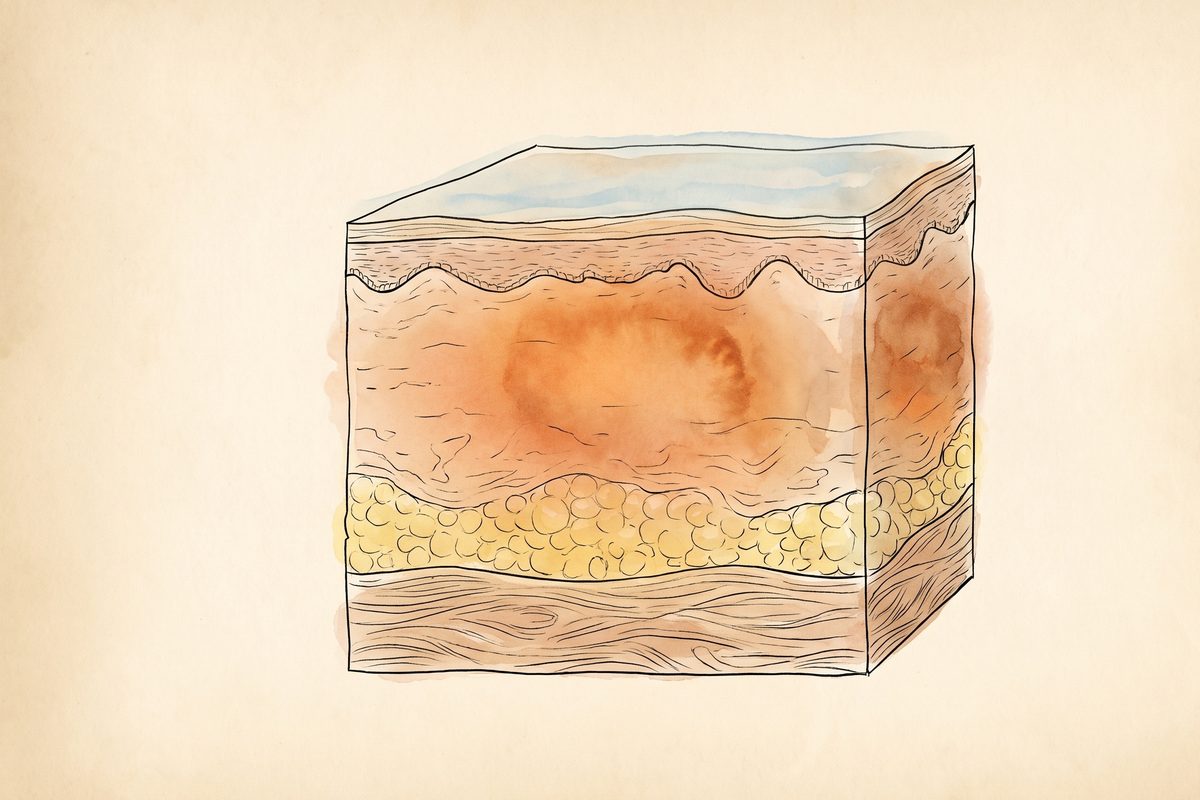
XERF is a monopolar radiofrequency device. An electrical field passes through the skin toward a return plate, and tissue resistance turns it into heat in the dermis and the layer beneath. Two frequencies, 6.78 and 2 MHz, are delivered together, the device reads the skin resistance pulse by pulse, and a burst of cooling holds the surface down. Details are on the XERF treatment page.
Heat that remodels collagen is also heat that reddens skin, tenderly warms it and, if misplaced, injures it. Every side effect below follows from that. I got my hands on the machine at a clinic that already had one, and I was the first Malaysian doctor to be treated with XERF, which is told in I got XERFed. That is a reason to write this plainly. It is not evidence about how often anything happens.
How much is actually known about XERF side effects?
Less than a brochure suggests. The one XERF-specific clinical report read for this article is a 2026 retrospective study in Lasers in Medical Science of 16 women after a single session, which found only mild and transient adverse events. Its authors call the findings preliminary, and the ethics application was submitted by the manufacturer. A 16-person retrospective review can miss a rare event by design.
Beyond that, a 2025 study modelled the two frequencies and treated pig skin. Everything else about safety comes from the wider class of monopolar radiofrequency, and this article labels it that way each time. The evidence review covers the whole file.
Why this matters for side effects in particular: a rare event needs a large number of treatments to show up at all. A handful of small studies can say that mild effects are usual. They cannot say that a rare one does not happen. The honest position is that mild effects are well described for the class, that rare ones are known to exist, and that nobody can put a number on them for this device yet. What would change that is an independent, registered trial with blinded assessment, a comparison arm and at least twelve months of follow-up, which is the bar set in the evidence review.
What are the common side effects, and how long do they last?
The standard protocol is two sessions a few weeks apart, so the pattern below is met twice, and it is worth asking how the first session went before the second is booked. Heat comes first. With the integrated cooling running, most people find the session comfortable without numbing, though it is not painless, and it varies from person to person. Then, on this clinic's published account, the common finding is redness and warmth that can last into the evening, with mild tenderness or slight swelling for some.
Class-level evidence agrees on the mildness. In a 2017 randomised trial of 20 necks and a 2019 split-face trial of 20 faces, adverse events with radiofrequency were mild and transient, and did not differ statistically from micro-focused ultrasound. Two trials of 20 people show mildness in small samples. They cannot give a rate, and no XERF-specific rate exists.
How it is reduced: the impedance feedback adjusts energy pulse by pulse, cooling protects the surface, and a candidacy check comes first, as in who XERF is for and who it is not. If it happens: gentle care and sun protection while it settles, as set out in redness after a treatment. Call if redness is not calmer each day.
Can XERF cause a blister or a burn?
Rarely. This clinic's published account describes redness that outlasts the day, a tender patch and, rarely, a small blister where energy has concentrated, and says these are covered before anything is switched on. No XERF-specific burn rate exists. Across 121 articles on radiofrequency for the face and neck, a 2022 systematic review recorded one serious event, a neck fistula, and otherwise called the class safe.
What cooling and contact do: cooling holds the skin surface at a protected temperature while the deeper tissue heats. Good, even contact between the tip and the skin spreads the current across the treated patch. If cooling stops, or contact is uneven, the surface is no longer protected and the energy can concentrate in one spot, which is how a blister forms. That reasoning matches the wording above, but it is a mechanism, not a measured cause.
Darker skin adds one more consideration. A 2023 review of 35 studies of radiofrequency and radiofrequency microneedling in skin types III to VI found transient pigment darkening in seven of them, mild prolonged darkening in one and permanent scarring in one. That is class-level, mixes in needle devices, and counts studies, not patients. This clinic does not offer radiofrequency microneedling, and the reasons are set out in why not.
If a blister or burn happens, it is treated as a wound and needs a doctor, not home remedies. Call the same day.
Can XERF take away fat you wanted to keep?
It is a reported concern with the monopolar radiofrequency class, not a measured one for XERF. The 2022 systematic review lists volumetric reduction of facial fat among the objective findings for radiofrequency, and a 2006 paper in Dermatologic Surgery is titled as reporting overtreatment effects from an early tightening device, rare and preventable, with a correction by subcision and fat transfer. Older monopolar devices used at aggressive settings drew reports of contour change from fat loss.
For the dual-frequency approach, the 2025 model found that the 2 MHz field heated more broadly and deeper into fat, and the pig histology showed no fat-cell death. That is reassuring in an animal, and it says nothing about a face. No XERF-specific human data on fat loss was read. No reliable rate exists.
How it is reduced: settings, energy read against the skin, and cooling, which is why safety sits in the operator more than in the brochure. A face with little fat to spare has less to lose, so a small loss shows more there. If it happens: volume is a separate problem with a separate set of tools. Call early if a hollow is developing after treatment.
When should you call?
Call the same day for a blister, broken skin, pain that is increasing, or a patch that looks white or grey. Call within a few days if redness or swelling is not improving, or if a tender lump or a hollow appears. Redness that is calmer each day is the expected path.
The reasons are practical. A blister, broken skin or a white or grey patch means heat has done more than it should at the surface, and early review limits the damage. Increasing pain is the sign that separates a reaction that is worsening from one that is settling. A hollow that appears over the weeks after treatment is easier to discuss early than late, because the conversation is about volume, and it depends on how much has changed. None of these needs a wait-and-see approach.
What should you ask before you book?
Ask what the clinic tells you to watch for, how surface cooling is managed, which settings are used on which part of the face and why, and who to call if something does not look right. A specific answer is a good sign. Read the comparison with ultrasound in XERF vs Ultherapy vs HIFU vs microneedle RF, because the risks differ in kind and not just in size.
Nobody can tell you that XERF carries no risk. What can be told is what is known, what is not, and what is done to reduce it.