
What is Mounjaro (tirzepatide)?
Mounjaro is a brand name. Tirzepatide is the medicine inside it. The molecule is a chain of 39 amino acids, built to act on two receptors instead of one: the GLP-1 receptor and the GIP receptor. Its GIP activity is similar to the body's own GIP hormone, and its GLP-1 activity is lower than the body's own GLP-1.
A fatty acid chain attached to the molecule binds to albumin, a protein in the blood. That slows its clearance and gives it a half-life of about five days, which is why it is injected once a week.
On the register of Malaysia's National Pharmaceutical Regulatory Agency (NPRA), tirzepatide appears as Mounjaro, in pens, vials and KwikPens. In the United States the weight-management use is sold under a second brand, Zepbound (tirzepatide). Zepbound was not on the Malaysian register when it was searched on 30 September 2026.
How does tirzepatide work on two receptors?
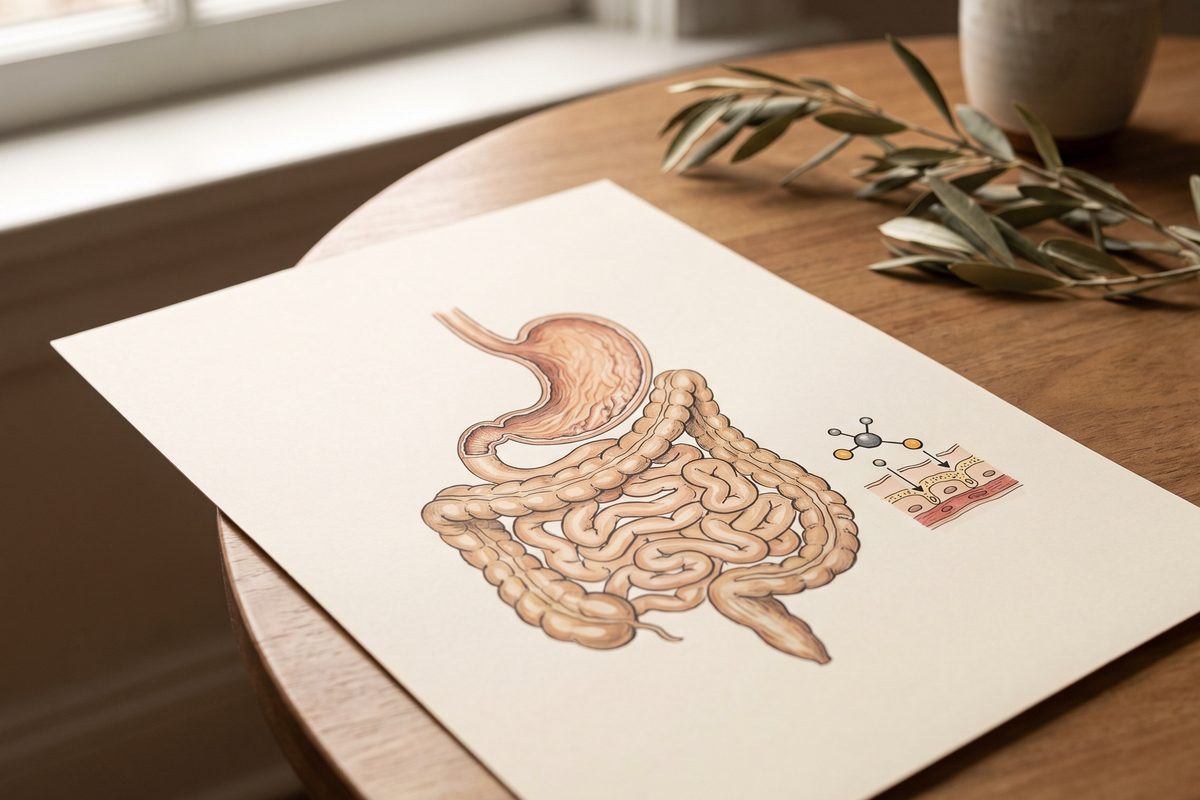
GIP and GLP-1 belong to a family of gut hormones called incretins, which the gut releases after eating. Tirzepatide switches on both receptors, so it is called a dual GIP and GLP-1 receptor agonist. The receptors sit in the pancreas, the gut and the appetite areas of the brain, among other tissues. GIP receptors are also found on fat cells.
In practice the medicine lowers appetite and energy intake, increases the feeling of fullness and reduces cravings. It also slows the emptying of the stomach. With tirzepatide that delay is largest after the first dose and then diminishes.
The weight lost is mostly fat. In a body-composition substudy of SURMOUNT-1 in 160 adults, about three quarters of the weight lost on tirzepatide was fat and about a quarter was lean mass, on average, the same split as on placebo. Lean mass is not the same as muscle. A small pooled analysis of three trials of two other GLP-1 medicines, liraglutide and dulaglutide, in 171 adults with obesity and without type 2 diabetes, found on average 0.78 kg more lean mass lost than in the control groups. The dietary and activity side of the plan is part of the answer to that.
What did the trials show?
The main weight trial is SURMOUNT-1. It enrolled 2,539 adults with a BMI of 30 or more, or 27 or more with a weight-related complication, and without diabetes. Over 72 weeks, including 20 weeks of dose escalation, average weight loss was 15.0%, 19.5% and 20.9% on 5 mg, 10 mg and 15 mg weekly, against 3.1% on placebo. Everyone in the trial, including the placebo group, had diet and activity counselling.
Averages hide the spread. Weight loss of 5% or more was reached by 85%, 89% and 91% of people on the three doses, against 35% on placebo. Loss of 20% or more was reached by 50% of people on 10 mg and 57% on 15 mg, against 3% on placebo. In the same trial 4.3%, 7.1% and 6.2% stopped because of adverse events, against 2.6% on placebo.
These are results from one trial, in one population, at doses reached by stepping up over months. They describe a group. They do not forecast what will happen to any one person, and this article promises no result.
How is the dose stepped up, and why?
The dose is raised slowly. Treatment starts at 2.5 mg once a week for four weeks, then moves to 5 mg. Further rises, if needed, come in steps of 2.5 mg, each after at least four weeks at the current dose. Maintenance doses are 5 mg, 10 mg or 15 mg, and 15 mg is the maximum. The Malaysian package insert gives a four-day window for a missed dose.
The slow schedule follows the side effects. They are most common while the dose is being raised, so the steps give the body time to adjust. Whether a dose is held, lowered or stopped is a decision for the prescribing doctor at review.
What are the side effects of Mounjaro?
The most frequent are digestive. In the weight study reported in the Malaysian package insert, digestive disorders occurred in 55.6%, 60.8% and 59.2% of people on 5 mg, 10 mg and 15 mg, against 30.3% on placebo. Nausea was reported in 24.6%, 33.3% and 31.0%, against 9.5%. Diarrhoea was reported in 18.7%, 21.2% and 23.0%, against 7.3%. The insert classes most of these events as mild (60.8%) or moderate (34.6%), and they were more frequent during dose escalation. Stopping because of digestive events occurred in 1.9%, 4.4% and 4.1%, against 0.5%.
Vomiting and diarrhoea can dehydrate, and dehydration can worsen kidney function, including acute kidney failure. Fluids that will not stay down need medical attention the same day.
Gallbladder disease is a recognised risk of the class. Across 76 randomised trials of these medicines, with 103,371 patients, the relative risk was 1.37, and 2.29 in the weight-loss trials. In three pooled placebo-controlled studies of tirzepatide reported in the Malaysian insert, inflammation of the gallbladder (cholecystitis) occurred in 0.6% against 0.2%, and acute gallbladder disease in 2.0% against 1.6%, linked to the amount of weight lost.
In July 2026 NPRA issued a safety alert on severe acute pancreatitis with GLP-1 and dual GLP-1/GIP medicines, covering 40 registered products. Severe, persistent abdominal pain that may spread to the back needs urgent care. The medicine is stopped at once if pancreatitis is suspected, and not restarted if it is confirmed. NPRA also advises doctors to ask about these medicines in anyone with those symptoms, because privately prescribed treatment may not appear on medical records. Anyone taking tirzepatide should tell every doctor they see.
These medicines slow the stomach, so anyone having a procedure under general anaesthesia or deep sedation should tell the doctors involved beforehand. Blood sugar can also fall too low when tirzepatide is combined with insulin or a sulfonylurea. The full list, with more figures, is in the article on weight-loss injection side effects.
Who should not use tirzepatide?
Tirzepatide is prescribed only after a full evaluation: a history, an examination and usually blood tests. Some people are ruled out before treatment begins. The Malaysian package insert lists hypersensitivity to the medicine as a contraindication, and what a doctor checks before prescribing GLP-1 medication sets out the rest of the assessment.
Pregnancy. Tirzepatide is not recommended in pregnancy, and the insert advises stopping at least one month before a planned pregnancy. Women who could become pregnant are advised to use contraception. The one-month interval belongs to tirzepatide. Other medicines in the class carry different intervals.
The oral contraceptive pill. The US label advises switching to a non-oral method, or adding a barrier method, for four weeks after starting and after each dose step. The Malaysian insert reports that after a single 5 mg dose the peak level of ethinyl estradiol fell 59% and total exposure fell 20%, which it does not consider clinically relevant, and it makes no change to the pill dose. The two positions differ, so raise the question at the assessment.
Thyroid. The US labels carry a boxed warning and rule out use with a personal or family history of medullary thyroid carcinoma or multiple endocrine neoplasia type 2. The Malaysian inserts, which follow the European text, list only hypersensitivity as a contraindication. They note that thyroid C-cell tumours were seen in rats and that the relevance to humans is unknown.
The inserts also list groups that were not studied, or where caution applies: previous pancreatitis, severe digestive disease including severe gastroparesis, proliferative or unstable retinopathy, severe kidney or liver disease and, for Mounjaro in Malaysia, people under 18. A history of disordered eating calls for a more careful conversation first.
Is Mounjaro approved in Malaysia?
Yes, for two uses. In Malaysia the package insert and consumer leaflet for Mounjaro (tirzepatide) cover type 2 diabetes and weight management in adults. The weight use applies to a BMI of 30 or more, or 27 to under 30 with at least one weight-related condition.
The prescription rule is firm. In Malaysia GLP-1 medicines are Group B poisons, supplied only by a registered doctor or a pharmacist against a valid prescription, and supply outside that is an offence. Registered medicines carry a MAL registration number (MAL followed by eight digits and a letter) and a hologram. The number can be checked on NPRA's Quest3+ search, and the hologram with a pharmacy's Meditag decoder.
The Health Ministry, as reported on 28 August 2026, warned against products sold as "Reta" or as "pen kurus". It said retatrutide is experimental, still in phase 3 trials and approved by no regulator anywhere, with no product registered in Malaysia as of 17 August 2026. It reported 65 complaints and 30 raids between January and July 2026.
What tirzepatide does not do on its own
The Malaysian clinical practice guideline on obesity (2023, Grade A) says medicine is used only alongside diet, exercise and behaviour change, and never alone. The guideline was published in May 2023 and does not list tirzepatide, so the review and stopping rules below are its general rules for this kind of treatment.
Review is face to face, monthly for three months and then at least every three months. Treatment stops if weight loss has not passed 5% by three months, or if significant safety or tolerability problems arise. Obesity is a chronic condition, so medicine is considered as a long-term treatment. Courses of six months or less do not sustain the loss, and weight returns after stopping, as set out in rebound weight after stopping GLP-1 medication. What each review checks is described in a weight management follow-up, and what a medical weight assessment decides covers the first step.
Tirzepatide is one tool inside a plan that a doctor assesses, monitors and can stop.