
Quick answer
Red or pink flat marks that fade under pressure are usually PIE; brown marks that stay put are usually PIH. PIH needs daily sunscreen and pigment-lightening care. PIE needs time and sometimes vascular treatment. A doctor can tell them apart in minutes.
- PIE is red or pink and comes from widened blood vessels; PIH is tan, brown or grey-brown and comes from extra pigment.
- Both can last for months; PIH can last years in richly pigmented skin, and up to 85% of Fitzpatrick types IV to VI develop it after inflammatory acne.
- For PIH, sunscreen every day plus a topical lightening regimen is the usual start; some agents need a prescription.
- For PIE, no treatment is an established standard; small trials tested vascular lasers and light.
- Lasers and light can worsen PIH in darker skin, so the device and settings matter.
What is the difference between PIE and PIH?
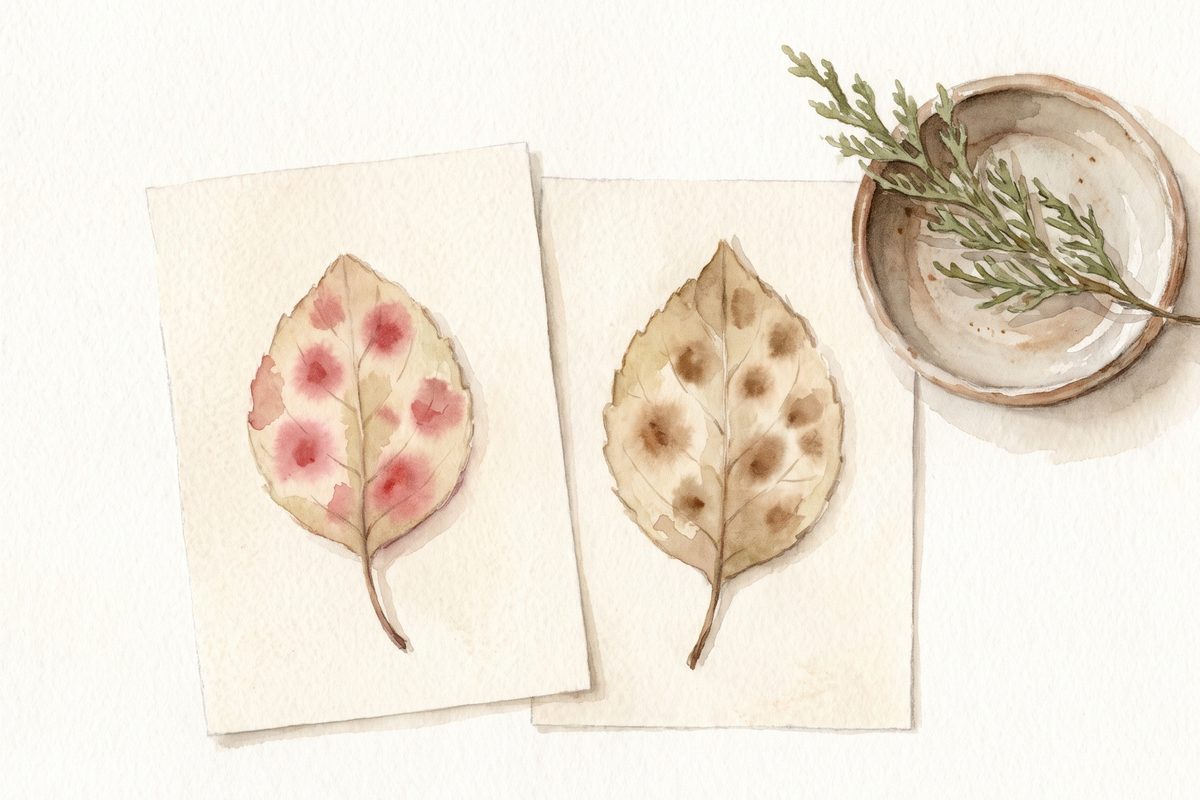
PIE is a blood vessel problem and PIH is a pigment problem. Post-inflammatory erythema is described as persistent flat red macules at the sites of healed acne, thought to reflect residual inflammation with widened superficial vessels. Post-inflammatory hyperpigmentation is excess melanin made and deposited after the same inflammation, which is why it looks tan, brown or dark brown when the pigment sits in the upper layer, and blue-grey when it sits deeper.
Many people have both at once, and a spot can start red and turn brown. Neither is a scar. Scarring is a structural change in the dermis, felt as a dent or a raised area, and it is covered in acne scars: icepick, boxcar and rolling. The mechanism of the dark kind is set out in why richly pigmented skin holds it longer.
How can I tell if an acne mark is red or dark?
Start with colour in daylight, then try a gentle press. Red or pink points to PIE, brown points to PIH, and a flat red mark that blanches for a moment under a clear glass or a fingertip is behaving like a vessel problem, while pigment stays the same colour. That press test is a general clinical sign and was not measured in the studies read here, and mixed marks give mixed answers, so treat it as a clue and not a diagnosis.
| PIE | PIH | Scar | |
|---|---|---|---|
| What you see | Flat red or pink mark | Flat tan, brown or dark brown mark; grey-blue if deeper | Dent or raised area, often with a colour change |
| What it is | Widened vessels after inflammation | Extra melanin after inflammation | Structural change in the dermis |
| Usual course | Usually fades; can persist for months | Months to years without treatment | Does not simply fade |
| Studied approaches | Vascular lasers and light, hyaluronic acid mesotherapy; no standard | Sunscreen, topical lightening agents, peels, low-fluence lasers | Procedures that remodel the dermis |
How long do red and dark acne marks last?
Longer than the pimple, and the dark kind lasts longest. A 2022 review says post-acne redness usually fades but can persist for months, and the 2026 systematic review found trial participants who had had it from one month to 13 years, so persistence varies widely. For PIH, epidermal pigment may take months to years to resolve without treatment, and pigment in the dermis may be permanent or clear over a protracted period.
Skin tone matters. A 2026 review reports that up to 85% of people with Fitzpatrick types IV to VI develop PIH after inflammatory acne, and both kinds of mark can weigh on quality of life more than the acne itself. This page gives no Malaysian figure because none was found in the sources read.
What helps dark marks (PIH)?
Sunscreen every day, treatment of the acne, and a topical lightening regimen. A 2010 review says treatment should start early with control of the inflammation, then topical depigmenting agents with daily broad-spectrum SPF 30 sunscreen. A 2026 review adds sunscreen that covers visible light, which is why the choice is covered in sunscreen in a tropical climate.
The agents are hydroquinone, retinoids, azelaic acid and tranexamic acid, among others. In reports cited by the 2026 review, hydroquinone at 2 to 4% lightened PIH over 12 to 16 weeks and azelaic acid 20% gave about 25 to 50% improvement over three to four months. Some of these need a prescription, and irritation can darken the mark, so a regimen that is too harsh backfires. For marks that stay despite this, a doctor may consider peels or pigment-targeting lasers, with caution, chosen after an assessment.
What helps red marks (PIE)?
Time, sun protection and avoiding picking, with procedures reserved for redness that stays. No treatment for PIE is an established standard. A 2026 systematic review of nine randomised trials with 301 participants found favourable results against untreated skin for a picosecond alexandrite laser, narrow-spectrum vascular intense pulsed light and hyaluronic acid mesotherapy, but five trials had some concerns and four a high risk of bias, and the authors could not name a preferred treatment. In one split-face trial of 16 people, the laser side scored 1.75 for redness against 3.19 on the untreated side a month after three sessions.
This clinic does not offer IPL or vascular lasers, so it does not claim to treat redness that way. If redness is the main problem, the assessment is where that is named, and a treatment this clinic does not offer is not presented as one.
Can lasers make dark acne marks worse?
Yes, and that risk is higher in richly pigmented skin. A 2026 review says lasers and light devices in skin of colour need strict caution because they can induce or worsen PIH, and that intense pulsed light is generally contraindicated in darker phototypes. In the redness review, one broad-spectrum light protocol produced pigmentation and blistering. Even low-fluence Q-switched lasers, the most studied for dark marks, gave rebound darkening in a subset after treatment stopped.
So the choice of device, the settings and a test spot matter more than the brand name. The same reasoning is set out for another pigment problem in can laser make melasma worse.
What if the mark has a dent or a texture change?
Then it is a scar, and scars need different options. At this clinic the acne-scar options are TCA CROSS, subcision and filler as needed, chosen by scar type after an examination, with what a doctor checks first in adult acne as the starting point if spots are still active. Active acne is treated first because every new inflamed spot can leave a new mark. Pigment concerns more broadly are on the pigmentation page.

