
What is in a numbing cream?
The question about numbing cream usually arrives as "can I put it on at home before I come?" The honest answer needs a little chemistry first.
The active ingredient is a local anaesthetic. The ones named in the US Food and Drug Administration (FDA) advisory on cosmetic use are lidocaine, tetracaine, benzocaine and prilocaine, supplied as a cream, ointment or gel. DermNet NZ groups them as esters (benzocaine, tetracaine) and amides (lidocaine, prilocaine). All of them work the same way, by blocking the sodium channels that nerve endings use to send pain signals.
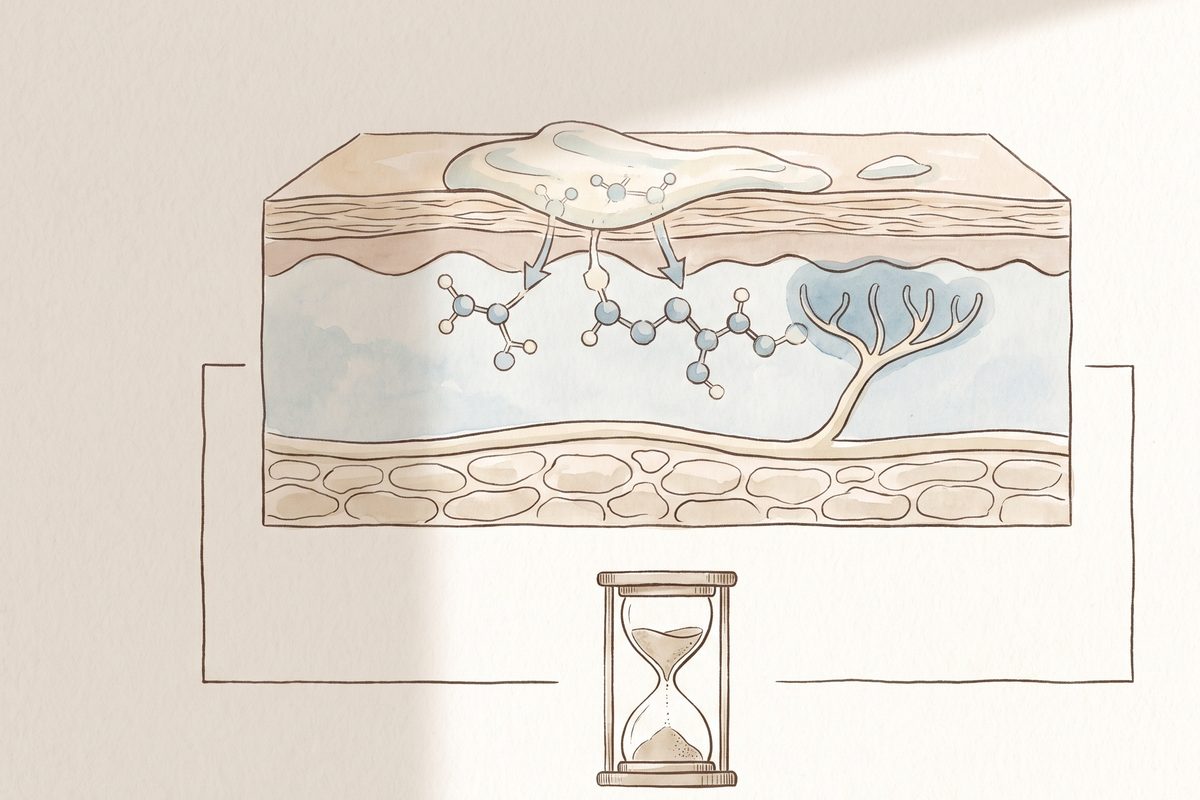
One licensed cream is a "eutectic mixture" of 2.5% lidocaine and 2.5% prilocaine. Mixed 1 to 1 by weight, the two drugs melt below room temperature and form an oil, and that oil is what carries them into the skin. Its label says the cream works by releasing the drugs into the epidermis and dermis, near the pain receptors and nerve endings. Strengths of other products vary, and I will not quote a figure I cannot show you the source for.
That also explains the limit. A cream reaches the skin's upper layers. It does not numb muscle, fat or the tissue a deep-reaching device works on, and the label says the depth of numbness depends mainly on how long the cream stays on.
How is it used properly?
Four things are decided by the person who applies it, and they are decided before the cream goes on. The amount, the area, the time and whether the skin is covered. For the one licensed cream whose label I read, those are stated exactly: a set number of grams over a set number of square centimetres, for at least an hour for a minor procedure, under a dressing. That is a clinical instruction written for a measured patch, and it shows why a tube from an online shop is a different thing. Covering the skin is the one most people get wrong. Both the FDA advisory and the label treat a dressing as something that increases absorption, so it is used when a clinician directs it and not as a habit.
The cream is then wiped off completely before the device or the needle. Leftover cream under a laser or a heated device is a risk of its own, and numb skin cannot tell you when it is being overheated.
None of this is a recipe to follow at home. It is the reason the applying is usually done by a trained person, in the clinic, with the time written down.
Why is more not safer?
Because the drug does not stay in the skin. The FDA advisory is plain that more of it passes into the blood when the cream is applied over a large area, when it stays on for a long time, and when the skin is covered after application. It also passes in more easily through irritated or rashy skin and when the skin warms, from exercise, a wrap or a heating pad. The amount that gets through also differs from person to person. A 2012 review in Dermatologic Surgery reaches the same list: amount, body location, surface area and duration of contact.
The reason the advisory exists is two deaths. The FDA describes two women, aged 22 and 25, who put topical anaesthetic on their legs to ease laser hair removal, wrapped their legs in plastic wrap as they had been told, and had seizures, fell into comas and died. The creams were made in pharmacies and contained high amounts of lidocaine and tetracaine. Those were pharmacy-made creams, not a tube off a shelf, but the pattern is the lesson: a high strength, a large area, a wrap, and time.
What does too much look like, and what do I do?
Early signs of systemic toxicity, as DermNet NZ lists them, are ringing in the ears, numbness or tingling around the mouth, a metallic taste, a change in how clear your thinking is, muscle twitching and seizures. Heart rhythm effects follow as it worsens. The FDA adds slowed or stopped breathing and coma.
If any of this starts after a numbing cream, the sensible steps are the plain ones: stop, wipe or wash the cream off, do not wait to see if it passes, and get emergency help (999 in Malaysia). Tell the responders which cream was used, how much and for how long. This is general first-aid advice, not a quotation.
Prilocaine and benzocaine carry a second, separate risk. They can cause methaemoglobinaemia, in which the blood carries less oxygen. The label describes bluish or grey skin, which can appear at once or hours later, and says people with G6PD deficiency, some heart and lung conditions, infants under six months and people taking drugs that oxidise haemoglobin are more susceptible. Tell the clinician about G6PD deficiency and every medicine you take, before the cream, not after.
What do the rules in Malaysia say?
Medicines here are controlled under the Poisons Act 1952, which sets a Poisons List divided into Groups A to D, and products sold as medicines are registered with the National Pharmaceutical Regulatory Agency (NPRA). So rules about who may supply a topical anaesthetic, and in which form, do exist.
What I cannot tell you from the sources I could read is which group lidocaine or prilocaine creams fall in, or whether a strength limit applies. The Act sets out the framework; it does not name this product, and the NPRA product register could not be searched for this page. A pharmacist or doctor can confirm both, and the registration number of a product is a fair thing to ask them for.
What does The Retreat Clinic do?
It depends on the treatment, and I say it plainly on the treatment pages. Numbing cream is not used for Ultherapy: the settings are adjusted during the session to keep it tolerable, and the discomfort ends when the session does. It is not used for OndaPro. It is applied before a PicoSure session to keep it comfortable. That is all those pages say, and I will not generalise from them to any other treatment.
What should I ask before any procedure?
Who applies the cream, and are they trained to? How long will it stay on, and what area will it cover? Will the skin be covered, and why? Is the product registered, and what is in it? Will it be wiped off before the device or needle? What should I tell you about my health first, in particular G6PD deficiency, heart or lung disease and any medicines? And if there is no cream, what will you do to keep it tolerable? An unhurried first visit is the place for these, and how the clinic assesses before treating describes it.
The honest complication
A numbing cream changes comfort. It does not change the outcome of the procedure, and it is not a reason to choose a larger or more intense treatment. The FDA says some procedures need a degree of numbness that these products cannot safely give, and that doctors have other techniques when a high degree of numbness is needed. A procedure that seems to need heavy numbing of a large area is a different conversation, about whether it is the right procedure, and it should be had before the day, not on it.
A cream is a small help for a small area. If it is being asked to do more than that, the question to ask is about the plan, not the cream.
The short version
Numbing cream is a local anaesthetic that works on the surface. The safe version is a measured amount on a defined area for a set time, applied by someone who has decided all four of those things and wiped off before the device. The unsafe version is more of it, stronger, over a bigger area, covered, for longer. Ask first.