
Can a laser remove a tattoo, and how many sessions does it take?
A laser can clear much of a tattoo, and it usually takes a course of sessions. A systematic review of picosecond lasers pooled eight trials, six of them in people, with 160 participants. Between 69% and 100% of tattoos were more than 70% clear after 1 to 10 treatments. Most of those tattoos were black or blue. The studies were mostly non-comparative and at medium to high risk of bias, so the numbers describe what was reported and cannot be applied to your tattoo.
A 2015 review of precautions is blunter about the limit: lasers cannot always erase a tattoo completely.
How does a laser clear ink?
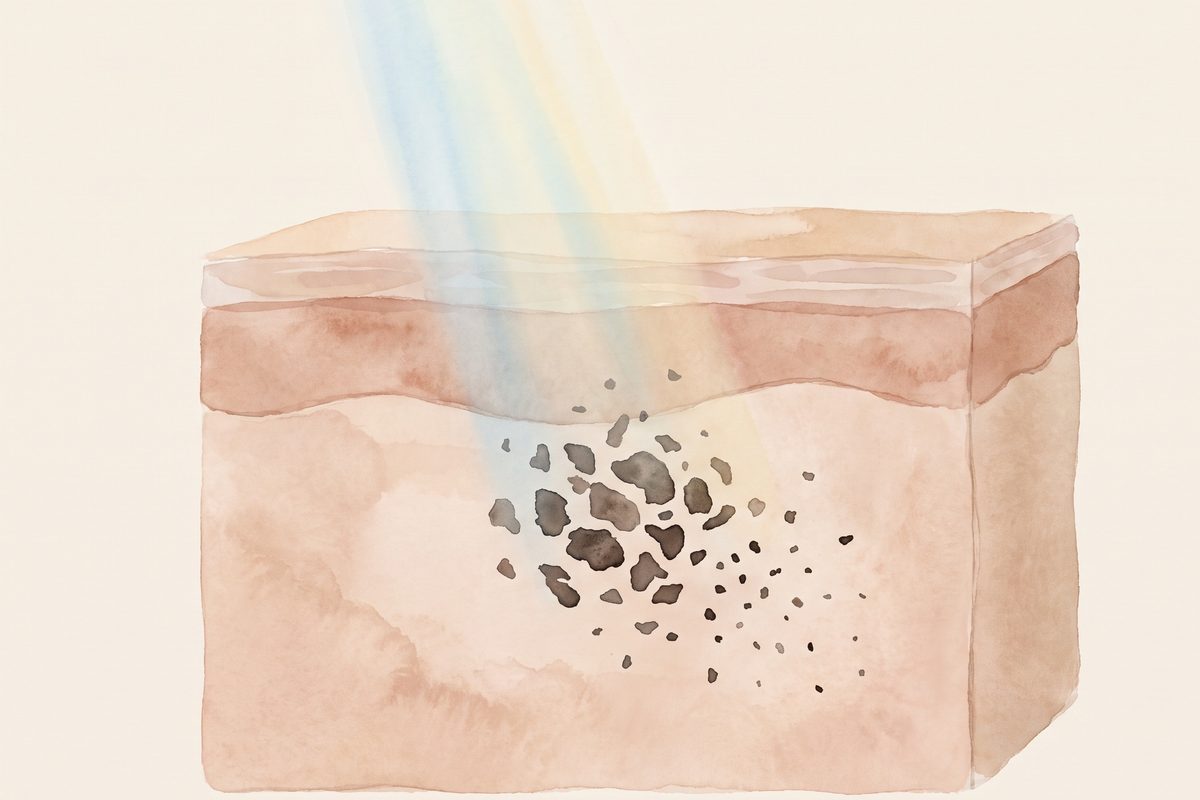
It breaks the ink into fragments small enough for the body to clear. A picosecond laser does this with pulses so short that the ink shatters with little heat spread to the skin around it, which is why the body's own clearing pathways then carry the pieces away over the following weeks. How a picosecond laser works covers the mechanism and its limits.
This is also why sessions are spaced out. The clinic's PicoSure page says tattoo removal takes a course of sessions, spaced so the body can clear the fragmented ink between them.
Does this clinic remove tattoos?
The clinic's PicoSure page says it treats selected tattoos, assessed case by case for suitability, because ink colour, depth and age all change the result. That page does not mention eyebrow embroidery, so this article treats eyebrow pigment as education. Whether a particular tattoo or old eyebrow embroidery is suitable is a question for an assessment, and nothing written here can answer it.
For readers in Shah Alam and Setia Alam, the clinic is about five minutes from Setia City Mall.
Is eyebrow embroidery different from a tattoo?
Yes, in ways that matter for removal. Eyebrow embroidery, sulam kening in Malay, is also called microblading. The ink goes in shallowly, into the upper layer of the dermis, to draw thin strokes that resemble hairs. The chart review notes that some microblading ink may not contain the metal-based pigments found in traditional tattoo ink, and that pigments are often blended into a personal shade. Each person can therefore carry a different mix.
Why can other colours appear as eyebrow embroidery fades?
Because the dark pigment absorbs the laser first. In the chart review, 26.3% of cases showed unmasking after the first treatment: red, orange, yellow, green or blue that had not been visible before. The authors explain that the darker pigment takes up more of the laser's energy and clears first, leaving the colours mixed in beneath it.
Ink can also darken. The same paper describes paradoxical darkening, which comes from the irreversible chemical reduction of iron oxide or titanium dioxide in some inks, turning them black or dark violet. It is more often seen with red and skin-tone colours, such as those used in lip-liner tattoos. In that series no eyebrow or eyeliner case darkened. A separate review found darkening less common with picosecond lasers than with the older Q-switched type. It remains a listed risk, so it belongs in the conversation before the first session.
What are the risks, and can it scar?
The reviews list pain, pigment change (paler or darker marks), blistering, temporary redness and swelling, pinpoint bleeding, ink darkening, scarring and the aggravation of a latent skin condition. Older removal methods, such as dermabrasion and cryosurgery, more often left scars and pigment change, which is why lasers replaced them.
The five-year chart review recorded no scarring, hair loss, necrosis or burns among 76 people. That is one centre, and two of its authors sit on advisory boards for laser makers. Read it as reassuring, and never as a guarantee. On darker skin, pigment change is a bigger question, and pigment laser side effects on Asian skin covers it.
What should be checked before a laser touches a tattoo?
Whether anything under the ink is not ink. A case report describes a melanoma that developed on a mole inside a tattoo during laser removal, and reports 16 melanomas in tattoos in the English literature. The authors suggest excision before laser removal and regular dermoscopic checks throughout. A mole is checked before it is lasered, and why a check comes before a laser explains the reasoning.
Eyeliner and tattoos on the eyelid margin need more. Laser near the eye calls for opaque goggles or a metal corneal shield, and the chart review says a shield is always used for eyeliner. A tattoo that touches the lid margin belongs with an eyelid specialist. Why eye protection matters near the lid explains the protection.
Who is allowed to operate a laser for tattoo removal in Malaysia?
A person who holds the designated medical device permit, since 1 June 2026. The Medical Device (Designated Medical Device) Order 2026 designates medical lasers by type and wavelength, and the types used for tattoo removal in the studies above, alexandrite and Nd:YAG, are among them. The Schedule does not name tattoo removal. Each laser carries a line for any other aesthetic purpose set by the manufacturer within its intended use, so whether a given tattoo treatment falls under the Order is not something the text settles.
The practical question is simpler. Does the person holding the laser have the permit, and who assessed the tattoo first? The Order, explained sets out the rest.
A tattoo is quick to have and slow to remove. The honest expectation is a course, an assessment first and no promise of a blank slate.