
How common is a headache after anti-wrinkle injections?
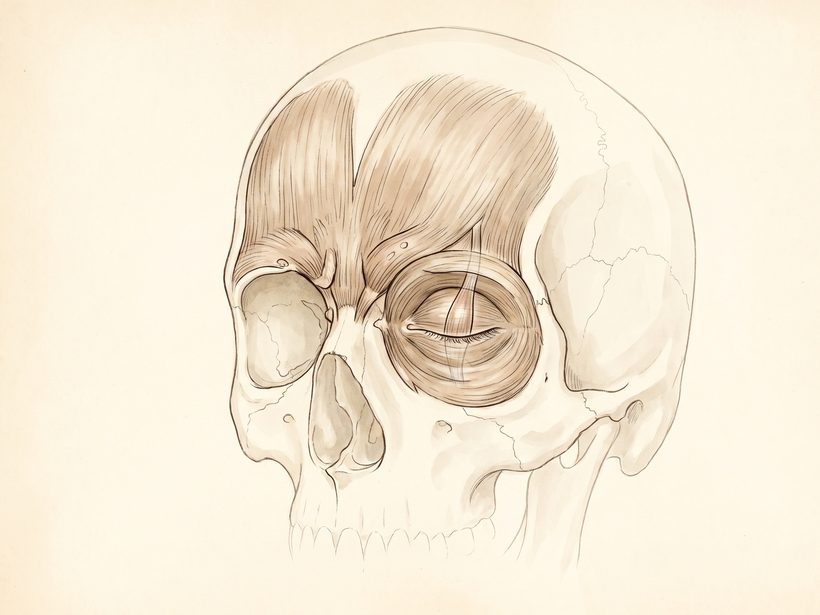
The figures depend on the product, the area treated and how the question was asked, so no single number fits everyone. The clearest one comes from the US prescribing information for onabotulinumtoxinA (sold as Botox Cosmetic). In its trials for forehead lines treated together with frown lines, 58 of 665 people (9%) on the toxin reported a headache, against 17 of 315 (5%) on placebo. Headache is listed there among the most common reactions. Even the placebo group had headaches.
The frown-line table in the same label, which lists reactions in 1% or more of treated people and more frequent than placebo, does not include headache. A pooled analysis of nine registration studies of the same product in 1,678 people also did not find headache significantly more frequent than placebo. A meta-analysis of 16 placebo-controlled trials did, for frown-line injection, with a relative risk of 1.53, and called the events mild to moderate. A relative risk says it is more likely than placebo, and it does not give the absolute chance.
Other products tell a similar story. In two trials of a different type A toxin for frown lines, headache was the commonest treatment-related effect at 6.4% against 2.0%. A prospective study in one Turkish practice, using a third product, found headache in 13 of 102 adults (12.7%), all of them after upper-face injections. These trials cannot be compared with each other, and the label says so itself. They agree on the rough size: a minority, in the low single digits up to the low teens of percent.
In the small study above, every headache followed upper-face injections and none followed masseter or armpit injections. The same study found it more often in first-time recipients (5 of 11) than in people treated before (8.8%), though the numbers are small.
When does it start and how long does it last?
In that prospective study the headache began on day 1 or 2 in 12 of 13 people and on day 3 in one, with a median of day 2. It lasted one day in 12 of them and two days in the other. It was described as throbbing or pressure-type and could sit at the front, the temples, the back of the head or all over. Reviews describe most post-injection headaches as mild and gone within a few days, usually 24 to 48 hours.
Why it happens is not settled. Suggested causes include the needle, the stress of the visit and the toxin acting on the muscle. The Turkish study found no link with the dose or how much the injections hurt, and no pattern that proves any one explanation.
Rare reports exist of severe headaches lasting two to four weeks. They are reports, with no rate attached, and they are the reason a headache that is lasting or worsening deserves a call and not a long wait.
On the question of long-term effects, none of the sources above followed headache over years of repeated treatment, so this article does not claim a long-term pattern either way. Where a headache keeps returning with each session, say so to your doctor.
What can I do at home?
For a mild headache the usual steps are the plain ones. Rest, drink water and, if you can take them, use an ordinary over-the-counter pain reliever exactly as its own leaflet says. A pharmacist can tell you what suits you if you take other medicines, are pregnant or have a stomach, kidney or bleeding problem.
It helps to note when the headache started, where it sits and what it feels like. That makes a phone call to the doctor who treated you much more useful. Our article on aftercare rules and which have evidence covers the other common questions in the first days.
Which signs need a call, and which need emergency care?
Call the doctor who treated you the same day if the headache is getting worse, has not eased after a few days, keeps coming back, or comes with a drooping eyelid or a heavy feeling in the lid. The eyelid has its own page: droopy eyelid after Botox, and how long it lasts.
Go to an emergency department, or call 999, if any of these appear in the hours to weeks after treatment. They are the label's own warning signs that toxin effect may have spread beyond the injected muscle:
- trouble swallowing, or breathing
- a hoarse or slurred voice, or trouble speaking
- double vision, or an eyelid that keeps drooping
- weakness that spreads beyond the injection area, or a general loss of strength
- loss of bladder control
A headache with a fever, a stiff neck, sensitivity to bright light, loss of vision, confusion, a seizure, numbness or weakness in the face or body, or a sudden, extremely painful onset also needs emergency care. That list is general medical guidance for any headache from the NHS, and has nothing to do with the injection. It applies whatever the cause.
The honest limit
The numbers above come from trials that often enrolled mostly women, ran for a limited time and often counted any headache a participant mentioned, so they describe groups and not you. If you have migraine, or are about to have a first treatment, tell the doctor beforehand. For the mechanism and what the injection does, botulinum toxin, explained without the myths is the longer read, and anti-wrinkle injections at the clinic describes the treatment itself.
A headache that passes in a day or two is common and does not need a clinic visit. One that does not pass is worth a phone call.
Common questions
Is headache a common side effect of anti-wrinkle injections?
It is one of the better documented ones, but it is not the usual outcome. In the US label trial for forehead lines, 9% of people on botulinum toxin type A reported a headache and 5% on placebo did. A small prospective study of another product found 12.7%. Rates differ by product, area treated and how the question is asked.
How long does a headache after anti-wrinkle injections last?
In the small prospective study the headache began on day 1 to 3 and lasted one day in 12 of 13 people. Reviews describe most as mild and gone within a few days. Rare reports of severe headaches lasting two to four weeks exist. A headache that is getting worse, or has not eased after a few days, is worth a call.
What helps a headache after anti-wrinkle injections?
Rest, fluids and an ordinary over-the-counter pain reliever used as its own leaflet directs are the usual steps, and a pharmacist can say what is safe for you. Call if the headache does not ease.
Which signs after anti-wrinkle injections need urgent help?
Trouble swallowing, breathing or speaking, double vision, an eyelid that keeps drooping, or weakness spreading beyond the injection area, in the hours to weeks after treatment. A headache with fever, a stiff neck, loss of vision, confusion or sudden severe pain also needs emergency care.
Sources
- US Food and Drug Administration, prescribing information for BOTOX Cosmetic (onabotulinumtoxinA), DailyMed record published 8 January 2026. Read 16 November 2026 Forehead lines treated together with frown lines: headache 58 of 665 people (9%) on toxin against 17 of 315 (5%) on placebo, and headache is listed among the most common reactions for forehead lines. The frown-line table, which lists reactions in 1% or more of treated people and more frequent than placebo, does not list headache; eyelid ptosis (3%), facial pain, facial paresis and muscle weakness (1% each) appear. The label warns that effects can spread from the injection site, with generalised muscle weakness, double vision, drooping eyelid, difficulty swallowing, hoarse voice, slurred speech, loss of bladder control and breathing difficulties, reported hours to weeks after injection, and that swallowing and breathing difficulties can be life threatening. It notes that rates from one trial cannot be compared directly with those of another product.
- Brin MF and others. Safety and tolerability of onabotulinumtoxinA in the treatment of facial lines: a meta-analysis of individual patient data from global clinical registration studies in 1678 participants. J Am Acad Dermatol 2009; PMID 19744746 Pooled nine studies, six of them double-blind and placebo-controlled. Headache was not among the adverse events found significantly more often on toxin than on placebo. The only individual events that were more frequent were an eyelid sensory disorder (2.5% against 0.3%) and eyelid ptosis (1.8% against 0%), in frown-line studies. No serious event was treatment related and there were no symptoms of weakness away from the injection site. The authors are from the manufacturer.
- Jia Z and others. Adverse events of botulinum toxin type A in facial rejuvenation: a systematic review and meta-analysis. Aesthetic Plast Surg 2016; PMID 27495260 Sixteen randomised placebo-controlled trials. For frown-line injection, headache was more frequent on toxin, relative risk 1.53 (95% confidence interval 1.15 to 2.03). The events were described as mild to moderate. It reports relative risks, not an absolute rate.
- Bertucci V and others. DaxibotulinumtoxinA for injection has a prolonged duration of response in the treatment of glabellar lines. J Am Acad Dermatol 2020; PMID 31791824 Two phase 3 trials of a different botulinum toxin type A in 609 people with frown lines. Treatment-related headache was the most common effect, 6.4% against 2.0% on placebo. The authors include employees of the manufacturer.
- Akpinar U and others. Post-botulinum headache in cosmetic practice: a prospective study. J Cosmet Dermatol 2026; PMID 41709680 (open access, PMC12917442). Read 16 November 2026 A prospective study of 102 adults in one practice, injected with abobotulinumtoxinA in the upper face, masseters or armpits. Headache occurred in 13 (12.7%), all after upper-face injections. It began on day 1 or 2 in 12 of the 13 and on day 3 in one, and lasted one day in 12 and two days in one. First-time recipients had headache in 5 of 11 against 8.8% of those treated before. No link with dose or injection pain was found. It was small, self-reported and had no placebo group.
- Witmanowski H, Blochowiak K. The whole truth about botulinum toxin: a review. Postepy Dermatol Alergol 2020; PMID 33603602 (open access, PMC7874868). Read 16 November 2026 Headache is described as a common short-term effect, mostly mild and clearing within a few days, usually 24 to 48 hours, with rare reports of severe headaches lasting two to four weeks. Suggested causes include the needle and the stress of injection. It lists severe, long-lasting headache and fatigue among the first signs of toxin spread, and weakness, swallowing, voice and breathing problems as the later ones.
- NHS. Headaches: when to get medical help. Read 16 November 2026 Emergency signs with a headache include a sudden, extremely painful onset, a seizure, numbness or weakness in the face or body, difficulty speaking, drowsiness or confusion, loss of vision, a rash that does not fade under a glass, a very high temperature, stiff neck and sensitivity to bright light. An urgent appointment is advised for vision or eye problems, vomiting or pain that worsens on coughing or bending. UK guidance, applied here as general triage.
Disclosure: In 2022 Dr Ong was a key opinion leader for Botox for Allergan, which makes Botox, the Juvéderm range and CoolSculpting, and he has spoken for Allergan on botulinum toxin and at the CoolSculpting launch in Manila (2019). How he thinks about ties like these: The quiet we kept: what shapes what your doctor recommends.