Where do the usual aftercare rules come from?
The familiar list is to stay upright for several hours, skip the gym that day, avoid the sauna and alcohol, and leave the area alone. A 2025 Italian paper describes conventional advice as avoiding facial expressions, staying upright, refraining from physical activity, avoiding direct sun and avoiding heat sources, and says care after injections has long been guided by anecdotal instructions, often based on theoretical considerations.
The theory is easy to follow. If the toxin is still free in the tissue, pressure, heat or a change of position might carry it somewhere it was not meant to go. What matters is whether anyone has tested it. The US label for onabotulinumtoxinA for cosmetic use carries a serious warning about spread of effect, but the text read for this article lists no patient instruction about lying down, exercise or massage. How Dr Ong plans anti-wrinkle injections is on the anti-wrinkle injections page.
Does lying down or staying upright make a difference?
A 2018 review in Dermatologic Surgery notes that many doctors suggest keeping the head elevated for around six hours. The authors found no evidence that a horizontal position or a lowered head influences eyelid ptosis or diffusion, and point out that most toxin is already inside the nerve-ending vesicles within 5 to 10 minutes of binding. They add that diffusion appears predominantly, perhaps exclusively, dose dependent, which puts the weight on dose and placement rather than posture.
A 2025 study gives a real-world check. Across six Italian centres, 5,014 patients treated for upper-face lines were observed in clinic for 10 minutes and given no specific restrictions. Of 4,000 who attended a two-week review, none had upper eyelid ptosis, and about 6% had any side effect: bruising in 3.00%, headache in 1.80%, eyebrow ptosis in 0.40% and dry eyes in 0.30%. The authors are open about the limits: it was retrospective, had no control group and no statistical analysis, and followed people for a short time. A fair reading is that there is no evidence posture matters, and no trial proving that it does not.
What about exercise and the gym?
No cosmetic trial read for this article tested a workout on the day of treatment. The nearest evidence points two ways. The 2018 review cites one study of masseter treatment in which people who increased chewing effort for over two hours a day had a prolonged effect, and calls it the first clinical evidence that muscle activity after treatment may be beneficial, with more studies needed. A small 2012 crossover trial in 26 people receiving toxin for facial nerve disorders found 40% lower spasm frequency after five minutes of facial exercises, but the difference was not statistically significant, and it was not cosmetic use.
A 2023 trial of 60 women is the one that sounds like a warning. Women who trained at CrossFit three or six days a week had less sustained muscle suppression and worse scores for lines between the eyebrows at 30 and 90 days than women who did no exercise. That compares how much people train over months, in groups sorted by activity rather than at random, and the paper does not say whether anyone was told to rest. It is a reason to think heavy regular training may matter for how long a treatment lasts, which the article on how long anti-wrinkle injections last covers. It does not show that a workout after an injection does harm.
Sauna, heat, make-up and alcohol: what do the studies say?
None of the five sources read tests a sauna, a hot shower, make-up, a facial or alcohol after toxin, so there is no figure to give. Heat sources sit on the conventional list, and the reasons offered are usually more blood flow to the area and more bruising. Both are plausible and neither is tested here. Bruising was the commonest side effect in the 2025 study at 3.00%, and the page on redness after a treatment explains what marks to expect.
Make-up and facials are a common-sense case. The skin has tiny puncture sites for a short while, so some doctors ask people to wait before heavy make-up or active facial treatments. That is a precaution based on reasoning, not on a trial, and the length of the wait is for your doctor to set.
Is rubbing or pressing the area a problem?
The 2018 review notes that no study has directly assessed massage after injection, although many clinicians suggest it or advise against it. So leaving the area alone for the first day is a precaution rather than a finding. It costs little to follow, and it is reasonable to follow it because your doctor asked, not because the evidence demands it.
What genuinely matters after treatment?
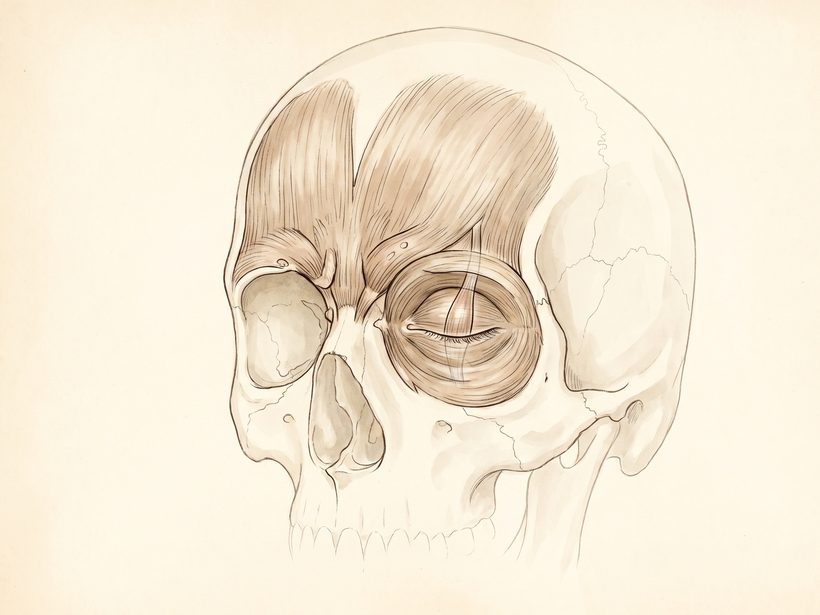
The signs. The US label has a boxed warning that the effects of botulinum toxin may spread from the injection site, with symptoms reported hours to weeks after injection. The listed symptoms include generalised muscle weakness, double vision, drooping eyelid, difficulty swallowing and speaking, and breathing difficulties. Swallowing and breathing difficulties can be life threatening, and the label says deaths have been reported. Trouble swallowing, speaking or breathing is an emergency: call 999 or go to the nearest emergency department, and do not wait for a message reply.
A drooping eyelid or a heavy brow is more common and is not an emergency. In the label trials for glabellar lines, eyelid ptosis occurred in 3% of people, and the label tells injectors to avoid the area near the muscle that lifts the lid and not to inject closer than 1 cm above the central eyebrow, so it is mainly a question of technique and dose. Report it to the treating doctor. The article on droopy eyelid after Botox explains the treatment and timelines, Botox side effects covers the rest, and what to do when a treatment goes wrong sets out who to contact.
So how should I use all this?
Follow the instructions your own doctor gives you for anti-wrinkle injections, since they know the dose and the areas treated. If a few hours upright or a skipped workout is the request, it costs little. The point of the evidence is that missing a rule is no cause for panic, and that the signs above deserve attention.
Ask what each instruction is for. A rule with a reason is worth following. A rule with no reason is worth asking about.
Common questions
Do I have to stay upright after anti-wrinkle injections?
A 2018 review found no evidence that lying down or lowering the head influences eyelid ptosis or spread of the toxin, and a 2025 study of 5,014 patients given no restrictions beyond a 10 minute wait found no upper eyelid ptosis at two weeks. That study had no control group, so it cannot prove the rule is unnecessary. Follow the instructions your own doctor gives.
Can I exercise after Botox?
No study read tests a workout on the day itself. One 2023 trial found that women who trained heavily several days a week had less sustained muscle suppression over 90 days, but that compares habitual training levels and does not test exercising after an injection. Ask your doctor what they advise.
Are sauna, make-up and alcohol allowed after Botox?
None of the studies read tests a sauna, hot shower, make-up, facial or alcohol after treatment, so no evidence-based answer exists. These are precautions, mostly aimed at bruising or the small puncture sites, and are worth following if your doctor asks.
Which symptoms after anti-wrinkle injections need urgent help?
Difficulty swallowing, speaking or breathing needs emergency care at once, because the medicine label says these can be life threatening. A drooping eyelid or heavy brow, double vision or widespread weakness should be reported to your treating doctor the same day.
Sources
- Dover JS, Monheit G, Greener M, Pickett A. Botulinum Toxin in Aesthetic Medicine: Myths and Realities. Dermatologic Surgery, 2018;44:249-260 A review of common myths. It reports that several post-treatment restrictions are widely used despite the lack of evidence, that there is no evidence that a horizontal position or lowered head influences eyelid ptosis or diffusion, that no study has directly assessed massage, and that muscle activity after injection may be beneficial. Diffusion appears predominantly, perhaps exclusively, dose dependent.
- Santorelli A, Salti G, Cavallini M, et al. Are Post-Care Recommendations Following Upper-Face Botulinum Toxin Treatment Scientifically Necessary? A Retrospective Study Based on 5000 Patients. Toxins, 2025;17:372 A retrospective study of 5,014 patients at six Italian centres who were observed for 10 minutes and given no specific restrictions. Of 4,000 seen at two weeks, none had upper eyelid ptosis and about 6% had an adverse effect (bruising 3.00%, headache 1.80%, eyebrow ptosis 0.40%, dry eyes 0.30%). Of 2,010 who completed a questionnaire, 90% were very satisfied. The authors note there was no control group and no statistical analysis, and the follow-up was short.
- Morhy ON, Sisnando AL, Camara-Souza MB, Carbone AC, De la Torre Canales G. High Levels of Physical Activity Reduce the Esthetic Durability of Botulinum Toxin Type A: A Controlled Single-Blind Clinical Trial. Toxins, 2023;15:463 Sixty women in three groups of 20 by habitual activity level (daily activities only, or CrossFit training 3 or 6 days a week) received one standard dose. Over 30, 60 and 90 days the low-activity group had lower muscle activity on electromyography and better line scores than the others. The paper does not state whether post-injection restrictions were given, and the low-activity group had fewer very severe lines at the start.
- O'Reilly P, Ross J, Norris J, Malhotra R. A comparison of facial muscle squeezing versus non-facial muscle squeezing on the efficacy of botulinumtoxin-A injections for the treatment of facial dystonia. Orbit, 2012;31:400-403 A double crossover study in 26 people receiving toxin for facial nerve disorders (not cosmetic use). Five minutes of facial exercises after treatment was followed by a mean 40% lower spasm frequency and 33% lower severity than rest, but the difference did not reach statistical significance (p = 0.367).
- BOTOX Cosmetic (onabotulinumtoxinA) prescribing information, US FDA label on DailyMed A boxed warning says effects may spread from the injection site, with symptoms reported hours to weeks after injection, including generalised weakness, double vision, ptosis, difficulty swallowing and speaking, and breathing difficulties. Swallowing and breathing difficulties can be life threatening and deaths have been reported. Eyelid ptosis occurred in 3% of people treated for glabellar lines. The text read gives no patient instruction about lying down, exercise or massage.
Disclosure: In 2022 Dr Ong was a key opinion leader for Botox for Allergan, which makes Botox, the Juvéderm range and CoolSculpting, and he has spoken for Allergan on botulinum toxin and at the CoolSculpting launch in Manila (2019). How he thinks about ties like these: The quiet we kept: what shapes what your doctor recommends.