What are gua sha and facial massage, and what do they actually do?
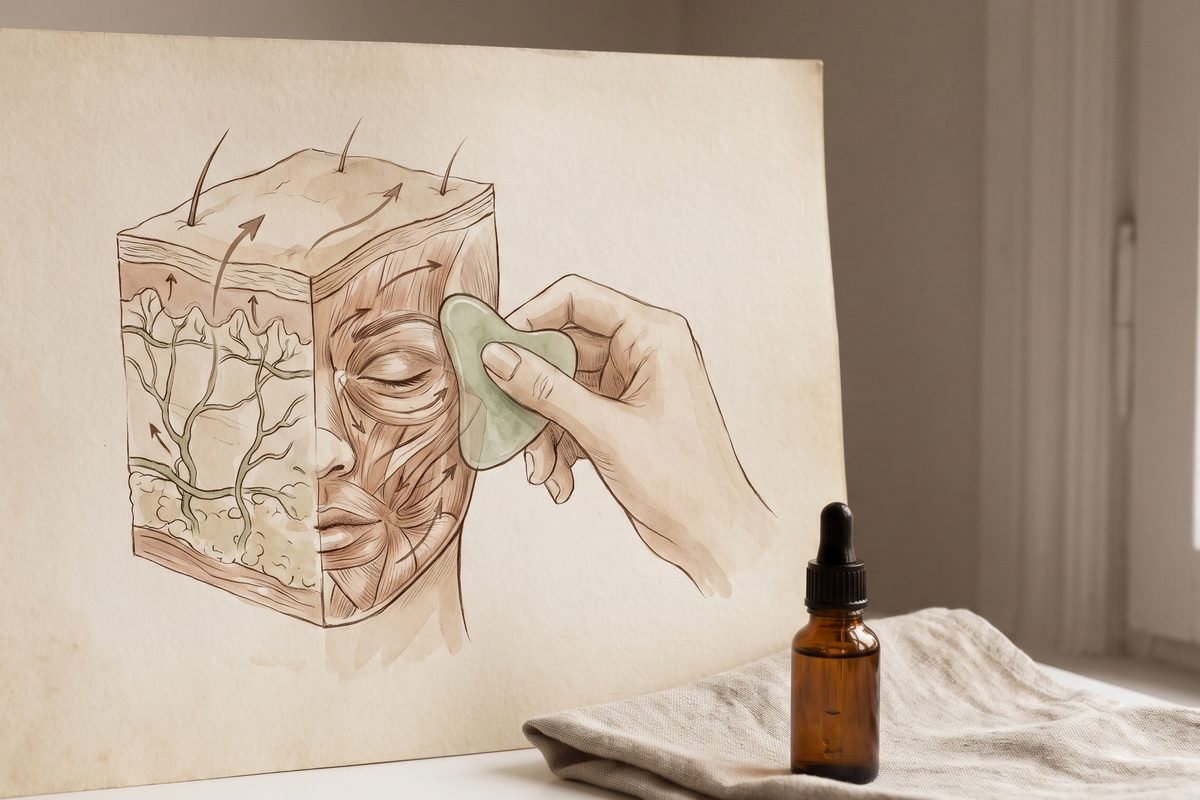
Gua sha (刮痧) is a traditional East Asian technique in which the skin is stroked with a smooth-edged tool. It is also known as coining, scraping or spooning. The traditional body version presses firmly enough to raise red or purple marks (petechiae and bruising) on purpose. The facial version sold today uses a stone or metal tool with lighter strokes and no intention to mark the skin. Facial massage by hand or with a roller follows the same idea.
What they do is easier to say than what people hope they do. Stroking and pressure bring blood to the skin and relax tight muscles. That is a real and pleasant effect, and a reason many people keep the habit. It is not a mechanism for lifting skin, melting fat or removing anything from the body.
What does the research show about blood flow and puffiness?
The best-known measurement is a small German pilot of 11 healthy volunteers who had one traditional gua sha treatment on the back. Skin blood flow rose about fourfold for the first 7.5 minutes and stayed raised across the 25-minute study period. That supports the idea that gua sha increases local circulation for a short time. It was the back, not the face, and it was a pilot.
Puffiness is a related question. A face can look less swollen after a cool tool and light strokes, and that is plausible, but the studies above do not measure how much or for how long. A review of lymphatic massage in cosmetic procedures says the mechanism behind drainage is still unclear and that facial use is less studied than other areas. Morning puffiness that comes back the next day is a sign that the effect, if any, is brief.
Can gua sha or facial massage lift the face or change its contour?
The claim is common, so the studies are worth reading closely. A 2025 randomised trial put 34 women on either a facial roller or a gua sha tool for 10 minutes a day, five days a week, for 8 weeks. Both groups showed surface measurements of the face about 2 to 3 mm smaller. There was no group that did no massage, so the trial cannot show that either method beats doing nothing, and the abstract reports nothing about whether the change lasted after stopping.
A 2022 pilot of five volunteers used CT scans after two weeks of twice-daily self-massage and found the cheek soft tissue had moved by a few millimetres. The authors themselves call it preliminary. Together these are interesting, small and short. They do not show a lasting lift, and they do not show anything for wrinkles, jowls or neck laxity. Lifting a face that has descended involves tissue that surface stroking does not reach.
Is gua sha the same as lymphatic drainage?
No. Manual lymphatic drainage is a trained technique that uses light, slow skin-stretching strokes along lymph pathways, and its established medical use is for lymphoedema, the persistent swelling that can follow cancer treatment. Gua sha uses a tool and firmer strokes, with a different history and aim. They share the idea of moving fluid and little else.
The lymphatic step the clinic offers is a separate thing again: a suction-based step within a HydraFacial, not a massage. What it does and what it cannot is set out in the lymphatic drainage facial article, and the facial itself is described on the HydraFacial page. The clinic does not offer gua sha or manual facial massage.
How can I use gua sha or a facial roller safely?
Use a clean tool, washed with soap and water before and after each use, on clean skin with a little oil or serum so it glides. Keep the pressure light enough that the skin does not turn red or marked, work for a few minutes, and stop if it stings. In one case report, a woman who had gua sha for body contouring developed painful nodules caused by an unusual bacterial infection, and the authors called for a safety protocol. Another report described a muscle injury after long, vigorous massage with a hard wooden block. Light pressure and a clean tool avoid both.
Leave the face alone when it has active, inflamed acne (rubbing can irritate it, and that is a precaution rather than a trial result; acne is better assessed first), open or sunburnt skin, a rash, or a cold sore. Traditional body gua sha leaves marks by design, and people who bruise easily or take blood thinners should ask a doctor before it.
Can I do gua sha after filler or anti-wrinkle injections?
Wait, and ask the doctor who treated you. No study has looked at massage after botulinum toxin directly, and the clinic's own review of anti-wrinkle aftercare rules notes that, so advice to avoid pressing on the area for a period is a precaution. The same applies to filler, where swelling and small lumps in the first days are covered in the filler aftercare article. Pressing on a freshly treated area has no proven benefit and may cause bruising.
If a bump, hard lump, or one-sided swelling appears, do not massage it. Contact the clinician who injected you.