
Why a facial is the wrong first step for some acne
People searching for acne treatment in Setia Alam often type "facial" as well, because a facial is the easy-to-picture version of looking after skin. It is a fair instinct for some kinds of acne and the wrong one for others. The word "acne" covers several problems, and the first job is to sort out which one is in front of the doctor. The same logic runs through what should happen before any facial: the skin is looked at first, and the plan follows what is found.
Which acne is it?
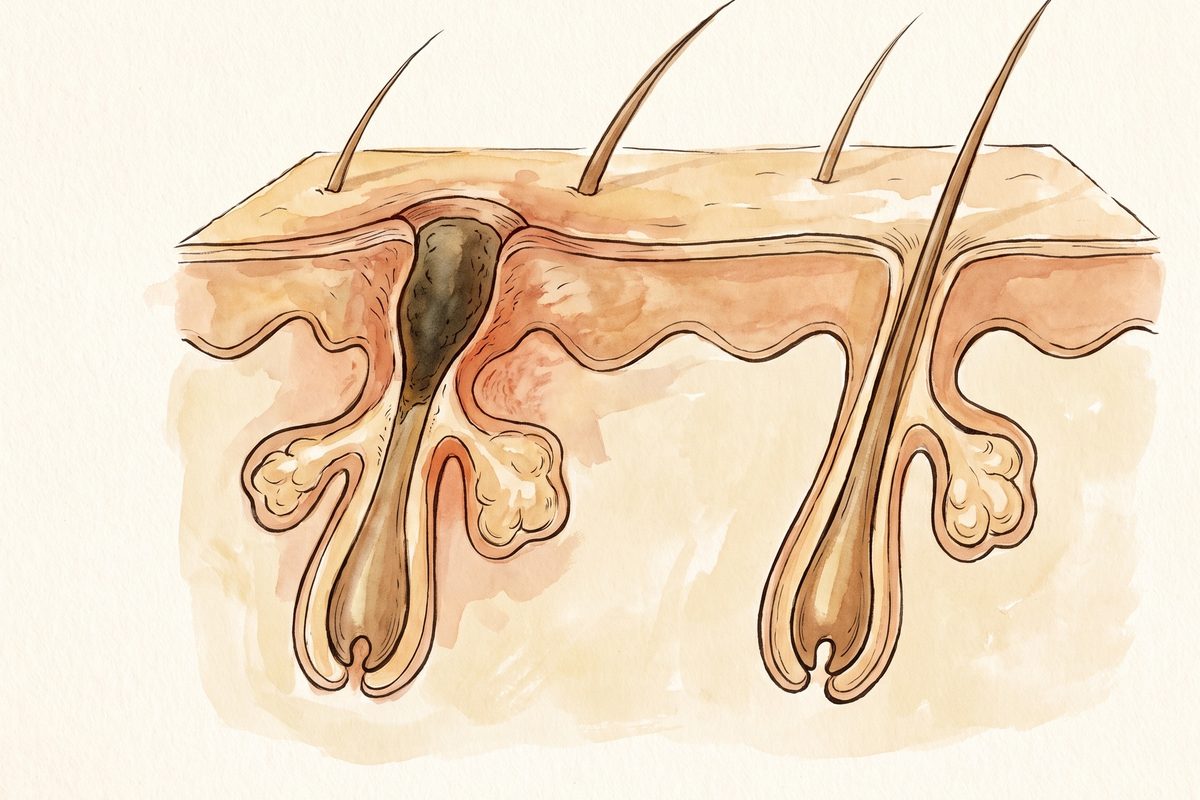
Doctors describe acne in three broad forms. Comedonal acne is blackheads and whiteheads, pores that are blocked without much redness around them. Inflammatory acne adds red, raised papules and pus-filled pustules. Nodulocystic acne is the severe form, deep, firm, painful lumps that can last for weeks.
Three patterns sit on top of those. Adult acne along the jawline that flares around the menstrual cycle points towards a hormonal driver, and irregular periods or excess hair growth alongside it raise the question of polycystic ovary syndrome. Acne on the back and chest behaves differently because the skin is thicker and sits under sweat and fabric, which is why back acne needs its own plan, set out in the related reading below. And the marks left behind come in two kinds: a flat dark or red mark that follows an inflamed spot, and a true scar, which is damage to the collagen underneath.
What the doctor checks before any treatment
The questions are plain. What products and make-up are on the skin, which medicines have been started in recent months, how the breakouts move with the cycle, how much stress and sleep are involved, and how much picking goes on. NICE advises that persistent picking can raise the risk of scarring, so that last question is asked without judgement. The adult acne work-up sets out the whole assessment.
Then the skin is looked at under good light, and the acne is graded. NICE separates mild to moderate acne from moderate to severe by the number of inflamed lesions and nodules, and the grade changes both the plan and the urgency.
The doctor also checks whether it is acne at all. The Malaysian guideline lists suspected rosacea and folliculitis, including yeast folliculitis, among the reasons to send a patient on for a diagnosis. A small, uniform, itchy rash that does not settle on acne care is looked at again, not treated harder. Pregnancy, or a plan for one, matters too: NICE says topical retinoids and oral tetracyclines are contraindicated in pregnancy and when planning a pregnancy.
What belongs where
In general dermatology, acne is treated by class, escalated by severity. The American Academy of Dermatology 2024 guideline makes strong recommendations for benzoyl peroxide, topical retinoids, topical antibiotics and oral doxycycline, conditional recommendations for salicylic acid and azelaic acid, and favours combining topical agents that work in different ways. NICE offers first-line treatment as a 12-week course and says benefit can take 6 to 8 weeks to show. Acne moves in months. Oral antibiotics are for moderate to severe acne, for a limited period, alongside a topical treatment. An oral retinoid is for severe, scarring or resistant acne, and the Malaysian guideline says it should only be prescribed by dermatologists. This clinic does not prescribe it.
Procedures sit beside medicines and do not replace them. The Malaysian guideline says peels, lasers and comedone extraction are not the mainstay of acne treatment. A salicylic acid peel suits mild to moderate acne with many blocked pores and oily skin, and Dr Ong uses it for acne-prone skin once the skin has been assessed. A HydraFacial suits congestion and upkeep. At this clinic it is performed by therapists trained and certified by HydraFacial, not by Dr Ong, and it waits while acne is inflamed.
A course of an oral retinoid changes the order. Peels, lasers and extraction wait until the treating doctors have agreed a plan. The old advice to wait 6 to 12 months afterwards rests on small case series, and the Malaysian isotretinoin insert still advises caution with aggressive chemical dermabrasion, so the decision is made with the prescriber and not assumed.
What a facial can and cannot do for acne
A facial cleanses, exfoliates, extracts congestion and hydrates. For blackheads, whiteheads and an oily, congested look between visits to the doctor, that is useful work. It does not switch off the hormonal or inflammatory driver, and it does not reach scars or deeper pigment.
Extraction deserves the most care. The Malaysian guideline found extraction effective in superficial acne and not in cystic acne, and lists incomplete extraction, tissue damage and recurrence among its drawbacks. DermNet NZ adds that abrasive skin treatments can aggravate both comedones and inflamed lesions. Pressing and suctioning over an angry pustule or a nodule is how a pleasant hour makes the skin worse, which is why inflamed acne gets medical treatment first and the facial later.
The marks and scars come last
Acne leaves two kinds of aftermath, and neither is treated while new spots are still arriving. The flat dark mark is post-inflammatory hyperpigmentation, which lingers longer in richly pigmented skin and is made worse by treating it aggressively. A scar is different, and icepick, boxcar and rolling scars each need different work. NICE advises treating the ongoing acne to prevent further scarring, and sends severe scarring that persists a year after the acne has cleared to a dermatologist-led team. This clinic treats the texture, pores and scarring acne leaves behind once the acne is controlled, and it does not offer fractional CO2 laser.
The honest complication
Acne is managed over months. A first visit may end with a plan for a prescription, a gentle routine and daily sunscreen, and no treatment bed at all. That can feel like an anticlimax to someone who came expecting a facial, and it is also what the evidence points to for acne that is inflamed.
The visit can also end with a referral. Nodules, scarring already forming, acne that has not responded to two completed courses of treatment, distress that is affecting mood, or a suspected hormonal condition are all reasons NICE gives to ask for a dermatologist. Saying so on the first day saves months.
The short version
Work out which acne it is, calm it with the right medical plan, keep the surface tidy with the right procedure, and treat the marks and scars last. A facial has a place in that order, and it is rarely the first step. The Retreat Clinic is in Setia Alam, about five minutes from Setia City Mall, by appointment.
The treatment bed can wait. The diagnosis cannot.