
What does fractional CO2 laser do to acne scars?
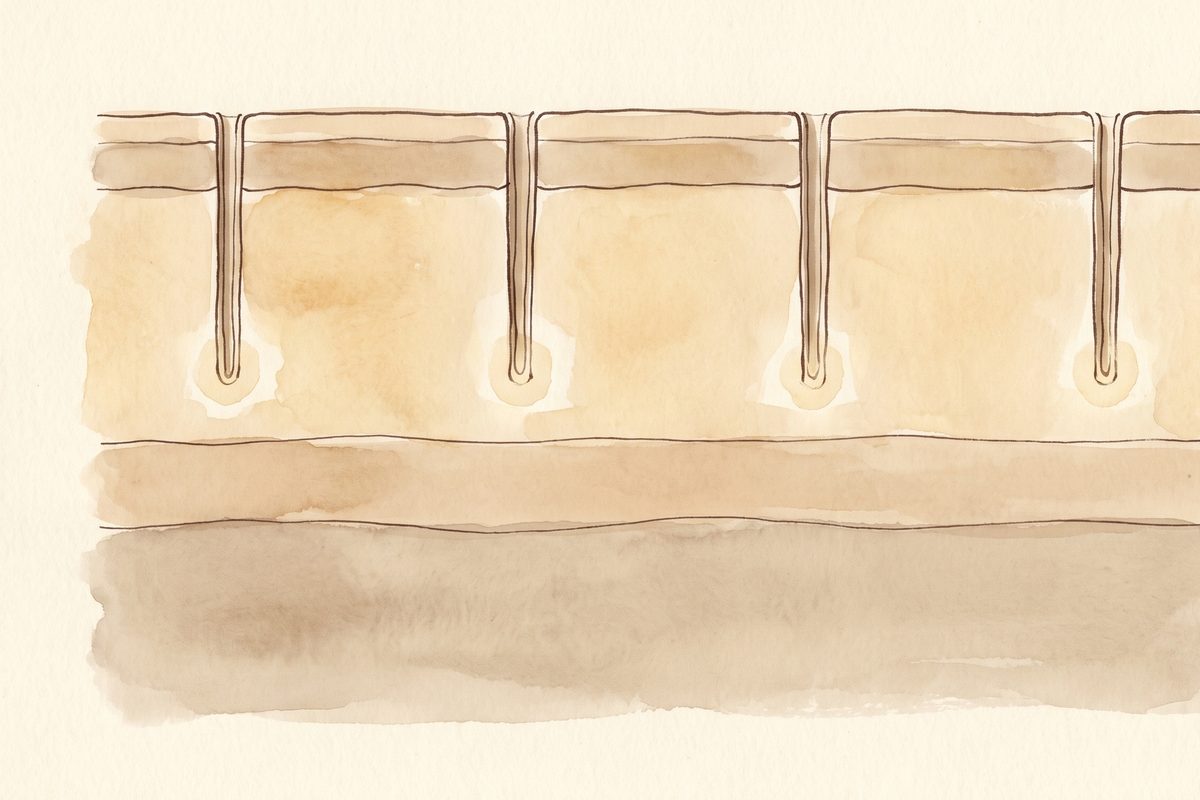
A CO2 laser delivers light at 10,600 nm that skin water absorbs, removing a thin column of tissue where each beam lands. The older, fully ablative approach treated the whole surface and meant a long recovery. The fractional version fires a grid of tiny spots and leaves skin between them intact. A review of fractional resurfacing in Asian patients describes the columns of controlled damage and notes that recovery is shorter than with fully ablative treatment.
The repair is where the benefit is meant to come from. As the columns close, the skin remodels the dermis beneath and lays down new collagen, which can lift the floor of a dipped scar and soften its edges. The treatment targets atrophic scars, the dips. Flat red or brown marks are a colour change with no dip, and they are managed differently.
It also affects the surface. In a small series of nine Asian patients, texture, pores and acne scars all improved significantly, although the improvement after one treatment was only mild to moderate. How acne scars, pores and texture are assessed covers the wider picture. Which scar type responds is a separate question, and the article on icepick, boxcar and rolling scars covers it. This article is about the laser.
How well does it work compared with the alternatives?
In trials on Asian skin it works to a useful degree. In a series of 13 people with skin type IV who had three sessions, 85% were rated as having at least 25% to 50% improvement at six months. In a split-face trial of 24 dark-skinned participants, 65% of the sites treated with fractional CO2 reached more than 50% improvement at six months, against 55% for a fractional Er:YAG laser, which was not a significant difference. The CO2 side was the more uncomfortable.
The pooled evidence is less tidy. A 2026 meta-analysis of 17 studies found no significant difference in scar score reduction between fractional CO2 laser and needling-based treatment such as microneedling, although success was slightly more likely with the laser (risk ratio 1.10). A second 2026 review of 27 studies on scars in general leaned further towards the laser: ablative fractional lasers, particularly CO2, suggested greater improvement than microneedling, while needling had shorter downtime and fewer pigment side effects.
Combinations rank highest. A network meta-analysis of 56 randomised trials and 1,488 patients with moderate to severe atrophic scars found that combinations generally outperformed single treatments, with CO2 laser plus subcision, or plus platelet-rich plasma, ranked highest. A larger analysis of 68 trials and 4,480 people put laser with platelet-rich plasma or with filler at the top on different scar scores. Rankings compare treatments in trials, and they do not promise a result for one face.
What is the downtime on Asian skin?
The skin is open for a while. In a split-face trial of eight East Asian patients treated once, crusting and scaling after fractional CO2 lasted a mean of 7.4 days and redness a mean of 11.5 days, against 2.3 and 7.5 days for a non-ablative fractional laser on the other side. Pain scores were higher with CO2 (7.0 against 3.9). It was one session in eight people, so treat the figures as a rough guide to scale. They are no schedule.
The larger cost is pigment. Skin with more melanin, Fitzpatrick types III to V, which covers many Malaysians, answers injury by making more of it. Why skin type changes a laser plan explains the scale, and why acne dark marks linger longer in Malaysian skin describes the same response after a spot.
The trial figures for dark patches (post-inflammatory hyperpigmentation) run from about a quarter to nearly all participants. Mild dark patches followed in 92% of 13 people with skin type IV, or 51% of sessions, and cleared in an average of 5 weeks. In nine Asian patients the rate was 55.5% at one month and 11.1% at six months. In 33 patients having three sessions, 36.4% were affected. In a split-face trial of 25 patients, 24% had mild dark patches on the CO2 side and none on the fractional picosecond side. The range reflects different settings, definitions and follow-up, and none of the figures is a forecast for a given person. The trials quoted here that name a skin type enrolled people with type III or IV skin, and the evidence for deeper skin tones is thinner.
Settings and aftercare change the risk. A review of fractional resurfacing in Asian patients reports that more sessions at lower density with longer intervals usually keep dark patches down. In a split-face trial of 20 Asian patients, higher density or energy gave more side effects and no better efficacy. In another of 40 participants with skin type IV, a short course of a topical corticosteroid for the first two days was linked to dark patches in 40% of people against 75% with petrolatum alone. A doctor decides on that, and it is no home remedy. Sun protection during healing is part of any plan.
Who should wait, or choose something else?
A doctor decides after examining the skin. These are the usual reasons to wait, or to choose a different tool.
Active acne. Acne that is still active keeps making new scars, so it is controlled first, as the acne scars article sets out.
Recent isotretinoin. A wait of 6 to 12 months after oral isotretinoin is widely taught. A 2017 consensus review of 32 publications and 1,485 procedures found that this rests on three small case series from the mid-1980s and found insufficient evidence to support delaying fractional ablative and non-ablative laser procedures. That is a consensus view, which leaves the interval to the prescribing and treating doctors. What a doctor checks with isotretinoin covers the drug.
Melasma. Rebound worsening of melasma is one of the two main concerns with fractional resurfacing in Asian skin, along with dark patches. Melasma is a reason to look at other options first.
A cold sore, or any active infection. Treatment waits until the skin is clear. A history of cold sores matters even when none is present, for the reason in the next section.
A history of keloid, thick scars or dark marks after skin injury. These are reasons to say so at the start, because the skin that heals that way may do so after a laser as well.
Recent sun exposure, or sun that cannot be avoided during healing. A tanned face is already carrying extra pigment activity, and healing skin needs shade.
What are the other risks, including infection and cold sores?
A review of complications after fractional laser resurfacing describes a full spectrum of severity, some of it long-lasting, with a higher risk in darker skin types and in people with medical risk factors, and notes that many complications are preventable. Because the surface stays open for days, infection is the other risk to watch for while it heals, and signs such as spreading redness, pain that worsens, pus or fever need a call to the doctor.
Cold sores are the specific hazard. In a 1998 series of 500 people treated with fully ablative CO2 laser, herpes simplex infection followed in 7.4%, redness lasted an average of 4.5 months and dark patches affected 37%. That was a heavier technique than the fractional laser, so the figures overstate today's risk, and they show why a history of cold sores is asked about. Reports describe antiviral prophylaxis around ablative fractional treatment, and prophylaxis can fail: one case report records herpes reactivation after fractional ablative CO2 laser despite twice-daily antiviral tablets from the day before. No figure for reactivation after fractional CO2 specifically was found in the sources read for this article.
What are the honest alternatives?
Needling-based treatment. Microneedling has shorter downtime, better tolerability and fewer pigment problems, at the price of a possible smaller effect in some trials. The 2026 meta-analysis put the risk of dark patches with fractional CO2 at about three times that of standard microneedling. What microneedling does, and where the evidence stops covers it.
A non-ablative fractional laser. It leaves the surface intact, so crusting is shorter. In the eight-patient split-face trial, the 1,550 nm erbium-glass laser had a lower improvement grade at three months than CO2 (2.0 against 2.5), with less downtime and less pain. That is a trade, and for skin that pigments easily many people take it.
A fractional picosecond laser. In 25 Asian patients both it and fractional CO2 improved scar volume, and no one developed dark patches on the picosecond side, against 24% on the CO2 side. It is one trial.
Other tools for other scars. Subcision, a targeted acid on icepick scars, fillers under soft scars and chemical peels each suit a different scar shape, and the acne scars article covers what each does. A laser is one part of a plan, and the plan starts with naming the scar.
Waiting is a choice too. Acne control, sun protection and time are what let marks fade and the skin settle before anything is done to it.
What should you ask before booking fractional CO2 laser anywhere?
Ask who will operate the laser and how they are qualified. Ask whether the device is registered and whether the operator holds the permit the rules now require: which lasers may only be operated by a permit holder since 1 June 2026 explains how to check. Ask whether a test spot is done, what density and how many sessions are planned, and what the plan is if dark patches appear.
A good consultation asks about isotretinoin, cold sores, keloid, melasma and recent sun before it mentions a setting. The Retreat Clinic does not offer fractional CO2 laser, so this article is education about what the trials show, and the questions above apply wherever you are considering it.
The short version
Fractional CO2 laser improves dipped acne scars in trials, about as well as microneedling on average and with the highest rankings in combination, and on Asian skin it brings a recovery of more than a week and a real chance of dark patches. Active acne, cold sores, melasma, a history of keloid and recent isotretinoin are reasons to pause and let a doctor decide. Gentler options exist and suit many.
A strong tool earns its place when the skin in front of it can heal well.