
Does botulinum toxin help body odour?
Sometimes, and nobody can promise it. Botulinum toxin is a sweat treatment. In small trials it also made underarm smell milder in many people, and a 2024 meta-analysis of all the trials put together did not find a clear benefit. The fair summary is a possible side benefit for some, not an odour treatment.
The reason lies in where the smell comes from, and it is not where most of the sweat comes from. The sweat side is covered in botulinum toxin for excessive sweating. This article keeps to the smell.
Why is sweat itself almost odourless?
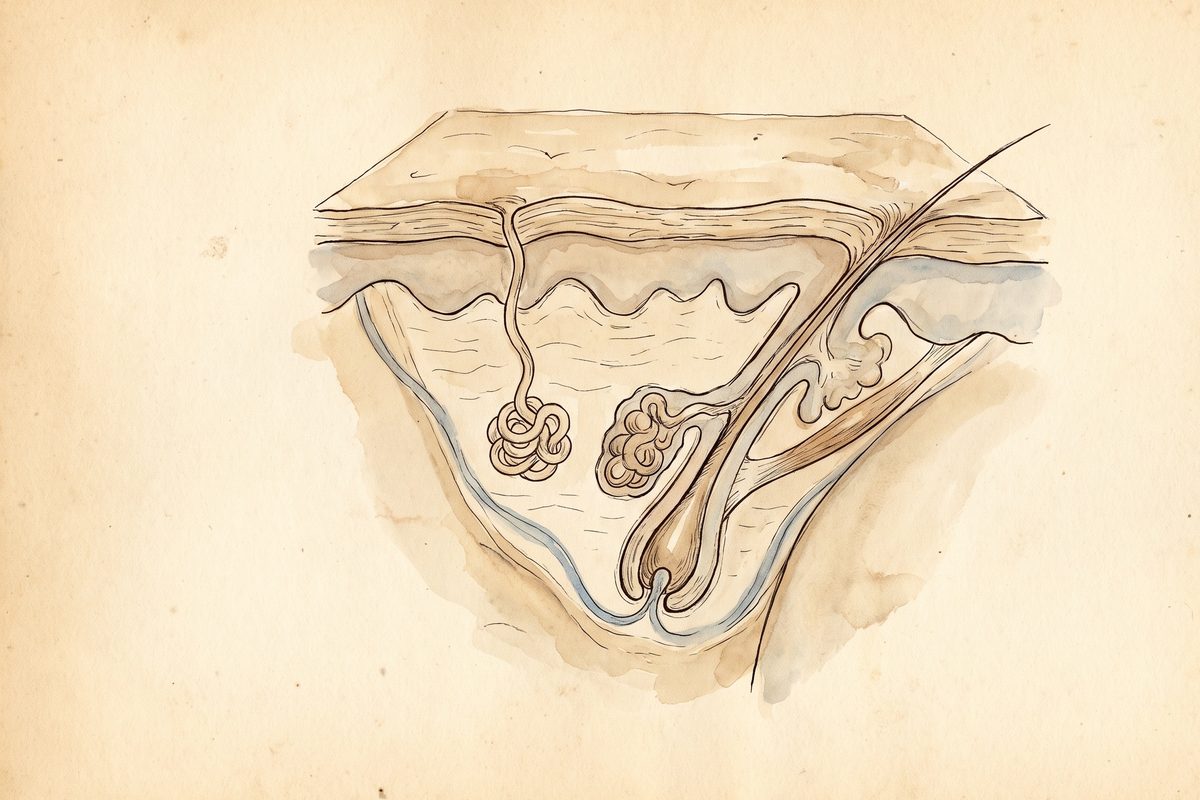
The body has two main kinds of sweat gland in the underarm. Eccrine glands cover most of the skin and release watery sweat to cool you. That is the sweat of hyperhidrosis. It is mostly water and salt, and it has little smell of its own. Apocrine glands sit mainly in the armpit and groin and switch on from puberty. They release a thicker secretion that is also nearly odourless when it comes out.
The smell appears afterwards. Bacteria that live on the skin, including Corynebacterium and Staphylococcus species, have enzymes that break the apocrine secretion down into small, strong-smelling molecules, such as sulfur compounds (thioalcohols) and short-chain fatty acids. A 2020 review describes the odour as an interplay between the host gland and the odour-releasing enzymes in the skin bacteria. In plain words, the gland supplies the raw material and the bacteria make the smell.
Is bromhidrosis the same as hyperhidrosis?
No. Hyperhidrosis is sweating more than the body needs. Bromhidrosis is an unpleasant body odour. DermNet NZ describes apocrine bromhidrosis, limited to the armpits and anogenital area, and eccrine bromhidrosis, a more generalised odour. Wet is not the same as smelly. Someone can soak a shirt and smell of little, and someone can sweat modestly and carry a strong odour.
That matters for the question. A treatment that blocks eccrine sweat does not directly switch off the apocrine glands, and that is where the studies disagree.
What do the studies of botulinum toxin for odour show?
The studies are small, and they do not all agree. Here are the main ones, with their limits.
A pilot in 2003 injected 16 healthy volunteers with 100 units of Dysport in one armpit and saline in the other. Seven days later, a T-shirt sniff test found the treated side less intense and less unpleasant. A larger 2007 randomised trial in 51 healthy volunteers, with 50 units in one armpit and placebo in the other, found the treated samples smelled less intense and better to the volunteers and to blinded raters. Both used healthy people, not people troubled by odour, and both measured smell by sniffing.
In 2019, a trial of 19 patients with bromhidrosis put the toxin in one armpit and saline in the other. At three months, the patients scored their own malodour at 2.42 on the treated side against 8.00, and sweat production was 13.33 against 33.75 mg per minute. Every patient then had the apocrine glands removed, and the glands on the treated side showed shrinkage. The sample is 19 people, the score was the patients' own, and follow-up was three months.
A 2012 study of 67 people gave 50 units to each armpit. Malodour and sweating tracked each other closely in 76.1%, and the malodour was eliminated in 73.1%. The authors concluded that the toxin worked mainly by reducing eccrine and apoeccrine sweating, not apocrine sweating, and that a close link between smell and sweat is what makes someone suitable. That finding helps explain why the toxin helps some people and not others.
Then comes the 2024 meta-analysis of 14 trials and 1,293 people. It found fewer adverse events than controls and a lower odour intensity against placebo, but no significant overall treatment success (relative risk 1.06) and a higher recurrence rate (3.80). Nine of the studies were of low quality, and the authors concluded the toxin is safe but not effective for bromhidrosis. A 2025 expert review reaches the opposite view and calls it a first-line option for mild to moderate cases, lasting 3 to 8 months. The gap between those two verdicts is the honest state of the evidence.
What else works for body odour?
The simple steps come first. An antiperspirant uses aluminium salts to reduce sweat, and a deodorant masks or reduces odour without stopping sweat. Regular washing, antibacterial or antiseptic washes, treating any skin infection, and removing underarm hair (shaving, electrolysis or laser) are the other steps DermNet NZ lists Clothing that dries quickly and is washed after each wear is common-sense help, though I found no trial for it. DermNet also lists avoiding foods that cause odour, though the evidence for any single food is thin and a food rarely explains an underarm smell on its own.
Some people hardly need any of this. A single gene variant, ABCC11 538G to A, stops the armpit glands secreting the precursors the bacteria depend on. In laboratory work it led to a nearly complete loss of the typical odour components. The variant is prominent among Asian people, and a 2006 genetics paper found it highest in Chinese and Koreans. In a Japanese study, 98.7% of 79 people who had had their apocrine glands removed because of underarm odour carried the opposite, wet-earwax version. I did not find a Malaysian figure, so I cannot say how common it is here. If your earwax is dry and flaky, you very likely carry two copies, and that is a reason you may find a deodorant almost unnecessary.
When these steps fail, doctors can use medical treatments for bromhidrosis. They range from removing or damaging the apocrine glands with microwave energy, laser or surgery, to the toxin itself. These are described here as education. None is claimed for this clinic, and each has its own risks of scarring, recurrence and recovery that a surgeon would go through with you.
When does body odour need a medical check?
Most odour is bacterial and harmless. Some is not. DermNet NZ lists medical causes of a changed body odour: diabetes, liver disease, kidney failure, obesity, skin infections such as erythrasma, and an inherited condition called trimethylaminuria. Odour that is new, strong, whole-body, or that comes with other symptoms, should be seen by a doctor before any cosmetic treatment. Skin specialist or aesthetic doctor explains which door to try first.
The honest complication
The toxin was designed to switch off a nerve signal to sweat glands. It does that well, for months. Whether it also changes the smell depends on whether your odour rides on the sweat that is switched off. For some people it does. For others the apocrine glands carry on, and the smell does too. The evidence is small, mixed, and mostly in short follow-up.
Injections at this clinic
This clinic offers injections for excessive sweating, and anti-wrinkle injections use the same medicine in a different place. Botulinum toxin is a prescription-only medicine in Malaysia, so a doctor assesses you first, as set out in what a first consultation decides, and whether to treat is decided after that assessment.
Dry is a reasonable goal. Smell-free is not a promise anyone can make.