
Is cellulite the same as cellulitis?
No. The two words differ by two letters and share almost nothing else. Cellulite is a cosmetic pattern. Cellulitis is an infection.
The confusion is easy to make, and it matters, because people search for one word and read about the other. A reader who types the wrong spelling while worried about a swollen, painful leg should not land on an article about dimples. That is why this piece starts with the infection.
What is cellulitis, and when is it an emergency?
Cellulitis is a bacterial infection of the skin and the tissue just under it. The NHS describes the skin as painful, hot and swollen, and red on lighter skin. It most often affects the lower legs, but it can appear anywhere. Blisters, swollen glands and flu-like symptoms can come with it.
On brown and black skin the redness can be harder to see, so do not wait for a red patch. Heat, swelling, tightness and pain in one area, and a patch that looks darker or feels different from the skin around it, are enough reason to be seen.
The warning signs that should not wait for tomorrow are these:
A patch of skin that is painful, hot and swollen, especially if it is spreading, or if the edge of the patch is moving outward over hours. Blisters on the patch. Swollen, tender glands nearby. Fever, chills or feeling unwell. See a doctor the same day.
Go to an emergency department, or ask someone to take you, if there is a high fever, a racing heartbeat, dizziness, confusion, fainting, or purple patches on the skin. The NHS lists these as signs of a serious complication. A change of this kind can be quick, and it is not something to sleep on.
Extra care applies to anyone with poor circulation, a weakened immune system, lymphoedema (swelling from a blocked lymph system), a previous episode of cellulitis, or a recent wound or surgery, because these raise the risk.
How does cellulitis start, and can I catch it from someone?
Bacteria get in through broken or cracked skin: a cut, an insect bite, a graze, a crack from dry skin or a wound. The NHS states that cellulitis cannot be caught from another person.
That is why small skin breaks on the feet and legs deserve a clean, covered dressing, and why a wound that turns hot, swollen and more painful over a day or two should be looked at rather than watched.
Could it be something else?
Yes, and that is the reason to see a doctor and not decide for yourself. Cellulitis is diagnosed by examination, and there is no single test for it. A 2023 systematic review of nine studies and 1,600 patients found that a mean of 41 percent of cases first labelled cellulitis were changed to another diagnosis when a second clinician looked again, with a range from 19 to 83 percent. More than half of the changed diagnoses were three skin and swelling conditions that can look similar.
The lesson runs in both directions. A red leg is not always an infection, and a swollen leg is not always harmless. Leg swelling has other causes as well, some of them serious, and telling them apart is the doctor’s job. If the leg is swollen, painful and one-sided, do not treat it at home.
How is cellulitis treated, and will it come back?
A doctor decides on treatment after examining the skin. According to the NHS, mild cases are treated with antibiotic tablets for about a week. The skin can look worse before it gets better, improvement is expected within two to three days, and most people recover in seven to ten days. Rest, raising the leg, fluids and gentle movement help. If the skin is not improving on treatment, go back.
Cellulitis can return in people who have had it before, because a previous episode is one of the listed risk factors, along with poor circulation, weakened immunity and lymphoedema. A doctor can advise on protecting the skin and dealing with the things that keep opening the door.
Where do I go in Malaysia?
For a hot, swollen, painful patch of skin, the same-day options are a GP clinic, a klinik kesihatan, or the emergency department of a hospital. For fever, fast heartbeat, confusion, fainting or purple patches, go to the emergency department. A cosmetic clinic is not the place for an infection.
The Retreat Clinic is an aesthetic clinic, and an infection needs a doctor who can examine and treat it that day. Redness after a cosmetic procedure that is hot, spreading or painful should also be reported at once. What counts as an ordinary healing response, and what does not, is set out in redness after a treatment: normal, or not?
What is cellulite, and does it need treating?
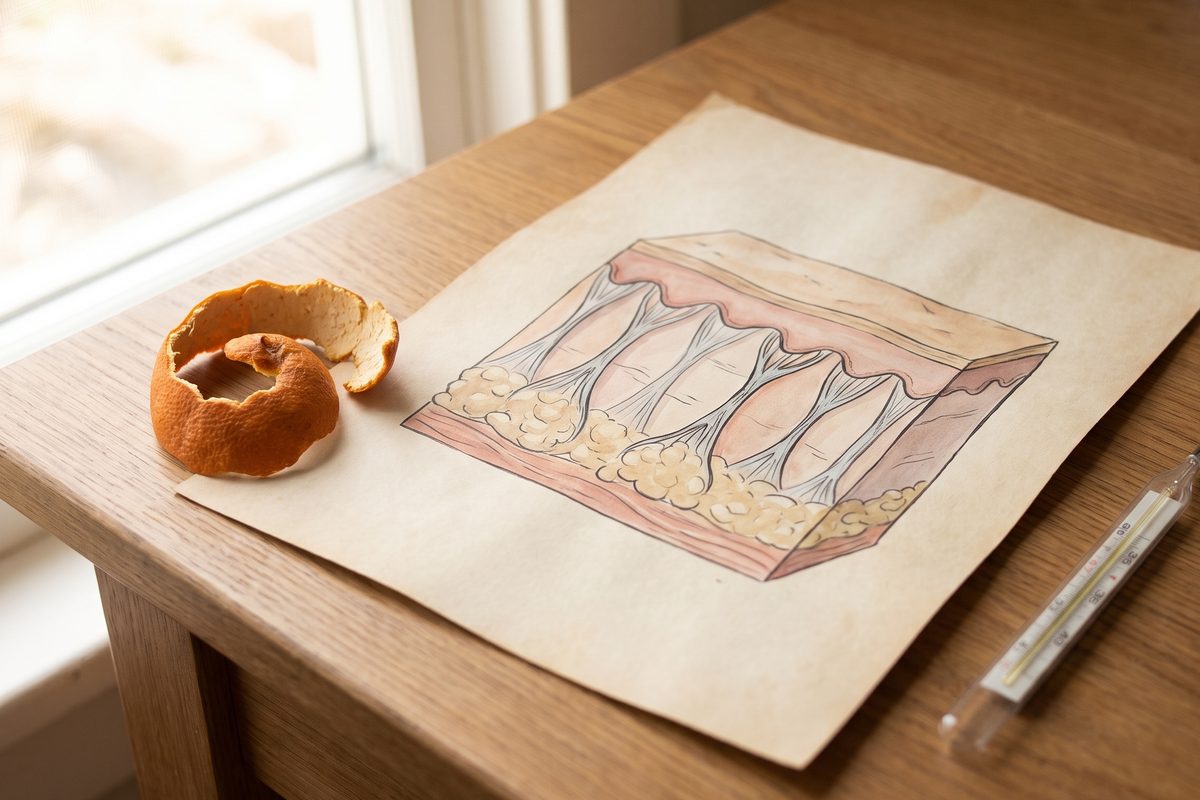
Cellulite is a dimpled, uneven look in the skin, usually on the thighs, buttocks and hips. A 2023 review puts it in 80 to 90 percent of females. It is not an illness, it does not turn into anything, and it causes no harm. Some people are bothered by it and some are not, and either is fine.
The cause is not fully understood. Reviews describe fibrous septae, bands of collagen that tether the skin to the tissue below, as playing a central part, with several other factors also involved. The same 2023 review is blunt that there is no effective treatment in the sense of a fix that lasts, that results are unpredictable, and that improvements are short lived. A 2021 review adds that trials are hard to compare because they use different methods and follow people for only a short time.
Where cellulite is the concern, what causes it and what the treatments do goes through each option and the evidence for it. The clinic uses OndaPro, a microwave device, for the appearance of cellulite. Its published evidence is early and mostly small studies, it can improve appearance for some people, and no result is guaranteed. Where the real concern is a stubborn pocket of fat, stubborn fat treatment starts from a different question.
Does infection matter before a cosmetic treatment?
Yes. Skin that is inflamed or infected is not treated with energy devices. An international advisory board paper on microwave treatment lists skin infection or inflammation in the treatment area as a reason to postpone or exclude treatment. A hot, red, painful patch needs a doctor first, and the cosmetic question waits until it has settled.
The short version
Cellulite is a pattern, and nothing needs to be done about it urgently. Cellulitis is an infection, and a hot, swollen, painful patch needs a doctor the same day. When in doubt about which one you have, choose the doctor.