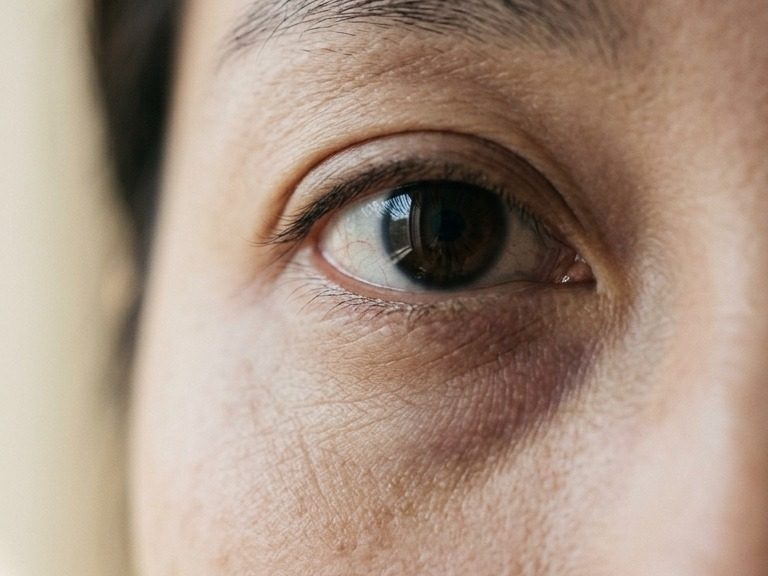
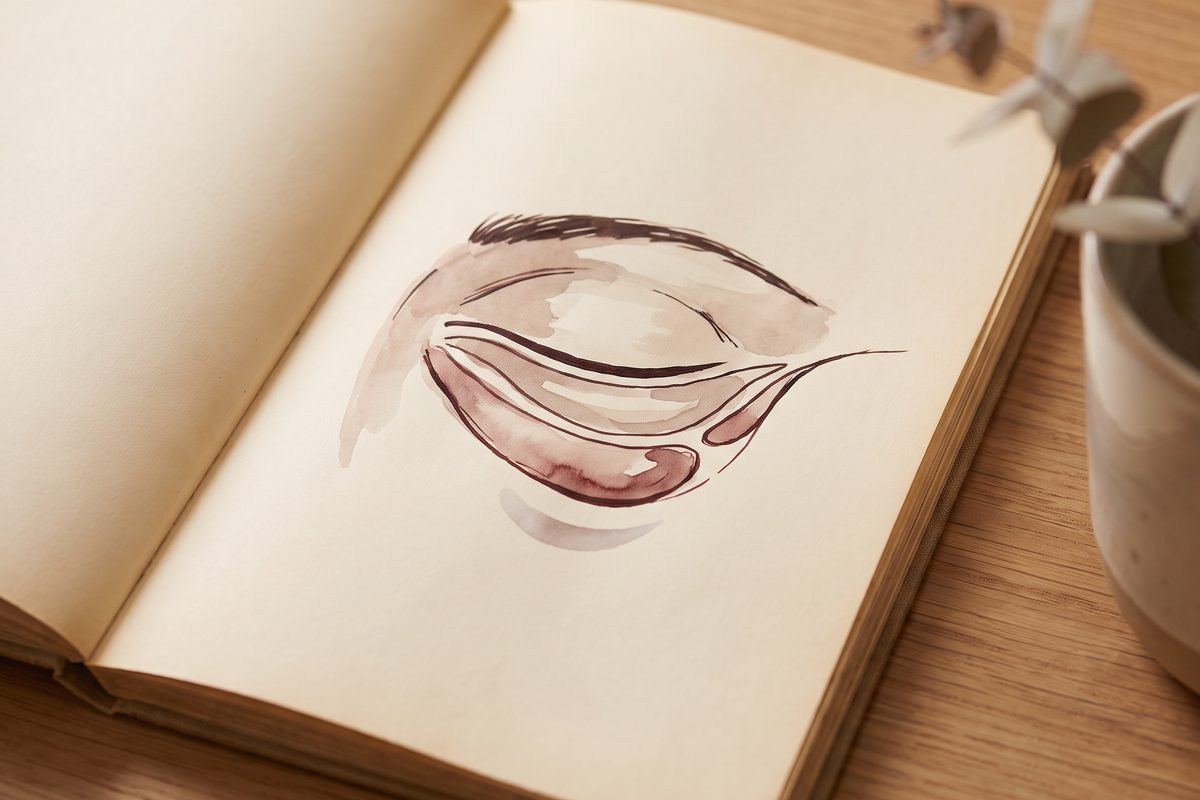
The five things people call an eye bag
A bulge of orbital fat pushing forward as the tissue holding it back weakens. A hollow beside the cheek that casts a shadow deep enough to read as a bag in photographs. Pigment in the skin itself, common in Malaysian and Southeast Asian skin and often familial, sometimes carrying a bluish tint from the vessels beneath. Thin, crepey lower-lid skin that shows the structures underneath. And fluid that comes and goes with sleep, salt and allergy. Two structural, one pigmentary, one dermal, one lifestyle.
They photograph the same at arm's length. They are treated completely differently. And most faces carry more than one at once, which is why the under-eye area produces more misdiagnosis than almost anywhere else on the face. Getting the read wrong does not just fail to help. It can make the exact complaint the patient came in with look worse.
What does an energy device actually do?
Heat placed at a chosen depth. A controlled response in the tissue. Collagen laid down over the following two to three months. Focused ultrasound, the kind used in Ultherapy, deposits that heat at small focal points at a precise depth below the surface without breaking the skin. Radiofrequency heats a broader field. Both are designed to act on tissue that has loosened by stimulating it to rebuild.
Nothing in it removes tissue. Nothing in it moves fat. Nothing in it lightens pigment or drains fluid. That is not a criticism of the technology. It is a description of the mechanism, and the mechanism is simply not aimed at four of the five causes on the list above.
Why does that miss four of the five?
A fat bulge is held back by a retaining membrane that has slackened with age. The skin sitting above it is not the cause. Heating the skin above a bulge does not move the fat behind it, and collagen built in the dermis above a prolapsed fat pad does not tighten the structure holding the fat in place. The concern page carries this plainly: filler placed around a bulge only makes the area heavier, and an energy device faces the same geometry.
A hollow reads as a bag because of the shadow it casts, not because something has grown there. The problem is a deficit of support beside the cheek. Tightening the skin above a deficit does not fill it, and on a lean face tightening can sharpen the look of depletion rather than soften it.
Pigment in the skin is not a collagen problem. It is a pigment problem, answered by work aimed at pigment. Heat-based treatment in the skin tones common here carries a recognised risk of post-inflammatory hyperpigmentation, where the inflammation of treatment triggers more pigment production. That is a standard principle in dermatology, and it is the reason pigment under the eye is treated with care rather than heat.
Fluid that changes between Tuesday and Thursday is not a collagen shortage. Puffiness that tracks with a late night, a salty meal, or seasonal allergy is a lifestyle and allergy question. The honest prescription for that one is boring and free: sleep, reduced sodium, and an antihistamine where relevant. A device does not change the pattern.
Is there a fifth cause in the right family?
Thin, crepey lower-lid skin is the one presentation where the family of problem, skin quality and dermal thickness, is closer to what collagen-building work is designed to act on. The results are measured in months and modest by the standards of what people picture when they book. Which tool suits that presentation, and whether any tool is appropriate at all given everything else the assessment finds, is settled at the assessment rather than here.
Under the eye, restraint is the safety margin. The area forgives nothing done in excess, and the right ceiling for any intervention there is set in person, in proper light, after the cause is identified. Two live pages on this site make the same point in different words: the skinboosters page notes that the under-eye area is treated more selectively, and that it is an assessment call made after the cause is identified.
What about Ultherapy specifically, since that is the question most people search?
On this site, focused ultrasound is used for early laxity on the brow, the jawline and the neck. The brow is the periorbital part of that list. When a heavy brow sits a little higher, the upper lid region changes with it, and a fair number of people who say their eyes look tired are describing the upper lid and the shadow around it, not a lower-lid bulge. The tiredness piece covers this: tiredness is usually a question of skin quality, light and structure, and the cause decides everything.
The lower-lid bag is a separate anatomical problem. A treatment aimed at the brow and the upper face is not the same as a treatment aimed at a lower-lid bulge, and describing focused ultrasound as an eye bag treatment conflates two different regions and two different problems. Skin quality, pigment and fine lines sit at a different layer from what the ultrasound beam addresses.
Where does eye bag treatment actually start?
In proper light. The under-eye is checked for a true fat bulge by observing how the tissue behaves when the skin is gently stretched. The darkness is assessed by how it responds to the angle of light and whether it shifts when the patient looks upward. A fluid pattern is separated from a fixed one by history. The mix of causes present, and there is almost always a mix, is mapped before anything is recommended.
The assessment can end with a recommendation to do nothing, or to address something other than what the patient arrived thinking was the problem. That is not an unusual outcome here. It is what happens when the read is done carefully, and it is what protects the patient from the cost of the wrong tool in an area that does not easily forgive a mistake.
The assessment happens in person and in proper light, in Setia Alam, which sits inside Shah Alam, Selangor, with Dr Ong Jin Khang. The consulting room piece describes what that process looks like in practice. The diagnosis is the start. The eye bag treatment question is answered inside it, not before it.
For the bags that turn out to be prolapsed fat, the honest answer leaves this building, and it is worth knowing what that conversation involves before having it. Dr Catherine Chow, a consultant oculoplastic surgeon, sets out what lower eyelid surgery actually addresses, and when a bag is fat rather than fatigue. This page explains why an energy device usually cannot help. Hers explains what can. Surgery has its own trade-offs, and the one worth knowing about in advance is what it can do to the tear film, which Dr Chow sets out in what is and is not proven about dry eye after eyelid surgery.
For a broader read on what the eyelids themselves can develop beyond a bulge, her eyelid conditions hub is a useful place to check whether a change is ordinary ageing or something worth a proper look.