Why can a selfie make a nose look wider?
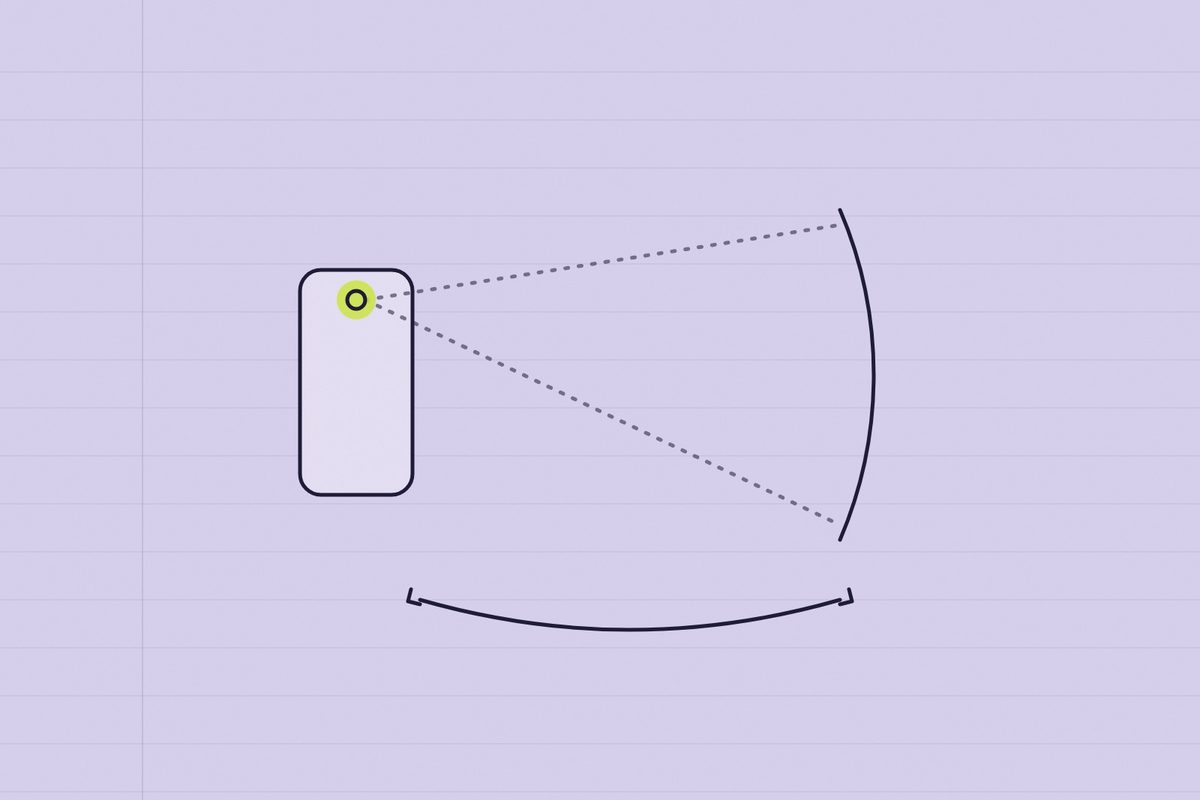
The model behind the 30% figure treats the face as flat layers at different distances from the camera. The tip of the nose sits nearer the lens than the cheekbones do. The closer the camera, the more that gap counts, and the nearer layer is drawn larger. The model comes from a 2018 research letter in JAMA Facial Plastic Surgery by Ward and colleagues. They note that the distortion does not accurately reflect the three-dimensional appearance of the nose.
The same journal ran a comment titled "Perceived Facial Distortions in Selfies Are Explained by Viewing Habits". It argued that the widening appears when a close-range photograph is viewed from a normal distance. The original authors published a reply.
How much wider does it look?
In the model, at 12 inches (30.48 cm), the ratio of nose width to cheekbone width came out 30% larger for the average man. For the average woman it was 29% larger. Both are set against a distortion-free projection.
That number has limits. It is a change in a ratio, and no nose was measured. Nobody was photographed. The model used average face measurements from the United States, with no breakdown by ethnic group, so it cannot say whether the size differs from one face to the next.
In 2022, Pressler and colleagues photographed 30 volunteers with a phone at 12 and at 18 inches (46 cm) and compared the results with clinical photographs. The ratio of nose-base width to face width differed by 10.8% between the 12-inch selfies and the clinical photographs, and by 7.8% at 18 inches. The nose also measured 6.4% longer at 12 inches. In a smaller study of 12 people (Derakhshan and colleagues, 2024), a smartphone at 12 inches stretched the midface vertically by 12%.
So the change is real and reaches beyond the nose. Its size depends on what is measured and how, which is why the confidence is medium.
What these studies cannot tell you
Mirrors, filters and comparing yourself with other people's photographs were not covered. Nor do the studies settle a distance at which a photograph becomes distortion-free. In the 30-volunteer study, 18 inches differed less from the clinical photographs than 12 inches did, and no distance has been shown to remove the effect.
The studies describe how a photograph behaves. They cannot say whether any feature needs treatment.
What should you do before judging a feature, or asking for a treatment?
Treat a selfie as one view from one distance. If a feature caught your eye in one, look at it in a photograph taken from further away before you decide anything. Then ask what a treatment would change in your face itself, and whether the thing that bothers you still shows from further away.
If it does, that is a fair thing to bring to a doctor. Bring more than one photograph and say how far from your face each was taken. A photograph of someone else's face raises a related question, and what a useful goal sounds like starts from your own. Distance and lens are also two of the photographic choices behind every before-and-after.
How do you take a fairer photo?
A fairer photo is one with a smaller effect.
Hold the phone further from your face than arm's length. Prop it on a shelf and use the timer, or ask someone to take it from further away.
Take two photographs of the same face in the same light, one at arm's length and one from further away, and compare them. Any difference is likely to come from the camera distance.
A selfie is one view of your face, from one distance. Whether a feature needs treatment is a question for an assessment in person, in three dimensions. One photograph cannot answer it.