
Two questions that get run together
Pigmentation and redness both raise the same question close to an event: what can actually still be done. The honest answer needs two separate pieces of information, not one. First, how long does the treatment itself take to show its result. Second, how long does the skin need to recover from having it done at all. A treatment can be fast on one measure and slow on the other, and conflating the two is how a plan goes wrong in the final weeks.
PicoSure: genuinely fast for a single spot, genuinely not for diffuse damage
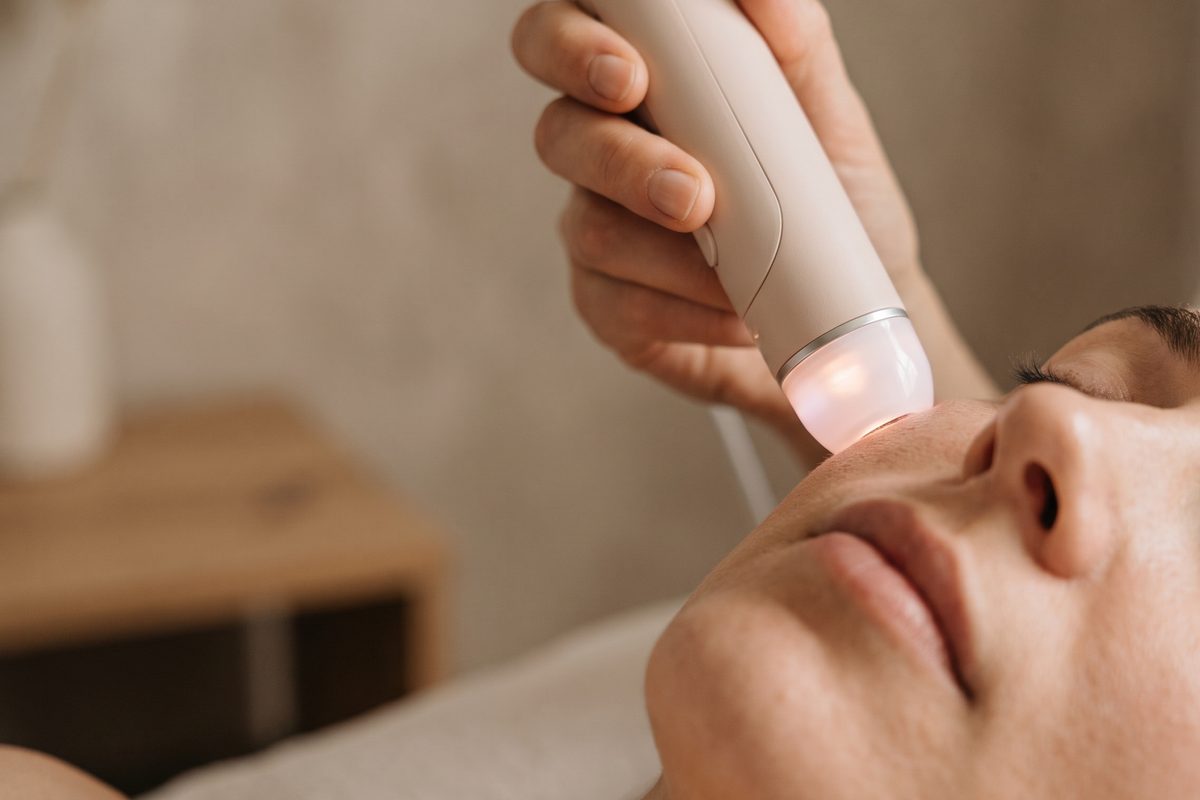
PicoSure is a picosecond laser that shatters pigment mechanically, and the fragments clear through the body's own pathways over the days and weeks that follow a session. That is one of the more genuinely quick timelines in this series, with a real caveat attached: the clinic's own page states that a discrete sun spot may clear in one or two sessions, while diffuse damage or tattoo ink takes a planned course, spaced so the body can clear the fragments between visits.
Downtime is minimal, sometimes a few hours of redness, with most people back to their day directly. A single spot still wants at least a month booked ahead of the date, enough for the days-to-weeks clearing window and room for a second session if one turns out to be needed. It is a shorter timeline than almost anything else in this series, but it is not a same-week option. A face with widespread sun damage, needing a course, is not the same request, and it deserves the longer timeline, several months, stated plainly rather than compressed to fit a date.
Medical grade peels: the label is not the fact worth checking
A chemical peel is not one treatment with one timeline. It is a category sorted by depth, and depth is the fact that actually determines both what the peel does and how much recovery it needs, not the phrase "medical grade" printed on a menu. A separate piece on this site sets that classification out in full, superficial, medium and deep, with what each agent and depth actually means, and it is worth reading in full rather than summarised here again.
What matters for event planning is the same principle stated elsewhere in this series: the depth of a peel decides its recovery time, and a peel booked without knowing which depth is involved is a peel booked without knowing the one fact that actually governs whether it fits before a date.
Redness after any treatment has its own timeline, separate from the treatment itself
Redness is not unique to pigment treatments. It follows lasers, radiofrequency and microneedling generally, as the visible first stage of the skin healing from a controlled treatment. A separate article on this site sets out, in detail, how long that ordinary redness should be expected to last, and the specific signs, worsening rather than improving redness, pain out of proportion to what was done, discharge, an odd smell, a spreading red line, that mean it is not ordinary healing and needs a doctor rather than more waiting. That detail is not repeated here.
What belongs in this piece is the planning implication: any treatment that leaves redness behind needs that redness to have settled before the event, not merely for the treatment to have been performed. A session scheduled the day before a date has given the redness no time to follow its own healing curve, whatever the treatment.
Why pigment and redness both sit closer to the "sometimes fast" end
Compared with the courses and slow-building devices covered elsewhere in this series, pigment and redness genuinely do include some shorter options, and it is worth being clear about why. PicoSure's mechanism works quickly on a single, discrete area of pigment because the laser is shattering a fixed amount of pigment already sitting in the skin, not prompting new tissue to grow over months. A superficial peel works on the outermost layer only, which is part of why it carries the lightest recovery of the three depths. Redness is simply the visible first stage of healing, and a lighter treatment produces a shorter version of it. None of that changes the deeper category of concern, diffuse pigmentation, or a deeper peel, which still needs the longer timeline set out in the linked articles.
That distinction, between a small, contained pigment concern and a broad or deep one, is exactly what an assessment sorts out, and it is worth having that conversation before assuming either the fast option or the slow one applies.
What this means for the final stretch before an event
Of the treatments and concerns covered across this whole series, pigment and redness are the ones most likely to have a shorter option available, a single PicoSure session for a discrete spot booked at least a month out, or a superficial peel, provided there is still enough time for the clearing or healing window before the date. Neither is a final-week option. HydraFacial is the only treatment in this series that genuinely is.
A treatment that leaves any redness behind, however briefly, needs that redness settled before the event, not merely performed before it. Booking the treatment itself for the day before a date, and assuming the after-effects will not matter, is how a fast option on paper turns into a visible problem on the day.
The full countdown, from the treatments that need months to the ones that fit inside a week, is set out in the planner, alongside the other two parts of this series covering energy-based devices and collagen-building courses.