What every energy device actually does
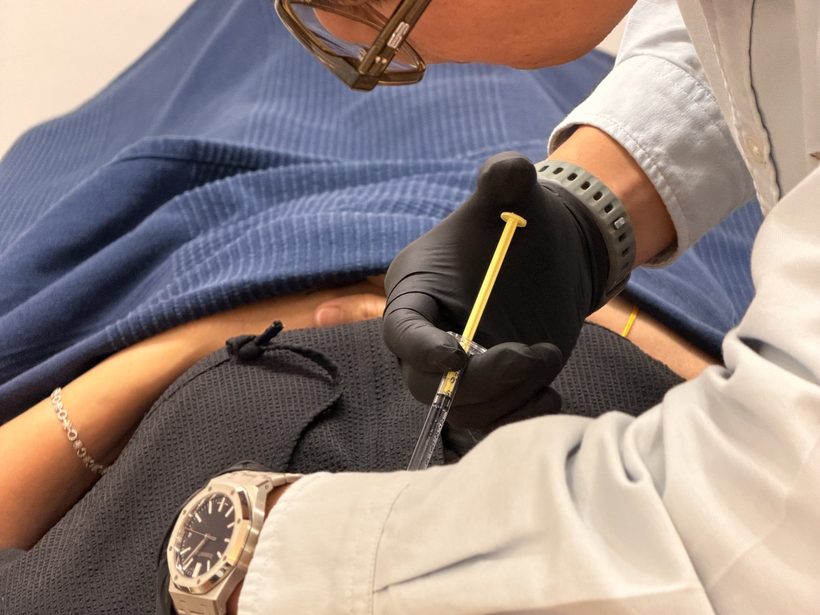
Every energy device used for skin tightening does one physical thing. It delivers controlled heat to a chosen depth in the tissue, and the body responds by laying down new collagen in that layer over the months that follow. Focused ultrasound reaches the deep plane, the same layer of tissue a surgeon would address on the face and neck. Radiofrequency works shallower and broader. Treatments that work through the skin surface itself take a third route. These are three roads to the same destination, and all three ask the tissue to reorganise. None of them takes tissue away.
Devices remodel skin. They do not remove it. This is not a limitation of current technology. It is the category. A device that heats a layer of tissue will firm that layer if the tissue has enough elasticity to respond. It will not reduce the amount of tissue present. So the useful question is always the same one: what kind of finding is actually there?
What weight loss actually does to the skin
Fat beneath the skin was occupying volume, and the skin above it was stretched around that volume, sometimes for years. When the volume goes, whether the skin recoils depends on how far it was stretched, how long it was held there, age, sun exposure and the skin quality that was inherited rather than earned. This is why two people who lose a similar amount can arrive with completely different envelopes. The history of the stretch matters as much as the size of it.
This also means there is no single answer that covers everyone who searches the same phrase. The envelope is individual, and it keeps changing while the weight does. A reading taken mid-course describes a body that will not exist in six months. If the weight loss itself is still in progress or still being decided, that conversation belongs with a doctor first, on a medical weight management pathway, before any device question is worth asking.
The three-way sort that decides everything
Not every post-weight-loss concern is the same problem. There is a useful three-way distinction, and knowing which category applies changes what is honestly worth considering.
The first is skin that has softened but is not redundant. Elasticity is reduced but present. The skin sits a little looser than it did and does not spring back as quickly. This is the finding where firming is a reasonable and modest goal, and where a tightening device is doing the job it was built for. The honest goal is a gradual firming, over months, not a dramatic change.
The second is residual localised fat with a decent skin envelope. This is a body contouring question, not a tightening question, and it belongs in a different category with different tools. The important limit here is that contouring works on fat, not on loose skin. OndaPro, for instance, is not the right candidate where an area is mainly loose skin rather than fat. Getting this wrong is a category error, not a treatment failure.
The third is a genuinely redundant skin envelope, where there is more skin than the frame beneath can fill. No energy device gives a result worth its cost here. The mistake, when it happens, starts in the marketing rather than in the treatment room. A patient who arrives expecting a tightening device to solve a surgical problem has been given the wrong map, and the cost of that is not only money. It is months, and a conclusion about an entire category of medicine that the category does not deserve.
How the assessment actually reads the skin
The difference between these three is not visible in a photograph. It is answered by examination. The skin is pinched to judge its quality and recoil. Descent is assessed at rest and in movement. Volume is checked separately, because a hollow area can drop a fold that looks exactly like laxity, and the two findings call for different responses. Age gives a clue, not the answer. A twenty-eight-year-old and a sixty-year-old who lose the same amount can arrive with a similar envelope or a completely different one. The variables are too many for any rule of thumb to hold.
This is the examination described on the sagging skin concern page: a layer-by-layer read, not a glance in the mirror. It is the part that decides whether any treatment is worth recommending, and which one.
The face after significant weight loss
The face deserves its own note because it is the part most accounts of this subject miss. After significant weight loss, the face often loses volume before it loses tone. A face that looks loose may in fact be a face that has lost the fat pads that held it in place. Tightening a deflated face can sharpen the look of depletion rather than soften it.
The distinction the assessment corrects most often on the face is descent versus deflation. Descent is tissue that has moved downward. Deflation is volume that is simply no longer there. A tightening device addresses the first. It cannot address the second, and in some cases it makes the second more visible. Knowing which finding is present is what makes a recommendation honest rather than optimistic.

Where the limit actually sits
Once laxity is advanced, with skin in genuine excess, the honest answer is surgical. For the body, the threshold is when a reasonable person would look at the envelope and see that no remodelling response is going to close that gap. Dr Ong's own position on this: if you have lost a significant amount of weight and the skin in a particular area is visibly hanging, a device is unlikely to give you a result that matters to you, and I would tell you that before we talked about anything else. We refer accordingly, because the right answer for the patient matters more than keeping the appointment.
That referral is part of the assessment, not a failure of it. A modest result sold at a premium is still the wrong recommendation. The point of the examination is precisely to find the cases where the honest answer is not a treatment at this clinic.