What is mesotherapy?
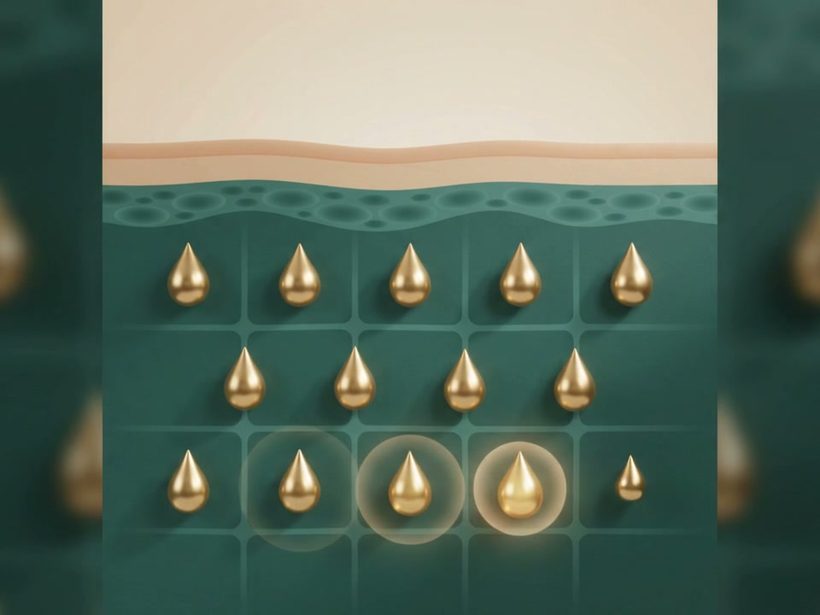
Mesotherapy is a way of giving a treatment: many tiny injections placed in or just under the skin, close to the area of concern. The word describes the delivery and says nothing about the contents. It has been used for skin quality, for fat, for scars and for hair, with a different mixture each time.
This is why the same word can describe very different things. A syringe of a single registered hyaluronic acid product and a hand-made cocktail of several ingredients can both be sold as mesotherapy. The first is a known product. The second is whatever the person mixing it chose.
What goes in the needle?
There are three broad possibilities. A single registered product, such as a hyaluronic acid or polynucleotide skinbooster. A manufactured multi-ingredient product, such as NCTF, which a 2015 review describes as a polycomponent formulation of vitamins, minerals, amino acids, nucleotides, coenzymes, antioxidants and hyaluronic acid. Or a mix made up in the clinic from several ampoules.
For the manufactured mixes, the review says the reasoning rests on laboratory experiments and calls for large controlled trials. That tells you how much weight the claim can carry today.
The clinic-made mix is the one to ask about. Ask for the name of every ingredient, the maker of each, and where its registration can be looked up. If the answer is vague, that is the answer.
What do Malaysian rules say about the contents?
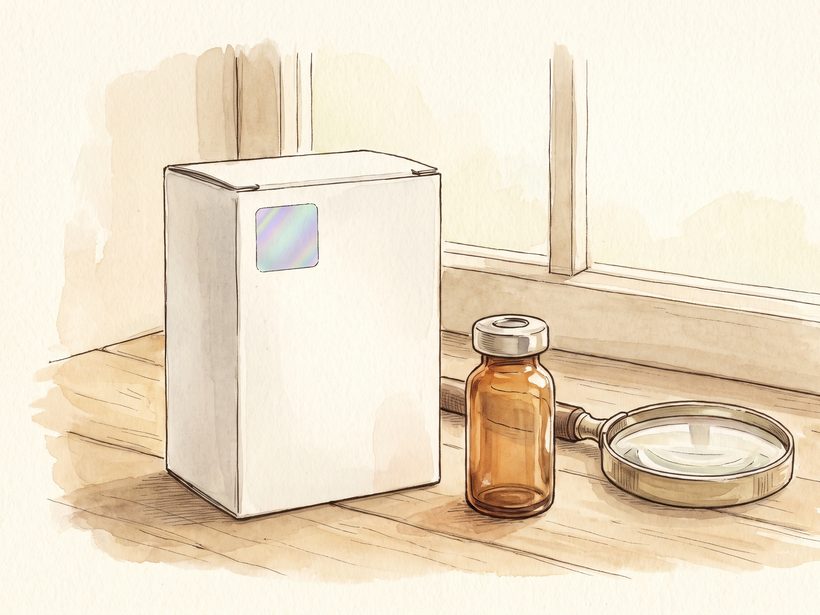
Two registers matter. The Ministry of Health says every medicine must be registered before sale, and a registered medicine carries a MAL number and a hologram label. A medical device is registered with the Medical Device Authority, and section 5 of the Medical Device Act 2012 says no device may be placed in the market unless it is registered. The guide to checking a product shows how to search each.
Where a vial is a registered product, the entry shows it is on a register. It does not show that the box is genuine or suits the problem. Where several vials are combined in a clinic, the mixture itself has no entry. Whether a particular mix needs its own registration is a legal question, and the Ministry's public guidance does not spell it out. The practical check is the one above: each ingredient should have an entry you can find.
Prescription ingredients add a second layer. Under the Poisons Act 1952, a Group B poison is supplied by a registered medical practitioner, or by a pharmacist against a prescription from one.
Who may inject it?
An injection into the skin is a medical procedure. The doctor injecting should be a registered medical practitioner working in a registered clinic, and the guide to checking an aesthetic doctor sets out the public registers. That is Dr Ong's reading of the general rules on medical practice; no rule is written for mesotherapy by name.
It matters because of the risk the literature documents. A 2022 systematic review gathered 423 patients with non-tuberculous mycobacterial infections linked to mesotherapy. Infections often took weeks to clear, often needed more than one antibiotic, and frequently left scars. These were case reports, so they cannot give a rate, and the review says the cases varied. They show that clean technique and sourcing are not details.
How is mesotherapy different from skinboosters?
A skinbooster is a product. Mesotherapy is a technique. The two overlap because a skinbooster is also injected as many small deposits, and some people call that mesotherapy. What skinboosters fix explains what a hydration injection can and cannot do, and the types of skinbooster sort the names into hyaluronic acid, polynucleotides and cocktails. Polynucleotides have their own evidence, set out in the article on PDRN, polynucleotides and salmon DNA.
The useful comparison is by content. A single registered product has a known composition and a register entry. A cocktail has a list of ingredients that varies with who mixes it.
Hair mesotherapy, in brief
Hair mesotherapy injects a mix into the scalp for thinning hair. A 2017 systematic review pooled five studies with 344 patients and found improvement in most outcomes, but the authors rated the studies as poor quality and asked for more research. That is a reason for caution and not a verdict.
Thinning hair has causes that injections do not touch: iron or thyroid problems, a medicine, shedding after illness or childbirth, scalp disease, or pattern loss. Hair loss care starts with naming the cause, and the PRP article covers the other scalp injection people ask about.
What The Retreat Clinic does and does not offer
The Retreat Clinic does not offer mesotherapy. It injects hyaluronic acid skinboosters, a registered device with a known composition, and it does not offer PRP or any other injection for hair loss. Dr Ong's role with a patient who asks about mesotherapy is to explain what the product would be and whether the problem has a better-matched answer.
The honest limit
Mesotherapy is neither a scam nor a proven answer. The method is simple, the mixtures vary, and the evidence behind most of them is small. Ask what is in the syringe, find its register entry, and check the doctor, and the word on the menu matters much less.
Common questions
Is mesotherapy allowed in Malaysia?
Mesotherapy is a method of injecting into the skin, and the method is not what the rules turn on. The contents are: a medicine must be registered with the NPRA, a medical device with the Medical Device Authority, and prescription medicines are supplied through a registered doctor or pharmacist. Ask what is in the syringe and where its registration can be checked. The Retreat Clinic does not offer mesotherapy.
Is mesotherapy worth it?
It depends on what is injected and for what. The evidence is thin and mixed: reviews of mesotherapy for skin ageing rest mainly on laboratory rationale, the one systematic review for hair loss rated its studies as poor quality, and there is a documented risk of infection. Worth is a decision to make with a doctor who has named the problem first.
Is mesotherapy the same as a skinbooster?
No. A skinbooster is a specific product, usually hyaluronic acid or a polynucleotide, registered as a device. Mesotherapy is the technique of many small injections, and some products sold as skinboosters are mixtures that are also called mesotherapy. The registered product matters more than the word on the menu.
Does hair mesotherapy work?
The evidence is limited. A 2017 systematic review of five studies found improvements in most outcomes but rated the quality as poor, and called for more research. Hair loss needs its cause named first. The Retreat Clinic does not offer any injection for hair loss.
Sources
- Prikhnenko S. Polycomponent mesotherapy formulations for the treatment of skin aging and improvement of skin quality. Clin Cosmet Investig Dermatol 2015;8:151-157 Polycomponent formulations such as NCTF contain vitamins, minerals, amino acids, nucleotides, coenzymes, antioxidants and hyaluronic acid; the rationale rests on laboratory experiments and large controlled clinical trials are called for.
- Singsing et al. Clinical features of mesotherapy-associated non-tuberculous mycobacterial infections: a systematic review. International Journal of Women's Dermatology, December 2022 (search summary and abstract record read 14 November 2026; full text not opened) Systematic review of case reports: 30 articles covering 423 patients met inclusion criteria; most were women aged 16 to 55; lesions were mostly on the abdomen, buttocks or thighs; infections often took weeks to clear, often needed more than one antibiotic course and frequently left scars; the authors flagged variation among case reports as a limitation.
- Marzban S, Amani F, Asgharzadeh A. Safety and efficacy of mesotherapy in the treatment of androgenetic alopecia: a systematic review. Health Technology Assessment in Action, 2017 (abstract read 14 November 2026; full text not opened) Five studies with 344 patients (three randomised, two not) met the criteria; the authors rated study quality as poor; most outcomes improved but one study did not show effectiveness for some outcomes; no significant adverse effects were reported; the authors concluded that further research is needed.
- Pharmaceutical Services Programme, Ministry of Health. How to identify a medicine registered with KKM (FAQ). Read 10 October 2026 All medicines must be registered with the Ministry before sale, including those made abroad; a registered product carries a MAL number and a hologram security label, and a product with neither is suspected of being unregistered.
- Medical Device Authority, Malaysia. Malaysia Medical Device Register (MMDR), public search. Read 10 October 2026 Anyone can search registered medical devices by brand name, registration number or establishment; a device that does not appear is unregistered, expired, suspended or cancelled. Medical Device Act 2012 (Act 737), section 5: no medical device may be imported, exported or placed in the market unless registered.
- Malaysia. Poisons Act 1952 (Act 366), Ministry of Health pharmacy services copy Group B poisons are supplied by a registered medical practitioner or by a pharmacist against a registered practitioner's prescription.