
Is it normal to leak urine after having a baby?
It is common, and common does not mean you must accept it. A Cochrane review of pelvic floor training in pregnant and postnatal women starts from the figure that about one-third of women have urinary incontinence after childbirth. The review gives no Malaysian figure, so it is unclear how that number looks here.
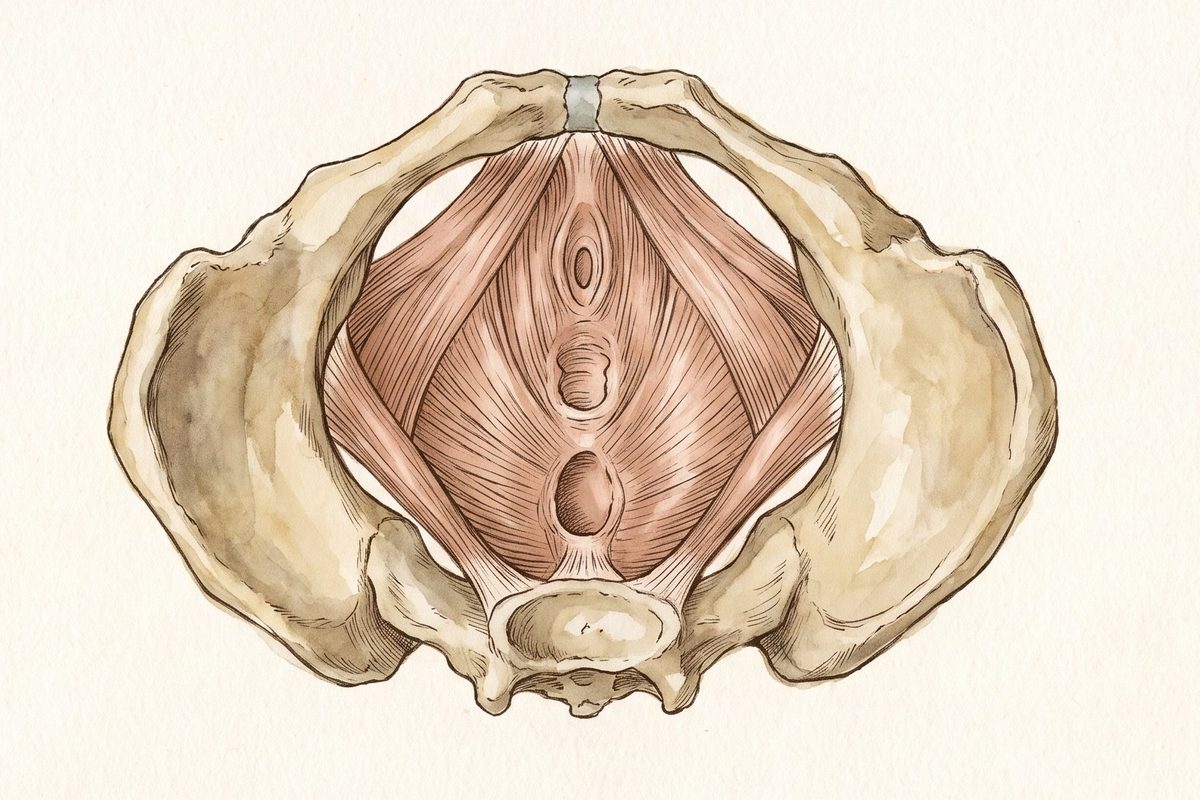
The leak that comes with a cough, a laugh, a sneeze or a jump is called stress urinary incontinence. The pelvic floor is a sling of muscle across the base of the pelvis, and it helps hold the bladder closed. When pressure rises suddenly and the sling cannot respond fast enough, a little urine escapes. Pregnancy and birth load that muscle, which is why the problem so often starts after children.
Stress leakage is one pattern. Urge incontinence, a sudden strong need that you cannot hold, is another, and many women have a mix. The type matters because the treatments differ. The bladder leakage page sets out how the types are told apart.
What is the first treatment for leaking after childbirth?
Pelvic floor muscle training, and the guidelines are clear about it. NICE guideline NG210 on pelvic floor dysfunction tells clinicians to offer a supervised programme of at least three months to women with stress or mixed incontinence. It also asks that women be encouraged to do the exercises as part of routine postnatal care.
The trial evidence points the same way. A Cochrane review of 31 trials and 1,817 women found that among women with stress incontinence, 56% of those who trained reported cure by the end of treatment, against 6% of those who had no treatment or an inactive one. Those were small trials with follow-up of mostly under a year, so read the numbers as a direction.
The postnatal picture is less tidy, and it is worth saying so. A separate 2020 Cochrane review looked at training in pregnant and postnatal women. Training during pregnancy lowered the chance of leaking three to six months after birth by 29%. For women whose leaking had already persisted after birth, the evidence was low in quality and could not show a clear difference at six to twelve months. The reviewers noted that the programmes varied and were often poorly described. That reads to me as training works, and the best way to deliver it after birth is still being worked out.
Why do pelvic floor exercises need to be supervised?
Because you cannot see this muscle, and it is easy to squeeze the wrong things. NICE asks that programmes be supervised by a physiotherapist or another professional with expertise, who first checks that you can contract and relax the pelvic floor, then fits the programme to what you can do, with at least one review during the programme and one at the end.
If you cannot manage an effective contraction, NICE says to consider adding biofeedback, electrical stimulation or vaginal cones to the training. Once the supervised programme ends, the advice is to carry on, because a muscle that is not used loses what it gained.
Does the Kegel chair work for leaking after childbirth?
Possibly as an addition, and the evidence is still small. The chair uses high-intensity focused electromagnetic energy (HIFEM, sold as Emsella) passed through the seat so that the pelvic floor contracts without you doing the squeeze. The Emsella article explains the mechanism. This section looks at what the studies found.
A 2025 meta-analysis pooled 7 studies. It found a larger fall in leaking episodes with the chair than with control, and a larger improvement in a standard symptom score. It found no significant difference in pelvic floor contraction or resting tone, and its authors warned of high heterogeneity and possible bias, calling for better-blinded trials.
Two recent trials put the chair on top of exercise. In a 2026 trial of 44 women with stress incontinence, everyone did supervised training, and half also had the chair. Both groups improved, the chair group did better on several measures, but after correction for multiple comparisons only three outcomes stayed significant. In a 2026 pilot of 40 mothers, the chair plus training was compared with sham chair plus training. It found no significant difference between the groups on any measure, and it was designed to test feasibility, not to prove benefit.
My reading is that the chair is a reasonable option to discuss after supervised exercises, or alongside them, and that it has not been shown to replace them. NICE guideline NG210 does not mention magnetic chairs in its recommendations.
When should I see a doctor before trying anything?
A leak that comes with pain, blood in the urine or a fever needs a medical check first, as does a sudden change in your usual pattern. So does a feeling of a bulge or dragging in the vagina, which can be pelvic organ prolapse and belongs with a urogynaecologist. A chair or exercises should come after that, not before.
Pregnancy is another reason to wait on the chair. The assessment is also where the type of leak is settled, because urge and mixed leakage do not always respond the way stress leakage does. Other changes after pregnancy have their own pages, such as stretch marks and what helps them.
What does this clinic offer for it?
The Retreat Clinic in Setia Alam has an Emsella chair, described on the Emsella page. By the clinic's own account the session is seated, fully clothed and about half an hour, a course is usually six sessions over about three weeks, and the plan is confirmed at assessment. The clinic does not provide supervised pelvic floor physiotherapy and directs patients who want that route towards it. It does not use the chair in pregnancy or with a pacemaker, defibrillator or nearby metal implants, and it refers prolapse beyond a mild degree to a urogynaecologist. What a first consultation decides covers the assessment.
Leaking is common, mechanical and treatable. The first step is knowing which kind of leak you have.