What is a hyaluron pen, and why do people search for one?
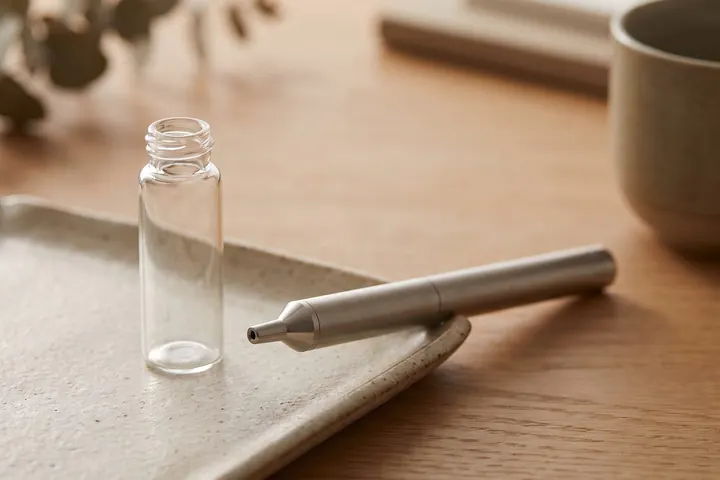
A hyaluron pen is a handheld device that pushes liquid hyaluronic acid into and under the skin using pressure, from compressed air or a spring-loaded piston, with no needle. Cleveland Clinic describes the design as modelled on the jet injectors used for some vaccines and insulin. The appeal is easy to see: people dislike needles, and a pen on a plain tray looks tidier than a syringe.
In Malaysia, searches for these devices run alongside "lip filler kit", "needle free filler" and "hyaluron pen training". Kits sold to the public tend to pair the pen with ampoules of HA. That pairing is the part this article is most concerned about, because the pen is a delivery method and the doctor's judgement about where the product should go is not in the box.
Do hyaluron pens work?
No controlled trial of a hyaluron pen against a conventional needle or cannula turned up in the searches made for this article, so what follows is what the available reports say and not a measured success rate. The doctors who have written about the devices describe a control problem. Cleveland Clinic quotes a plastic surgeon saying the depth of penetration and the amount delivered cannot be controlled. The authors of a published case report write that pressure delivery may be less precise than the classical methods, and that with a pressurised pen the plane of injection can be erratic, so the product reaches varying layers of the skin.
That matters because filler is placed at a chosen depth. Too shallow and it can show as lumps. Too deep or in the wrong spot and it can press on or enter a blood vessel. A device that cannot place the product in a chosen layer removes the part of the procedure that the doctor's training is for.
What are the risks?
The FDA safety communication of 8 October 2021 says the agency is aware of serious injuries, and in some cases permanent harm, to the skin, lips or eyes from needle-free injection of lip and facial fillers. It adds that it has not evaluated the safety or effectiveness of needle-free devices for this purpose and has not approved them for marketing. FDA-approved fillers are prescription products meant for use with a syringe with a needle or cannula.
The risks named in the clinical literature are the same ones that follow any filler: bruising, swelling, lumps, infection, asymmetry, scarring and allergic reaction, and rarely a blocked blood vessel. A published guideline on managing blocked vessels after HA filler describes the early signs as escalating pain, pale or dusky skin that may turn a lace-like purple, and slow return of colour after pressing on the skin. Its authors state that a blocked vessel can cause retinal damage within 12 to 15 minutes in some cases, and that rapid treatment with hyaluronidase, the enzyme that dissolves HA, rescues threatened tissue. The first hour matters, and the clinic has set out the signs of a blocked blood vessel after filler and what to do in the first hour.
One case report describes a 31-year-old woman who had two syringes of HA placed in the lips with a vacuum-pressure pen. She developed marked, firm swelling with bruising within three hours. An urgent ultrasound showed external compression of the inferior labial artery, with blood flow still present. She was treated with oral medicines, did not need hyaluronidase, and the swelling eased within 24 hours. The authors wrote that the lack of a needle does not remove the risks. It is one case, and it ended without tissue loss, but it shows that pressure delivery can affect a vessel.
A 2024 survey of 161 US adults who had used the Hyaluron Pen found that 79% reported a complication, and about 78% of those reported permanent disfigurement. This is an anonymous online survey of self-reports, without medical records or a comparison group, so it cannot give a true complication rate. It does show the kind of problems people say they have had, including infection, asymmetry, scarring, and the need for hyaluronidase, surgery or an emergency visit.
Is a hyaluron pen allowed in Malaysia?
The FDA warning applies in the United States and does not by itself set the rule here, so it helps to separate three questions. The first is who may place filler. The Ministry of Health's Guidelines on Aesthetic Medical Practice (second edition, 2020), as summarised in the clinic's guide, list filler injection among procedures performed by a registered medical practitioner who holds a Letter of Credentialing and Privileging (LCP). Beauticians and therapists may assist under a doctor's supervision and may not treat. The clinic sets this out in which aesthetic procedures only a registered doctor may perform. The summary read for this article does not single out needle-free devices, so the careful reading is that placing filler is the doctor's work whatever the tool.
The second question is the device. Medical devices in Malaysia must be registered with the Medical Device Authority, and the public register is at mdar.mda.gov.my. On 18 November 2026, a search of the register for "hyaluron pen", "needle free injector" and "needleless injector" returned no results, while the broader words "injector" and "syringe" did return entries. The register states that a device that does not appear is unregistered, expired, suspended or cancelled. This is a search on three generic names only. It does not show that any particular brand of pen is unregistered, because brand names, registration numbers and establishment names were not searched, and a product may be listed under another name. Anyone considering a specific product can search its brand or registration number on the register and read the entry.
The third question is the ampoule. HA filler is a product in its own right with its own registration question, and how to check whether a product is approved in Malaysia covers the checks. A box with no registration number, or a product bought from an online seller with no named maker, deserves a question before it goes near the face.
The regulation hub shows how the doctor, the premises, the device and the advertising each have their own register.
What would a doctor do instead?
The clinic's answer is a plain one. The Retreat Clinic does not use hyaluron pens, and Dr Ong places filler with a needle or a blunt cannula after an assessment of the area, because those tools allow the product to be placed at a chosen depth and the injector to stop and respond to what the tissue shows. Needles and cannulas carry risk too, including bruising, lumps and, rarely, a blocked vessel, which is why the person using them and their ability to recognise and treat a complication matters more than the tool. The article on skin booster side effects, aftercare and who should wait lists the common effects, which settle in most cases, and the signs that need a call.
If a service offers needle-free filler, three questions are worth asking before anything else. Who is performing it, and are they a registered doctor with an LCP for filler? Which product is going in, and is it on the Medical Device Authority register? What is the plan if a vessel is blocked, and is hyaluronidase on site? How to check an aesthetic doctor in Malaysia walks through the checks in order.
Common questions
Are hyaluron pens safe?
The FDA warned in October 2021 against using needle-free devices such as hyaluron pens to inject fillers, citing serious injuries and, in some cases, permanent harm to the skin, lips or eyes. It has not evaluated their safety or effectiveness. A case report and a self-reported survey describe complications, and no controlled trial read for this article shows them to be safe.
Does needle-free filler last as long as filler placed with a needle?
No study read for this article compares the two, so the question cannot be answered with evidence. What is documented is that depth and amount are hard to control with a pressure pen, and both affect how a filler looks and how long it lasts.
Can I use a hyaluron pen at home?
The FDA warning covers use by the public as well as by providers. At home, a problem such as a blocked vessel may go unnoticed, and hyaluronidase is a medicine that a doctor gives. In Malaysia, the Ministry of Health lists filler injection as a procedure for a registered doctor with an LCP.
Is a hyaluron pen registered with the Medical Device Authority?
A search of the public register at mdar.mda.gov.my on 18 November 2026 for "hyaluron pen", "needle free injector" and "needleless injector" returned no results. That covers those generic names only and says nothing about any specific brand. Search the brand or registration number on the register itself.
What should I do if lips turn pale, painful or dusky after filler?
Treat it as an emergency and contact the injector or an emergency department at once. Escalating pain, pale or dusky skin, a lace-like purple pattern, or any change in vision are warning signs. Hyaluronidase works better the earlier it is given.
Sources
- US Food and Drug Administration. Do Not Use Needle-Free Devices for Injection of Dermal Fillers: FDA Safety Communication, 8 October 2021 (read as the FDA bulletin on govdelivery; the original page is on fda.gov) Warns the public and health care professionals not to use needle-free devices such as hyaluron pens to inject HA or other lip and facial fillers. The FDA is aware of serious injuries, and in some cases permanent harm, to the skin, lips or eyes. It has not evaluated safety or effectiveness and has not approved these devices for this use. Approved fillers are prescription products intended for a syringe with a needle or cannula.
- Mattos ABN, Fim GM, Bortoli GQ, Erthal C, Brandao MG. External vascular compression by hyaluronic acid injected by vacuum device (case report). Surgical and Cosmetic Dermatology, 2022;14:e20220090 One 31-year-old woman, lips injected with two syringes of HA by a vacuum-pressure pen, marked swelling within three hours, ultrasound showing external compression of the inferior labial artery without occlusion, managed with oral medicines and no hyaluronidase, swelling reduced in 24 hours. The authors state that pressure may be less precise than classical methods and that the lack of a needle does not remove the risks.
- Ockerman K, Killeen K, Annadata V, Han S, Sorice Virk S. Patient and injector perspectives on the use of the Hyaluron Pen: a population based study. Plastic and Reconstructive Surgery Global Open, 2024;12(Suppl 8):21 (conference abstract) Anonymous online survey of 161 US adults who had used the Hyaluron Pen. 79% reported complications, about 78% of those reported permanent disfigurement. Self-reported, unverified, no comparison group, so it describes the kinds of problems and gives no true rate.
- Cleveland Clinic. Hyaluron pen (patient information page) Describes pressurised-air or spring-piston delivery modelled on jet injectors, quotes a plastic surgeon on the lack of control over depth and amount, and lists bruising, asymmetry, scarring, infection, lumps, blocked vessels and eye damage as risks. Notes the devices are not FDA approved.
- Murray G, Convery C, Walker L, Davies E. Guideline for the Management of Hyaluronic Acid Filler-induced Vascular Occlusion. Journal of Clinical and Aesthetic Dermatology, 2021;14(5):E61-E69 Early signs include escalating pain, pallor then a reticulated purple pattern, and delayed capillary refill. Hyaluronidase is the mainstay of treatment, and the authors state that rapid deployment rescues threatened tissue. Occlusion involving certain connections between the carotid arteries can lead to blindness and stroke, and the authors note retinal infarction can occur in 12 to 15 minutes.
- The Retreat Clinic. Which aesthetic procedures only a registered doctor may perform in Malaysia (17 August 2026), summarising the Ministry of Health's Guidelines on Aesthetic Medical Practice for Registered Medical Practitioners, 2nd edition, 2020 Filler injection (excluding silicone and fat) is listed among minimally invasive procedures performed by a registered medical practitioner holding an LCP; beauticians and therapists may assist under supervision. The Ministry's own document was read through this guide and not re-read for this article.
- Medical Device Authority, Malaysia. Medical device register (MeDC@St 2.0), public search, searched 18 November 2026; register last updated 17 November 2026 Searches for "hyaluron pen", "needle free injector" and "needleless injector" returned no results. "Injector" and "syringe" returned entries. The register's own note says a device that does not appear is unregistered, expired, suspended or cancelled. Generic names only; no brand or registration number was searched.