
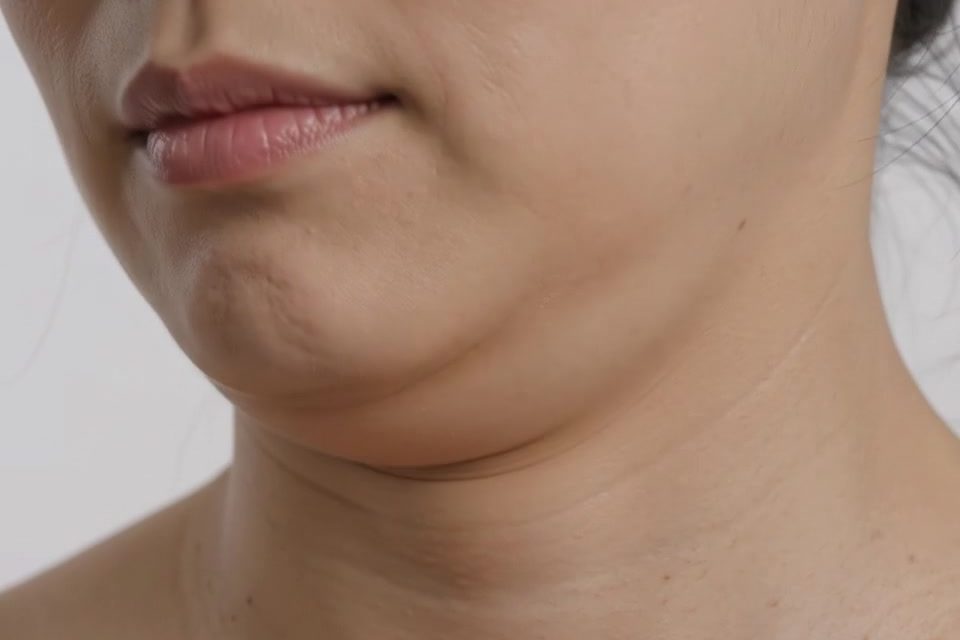
The assumption that keeps people stuck
When someone books a consultation for a double chin, they usually arrive with a treatment in mind. They have seen an advertisement for a device that melts fat, or a tightening procedure, or both. What they have rarely done is question whether their problem is fat at all.
That assumption costs people. Not because the treatments are bad, but because a fat-reduction device applied to loose skin does nothing to loose skin. A skin-tightening device applied to a fat pad does nothing to a fat pad. The mechanism has to match the cause, and the cause is not always obvious from the outside.
Submental fullness, the clinical term for the fullness beneath the chin, is genuinely multifactorial. It can be subcutaneous fat sitting between the skin and the muscle. It can be skin laxity, where the dermis has lost the elasticity to sit tightly against the jaw. It can be a tight or prominent platysmal band, the vertical muscle that runs down the front of the neck, which can push the soft tissue forward. It can be glandular. And it can be structural, where the chin or jaw simply does not project enough to give the profile a clean angle, so even a normal amount of soft tissue reads as a double chin from the side.
Often it is two or three of these at once.
What the assessment actually reads
A clinical assessment of submental fullness takes a few minutes and uses nothing more sophisticated than eyes and hands. What it is reading, though, is quite specific.
The pinch test distinguishes fat from skin. A gentle pinch of the submental tissue tells you how much is compressible subcutaneous fat and how much is skin that has lost its support. Fat feels thick and mobile. Loose skin feels thin and folds easily.
The jaw and chin projection matter enormously. Standing to the side and drawing an imaginary line down from the lower lip to the chin tells you whether the chin sits where it should. A recessed chin throws the whole profile forward. No amount of soft-tissue treatment corrects that.
The platysma becomes visible on a clench. Asking a patient to tighten their neck muscles makes any prominent banding immediately apparent. Bands that show up clearly are a separate structural element from the overlying fat or skin.
Putting these together, a clinician can map the relative contribution of each cause before recommending anything. That mapping is the actual work.
The three causes, mapped to their tools
Fat is the most straightforward to address non-surgically. Energy-based fat-reduction devices can reduce subcutaneous volume in the submental area with reasonable predictability, provided the fat is genuinely there to reduce. The result is meaningful when the diagnosis is right.
Skin laxity needs a different approach entirely. Tightening treatments work by stimulating collagen and elastin remodelling in the dermis, or by delivering energy to the deeper supporting structures to create lift. Ultherapy and XERF are both used here, targeting different tissue depths. The principle is the same: improve the skin's structural integrity so it sits more closely against the jaw. This does nothing to a fat pad.
Platysmal banding, where visible muscle bands are part of the picture, can respond to approaches that address the muscle directly. This is a less common finding, but when it is present and unaddressed, other treatments work around rather than at the problem.
Structural causes are honest surgical territory. A recessed chin or significant mandibular underprojection is a skeletal issue. Non-surgical treatments can soften the appearance at the margins, but the ceiling is low and it is better to say so clearly than to run a patient through three rounds of a device that was never going to move the needle.
What the marketing gets wrong
The phrase that follows almost every device advertisement in this category is some version of melt your double chin. It is a single-cause framing for a multi-cause problem, and it is the tell.
This is not a criticism of any device or any clinic. The devices are real, the results are real for the right patient, and the people using them are mostly doing so appropriately. The problem is upstream, in how the category is marketed to the public. One-size messaging selects for one-size thinking, and one-size thinking leads patients to pick a machine before they have answered the prior question.
The prior question is not which treatment. It is what is actually causing this. A collegial industry would lead with that question. Some of it does. The patients who arrive having already asked it are the ones who leave satisfied.
What an assessment changes
The practical implication of all of this is that an assessment is not a bureaucratic step before treatment. It is the treatment decision. Fifteen minutes of clinical reading, at rest and on movement, can tell you whether you are looking at fat, lax skin, a muscle band, a structural issue, or a combination. That reading changes the plan completely, and it protects the patient from spending money on the wrong answer.
For many people, submental fullness is genuinely improvable without surgery. OndaPro addresses fat in this area, and tightening treatments address laxity. The range of tools is real. The question is which one you need, and you cannot answer that before you know what you are dealing with.
If you have wondered why a previous treatment did not move things, this is often the reason. Not a bad treatment. A diagnosis that was never made.