
What does a chemical peel actually do?
A chemical peel is the application of one or more chemicals to the skin to remove damaged cells and resurface it. DermNet NZ describes it in those terms and adds that a peel may stimulate new collagen, which improves texture. A 2018 review by Stanford dermatologists sets out the mechanism. The acid causes a controlled injury. The skin answers with inflammatory signals and a healing cascade that lays down new collagen and elastin and renews the epidermis, while the shed layers take superficial pigment with them.
The reviews group the reasons for a peel into four: sun and age changes, acne and acne scarring, pigment disorders such as melasma and sun spots, and pre-cancerous sun-damage lesions called actinic keratoses. The same review calls these indications primarily cosmetic, so a peel is tailored to the person, to the recovery they can accept and to their skin type, and a realistic expectation is part of the decision.
Superficial, medium and deep: what separates one peel from another
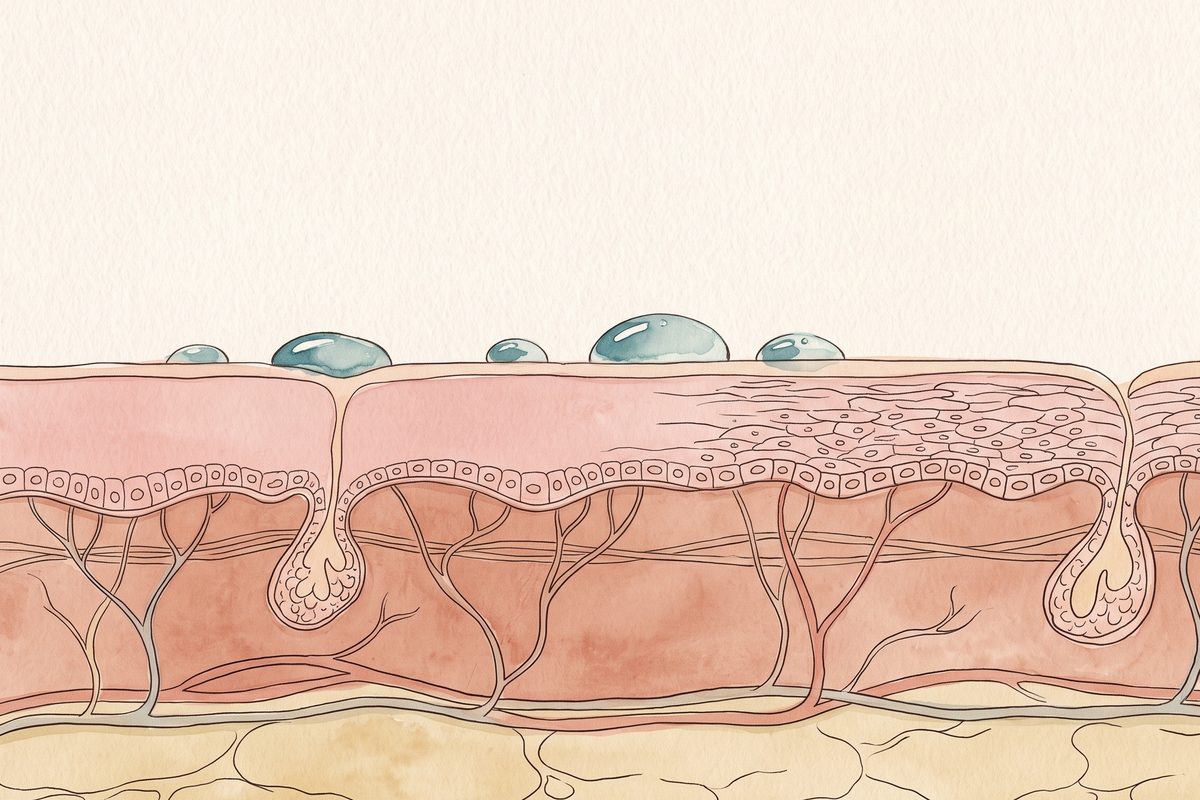
Peels are sorted by how far they reach. A superficial peel stays within the epidermis. A medium-depth peel takes in the whole epidermis and the upper dermis. A deep peel reaches the middle of the dermis. Recovery time, the chance of side effects and the change in tone and texture all rise with depth, together. That is the trade in every choice: the deeper the peel, the more it can change and the more the skin has to recover from.
| Depth and reach | Agents commonly used | Recovery | In the Ministry of Health guideline |
|---|---|---|---|
| Superficial: the epidermis only | Glycolic, lactic, mandelic or salicylic acid; Jessner solution | Redness and light peeling over days | Non-invasive; general practitioners with an LCP, and dermatologists and plastic surgeons |
| Medium: the epidermis and the upper dermis | TCA; stronger glycolic acid or multilayer salicylic acid | About a week of swelling, redness and crusting | Minimally invasive; general practitioners with an LCP, and dermatologists and plastic surgeons |
| Deep: down to the middle of the dermis | Phenol; high-strength TCA | Two weeks or longer; surgical setting | Invasive; dermatologists and plastic surgeons |
The same acid can fall in different depth bands, depending on how it is used. The 2018 review lists glycolic acid at 30 to 50 per cent and salicylic acid at 30 per cent as superficial, and glycolic acid at 70 per cent or a stronger, multilayer salicylic acid as medium depth. Depth is dose dependent, so a stronger solution, more layers and a longer time on the skin all go deeper. The name of the acid alone does not tell you the depth.
What the common peeling agents do
Glycolic acid is an alpha-hydroxy acid from sugar cane and the smallest of its group. In superficial peels it is used for superficial pigment, mild to moderate sun damage and fine lines, and the 2018 review calls it a first-line peel for melasma. It keeps working until it is neutralised, so timing and a neutralising step matter.
Lactic acid is close to glycolic acid in structure. It is more acidic at the same strength, so lower concentrations reach the same depth, and the review reports comparable results for sun damage, superficial pigment and fine lines.
Mandelic acid is a larger molecule that penetrates more slowly. Its results are more subtle than glycolic acid, with less downtime, and the skin surface is often renewed in three to five days. It is often chosen as an alternative to glycolic acid where tolerance is a concern, and it has antibacterial properties.
Salicylic acid is a beta-hydroxy acid that dissolves in oil, so it can work inside blocked pores. That suits oily, acne-prone skin. Unlike the alpha-hydroxy acids, the skin neutralises it by itself. Used in excess, or together with other salicylates, it can cause salicylism, with ringing in the ears, nausea and fast breathing. The salicylic acid peel article covers what the trials show.
Jessner solution is a mixed superficial peel of resorcinol, salicylic acid and lactic acid in ethanol. It is used on its own and as a primer before glycolic acid or TCA. Resorcinol can cause dark marks in Fitzpatrick skin type IV and above, and contact dermatitis, so the peel is chosen with care.
Trichloroacetic acid (TCA) is the usual medium-depth peel, and its depth depends on the concentration. DermNet NZ says it can improve texture and blotchy pigment and has no effect on deep furrows. It is painful, and the skin is swollen, red and crusted for about a week. Higher concentrations carry a higher risk of pigment change, scarring, infection and cold sore reactivation, and a 2026 review describes a narrower safety margin in darker phototypes.
Phenol is the classic deep peel. It is absorbed through the skin and can disturb the heart rhythm and harm the liver and kidneys, so it needs a surgical setting with monitoring. DermNet NZ says it is rarely used for facial peels now because of scarring and toxicity, and lasers have largely taken its place. A review of peels in Asian patients adds that it has rarely been used in Asians because of loss of pigment.
Who suits which peel?
A peel is matched to the finding, not chosen from a menu. For acne, the Ministry of Health acne guideline says a glycolic or salicylic acid peel may be used as an adjunct to treatment, and also says peels are not the mainstay of acne care. A salicylic acid peel suits oily skin with blocked pores. For acne-prone skin, Dr Ong uses salicylic acid peels at The Retreat Clinic, chosen after the skin has been assessed rather than offered as a standard facial. The acne page sets out the kinds of acne and what helps each.
For pigment, a 2026 review reports that superficial glycolic acid is used as an adjunct to sun protection and lightening creams in melasma, that salicylic acid is useful in acne-prone skin and for the dark marks acne leaves, and that peels are individual add-ons, not stand-alone treatment, for pigment disease. Melasma relapses often, so it is managed in cycles. The pigmentation page sets out how melasma, sun spots and post-acne marks differ.
For sun damage and fine lines, superficial peels are used for mild to moderate change, and medium-depth peels for deeper sun damage, fine wrinkles and shallow acne scars. DermNet NZ says the result of a first superficial peel can disappoint and that improvement shows after repeated peels, and that moderate-depth peels are usually spaced three to six months apart.
Why Asian skin changes the plan
The risk that shapes every choice on Asian skin is a dark mark after the peel, called post-inflammatory hyperpigmentation. A 2018 review of peels for acne places Asians at Fitzpatrick skin types III to V and says people at types IV to VI, Asians included, are at higher risk of pigment change after a peel. A 2012 review of studies in Asian patients describes the same greater tendency to darken after any inflammation. DermNet NZ adds a risk of hypertrophic and keloid scarring at types IV to VI, and says peels there must be done cautiously, with full informed consent.
The reviews converge on the same rules. Deep peels are avoided. Superficial peels are generally considered safe across skin types III to VI, medium-depth peels are kept for selected areas and for doctors experienced with them, and glycolic and salicylic acid are generally safer than TCA for repeated courses. Preparation counts. The acne review advises broad-spectrum sunscreen for at least two to three months before a peel, and DermNet NZ describes pre-treatment creams for several weeks, sun protection every day, and protecting the skin from the sun afterwards, especially for the first six months. The limits of an SPF number in this climate are covered in sunscreen in the tropics.
None of this rules peels out. It is the reason the depth is chosen cautiously, and the reason a peel on Asian skin is planned for pigment as well as for the problem it is meant to treat.
What recovery looks like at each depth
Superficial. DermNet NZ says a superficial peel causes mild redness and occasional swelling that usually settle within 48 hours, with peeling like sunburn, and that most people carry on as normal and can wear make-up a few hours later. A 2018 review describes exfoliation over several days, with the surface renewed in 7 to 10 days for glycolic, lactic and salicylic acid, and often in 3 to 5 days for mandelic acid.
Medium. DermNet NZ describes intense inflammation and swelling that settle within about a week, more marked peeling, mild redness that can last several weeks, and says most people take a week off work. The 2018 review puts the peak of redness at four to five days and complete exfoliation at 10 to 14 days.
Deep. Healing does not begin until the third or fourth day and carries on for two weeks or longer. The eyes can swell shut, and the peel is done in a surgical setting with sedation, hydration and heart monitoring.
At any depth, picking delays healing and causes scarring, so peeling skin is left alone. Treated skin is kept cool, and moisturised lightly after a superficial peel and more richly after a deeper one. How to tell normal redness from a reaction is covered in redness after a treatment.
Who should wait, or avoid a peel
The 2018 acne review lists the usual reasons to wait or to ask first. Pregnancy comes first. The safety of cosmetic procedures in pregnancy is not well documented, glycolic and lactic acid peels penetrate poorly and are generally considered safe, data on salicylic acid are lacking, and medium to deep peels should be avoided. Which skin treatments can wait in pregnancy sets out the same caution, and elective peels are usually postponed.
An active infection, including a cold sore, is the second reason. Herpes simplex can be reactivated by a peel, and antiviral cover is highly recommended before medium or deep peels. Isotretinoin is the third. The older advice was to wait 6 to 12 months after a course, but a 2017 systematic review found insufficient evidence to delay peels, so it is a decision for the treating doctors.
A history of keloid or thick, raised scars, a suppressed immune system, major facial surgery in the past six months, radiation to the head or neck, and a medicine such as minocycline that makes the skin sensitive to light are also on the list. A phenol peel adds heart, liver and kidney disease as reasons not to proceed.
What a peel does not do
A peel resurfaces. It does not lift. The 2018 review says deep wrinkles, loose jowls and drooping of the face are unlikely to respond to chemical peeling at any depth and are better served by surgery, and DermNet NZ says a TCA peel has no effect on deep furrows. Loose skin is a different problem, and the sagging skin page explains the layers involved.
It does not reach deep acne scars either. Ice-pick scars are the hardest to treat, according to the 2012 review of peels in Asians, and a superficial peel works at the surface and in the pore. It does not switch off a hormonal driver of acne. For texture and scars, the acne scar and pore page maps the options.
And it does not end melasma. The 2026 review notes a high recurrence rate, and says peels are used as add-ons, with maintenance cycles for people who relapse often. Sun protection stays in place.
Peel or laser?
A 2018 review says lasers have largely replaced deep peels because they control depth more finely and avoid the toxicity of phenol, while superficial peels have grown in use because they are mild, have few side effects and are cost efficient next to laser devices. A 2026 review adds that peels are repeatable and technically accessible. The choice follows the finding, and sorting out the finding comes first. A single sun spot, diffuse pigment, melasma and an acne mark are four different questions.
Who may perform a peel in Malaysia
The Ministry of Health Guidelines on Aesthetic Medical Practice (second edition) sort procedures into non-invasive, minimally invasive and invasive. Non-invasive procedures are external applications that target the epidermis only. Superficial chemical peels are listed as non-invasive, medium-depth peels as minimally invasive and deep peels as invasive. The guideline says general practitioners are only allowed to perform non-invasive and minimally invasive procedures, so superficial and medium-depth peels fall within the scope of a registered general practitioner holding a Letter of Credentialing and Privileging (LCP) for them, with a minimum of 20 procedures performed for superficial peels and 25 for medium-depth peels in the training requirements. Deep peels are listed under dermatologists and plastic surgeons.
Rules differ by country. DermNet NZ says a nurse or aesthetician may perform superficial peels. In Malaysia the guideline lists them as aesthetic medical procedures carried out by registered medical practitioners, and the guide to which procedures only a doctor may perform sets out the rest. The MMC and LCP check takes a few minutes, and why "medical grade" on a menu is not a classification explains why that phrase tells you nothing about depth.
What to ask before you book a peel
Five questions cover most of it. Which peel is this, at what depth and strength, and why that one for my skin? Who will apply it, and does their LCP cover it? What do I need to do before and after, and how long should I stay out of the sun? What happens if the skin reacts? And is this a peel at all, or a facial being described as one?
Home use needs a note of caution. The American Academy of Dermatology carries an FDA warning that some peels sold for use at home have caused serious injuries, and advises buying and using a chemical peel only under the supervision of a licensed, trained provider. Low-strength acids in over-the-counter skin care are a different product: the 2018 review describes them as causing mild, gradual exfoliation over weeks.